
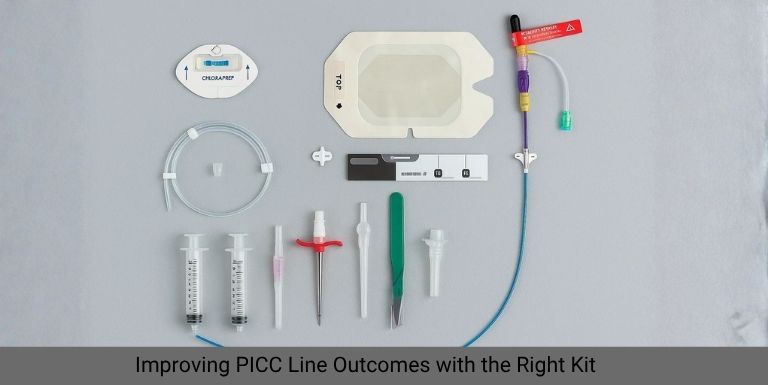
The primary objective of this article is to examine the challenges associated with PICC line insertion and how utilizing the right kit can improve the outcomes of the procedure. By exploring the common complications during PICC line placement and discussing effective solutions, healthcare professionals can enhance the efficiency and safety of this crucial medical procedure.

Peripherally Inserted Central Catheters (PICC lines) are widely used for long-term intravenous access in patients requiring extended medication administration, such as chemotherapy, antibiotics or total parenteral nutrition. These devices are often the go-to option for patients whose veins are difficult to access or who require continuous intravenous therapy. However, despite their advantages, PICC catheter insertion presents numerous challenges, both for clinicians and patients.
The right tools, particularly the PICC line kit, can significantly mitigate many of these challenges. In this article, we’ll explore common issues faced during PICC line insertion and how the use of the proper PICC line set can improve overall outcomes, reduce complications and ensure better patient care.
PICC line insertion may seem routine to experienced healthcare providers, but there are several obstacles that can complicate the procedure. The insertion of a PICC catheter requires precision, skill and proper technique to avoid potential complications. Some common challenges include:
One of the most significant challenges in PICC line insertion is selecting an appropriate vein for access. The peripherally inserted central line must be placed in veins that are large enough to accommodate the catheter and ensure proper flow. The veins chosen are often in the arm and if a vein is too small, it may be difficult to insert the catheter without causing damage or causing irritation to the vessel. Furthermore, veins that are already compromised due to prior insertions or conditions like thrombosis may not be suitable.
Although PICC lines are designed for long-term use, one of the persistent concerns is the risk of infection at the insertion site or within the bloodstream. Infection control measures are crucial, but improper technique or using suboptimal equipment may increase the likelihood of complications. Catheter-related bloodstream infections can occur when bacteria enter the bloodstream through the PICC line insertion site.
The PICC line catheter must be inserted correctly, with its tip positioned in the central venous system, typically in the superior vena cava. Misplacement, such as the catheter being positioned too deep or too shallow, can lead to complications, including thrombosis or poor drug delivery. PICC line placement errors are one of the most challenging aspects of the procedure and can compromise treatment effectiveness.
In patients who are obese or have edema, the veins may be harder to locate. The presence of excess tissue can obscure veins, making insertion more challenging. In these cases, the use of ultrasound guidance or advanced imaging may be necessary, which adds to the complexity of the procedure.
Another challenge is managing patient discomfort during PICC line insertion. While the procedure is generally minimally invasive, the insertion of a catheter into a vein can cause pain, bruising or swelling. In some cases, patients may experience anxiety or fear, making the procedure more difficult to complete successfully.
Using a high-quality PICC line set and appropriate tools is essential for overcoming these challenges and improving patient outcomes. Here’s how the right kit can make a difference:
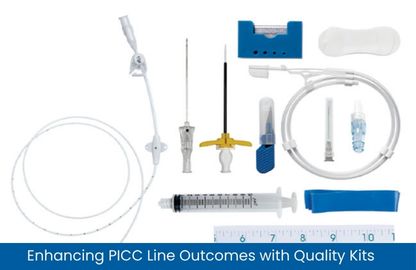
Modern PICC line kits often include ultrasound devices or other tools that assist with vein visualization. PICC catheter manufacturers have integrated advanced imaging technology into their kits, making it easier to identify veins that are difficult to locate, especially in patients with obesity or edema. This improves the accuracy of the insertion, ensuring that the catheter is placed in the correct vein on the first attempt, reducing patient discomfort and the risk of complications.
Infection is a major concern with PICC line usage. Using a sterile and well-designed PICC catheter set that includes antiseptic solutions, sterile drapes and gloves, along with other infection prevention tools, can significantly lower the chances of infection. These kits often come with pre-packaged items that are tailored to maintaining a sterile field and minimizing microbial contamination during the procedure. Proper aseptic technique during PICC line placement is critical to avoiding bloodstream infections.
A well-designed peripherally inserted central catheter line set can streamline the insertion process, reducing the time needed for placement. The inclusion of features like easy-to-use guidewires, specialized introducers and secure fixation devices helps clinicians to perform the procedure with greater confidence and efficiency. A faster insertion process minimizes discomfort for patients and reduces the likelihood of complications associated with prolonged catheterization.
Some advanced PICC catheter kits are equipped with tools that allow clinicians to confirm correct placement of the catheter in real-time. For instance, certain PICC line sets incorporate mechanisms that allow for fluoroscopic or electrocardiographic verification of catheter tip placement, reducing the chances of malposition. Ensuring that the catheter is properly positioned in the central vein is crucial for preventing complications such as thrombosis, poor drug delivery and catheter-related injuries.
PICC line kits can be customized based on specific patient needs. For example, kits designed for pediatric or geriatric patients may come with smaller catheters or specialized guidewires. In contrast, kits for patients with more challenging anatomy, such as those with limited vein accessibility, may include longer catheters or specialized access devices. The versatility of these kits can enhance outcomes, particularly in challenging cases.

Patient comfort should always be a priority during PICC line insertion. The right kit can reduce discomfort during the procedure and improve recovery time. Here’s how:
PICC line insertion is a critical medical procedure, but it comes with several challenges that can affect both patient safety and comfort. By using the right PICC catheter kit, healthcare providers can minimize complications such as improper catheter placement, infections and discomfort. The correct equipment not only enhances the effectiveness and efficiency of the insertion process but also improves long-term patient outcomes.
Investing in high-quality, specialized PICC line products and adhering to best practices in PICC line placement can make a significant difference in the success of the procedure. Clinicians must continuously evaluate the available PICC catheter sets and ensure that they are equipped with the right tools to tackle the challenges that may arise during insertion.
We are recognized as one of the leading manufacturers, exporters, and suppliers of a diverse range of high-quality medical devices in India. Our products, including Interventional Cardiology, Nephrology, Anaesthesia, General Consumables, and Critical Care Accessories, are designed to meet the highest standards of excellence, ensuring reliable performance and patient care.
A – 8, Kuraopokpi industrial Estate,
Thoubal (kakching) Imphal,
Manipur – 795001, India.