
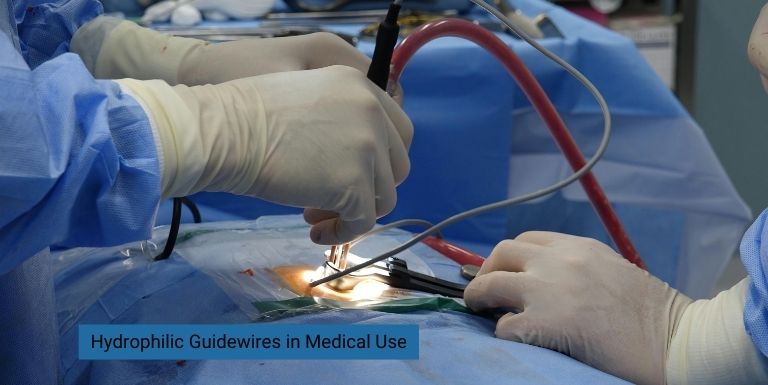
In modern medical procedures, precision, efficiency, and safety are paramount, especially in minimally invasive surgeries. One such crucial tool used to improve the success of these procedures is the guidewire. Among the various types of guidewires, hydrophilic guidewires have become an essential component in fields like vascular surgery, catheterization, and endovascular interventions. This article explores what hydrophilic guidewires are, where they are used, how they work, and how healthcare professionals can use them effectively during medical procedures. Finally, we’ll also introduce the different types of guidewires offered by St. Stone, a trusted supplier of medical devices.

A hydrophilic guidewire is a specialized medical device that plays a crucial role in guiding other instruments through the body during minimally invasive procedures. These guidewires are coated with a hydrophilic material, which makes them slippery when hydrated. This coating significantly reduces friction between the guidewire and the surrounding tissues, allowing for smoother navigation through blood vessels, ducts, or cavities.
The term hydrophilic refers to the wire’s ability to attract and bond with water. When the guidewire is exposed to saline or other fluids, the hydrophilic coating activates and becomes slippery, enhancing its ability to pass through narrow or complex anatomical structures with ease. This makes hydrophilic guidewires especially beneficial in delicate procedures where precision is vital.
Hydrophilic guidewires are used in a variety of medical procedures, especially in the field of vascular surgery and other endovascular treatments. Here are some key areas where they are commonly used:
In procedures like angioplasty or catheter insertion, hydrophilic guidewires help navigate the blood vessels with minimal resistance. Their reduced friction makes them ideal for working through the coronary arteries, peripheral arteries, and veins, where precision and smooth movement are crucial. The ability to move through constricted or tortuous pathways in blood vessels reduces the risk of damage or trauma.
Hydrophilic guidewires are also used in the treatment of varicose veins, where they help position the catheter accurately for laser treatment. The guidewire’s ability to navigate through narrow veins ensures the catheter is placed correctly, enhancing the procedure’s success rate.

In urology, hydrophilic guidewires assist with the insertion of catheters, stents, and other instruments into the urinary tract. They ensure smooth navigation through the ureters and kidneys, reducing the risk of injury during these delicate procedures.
Hydrophilic guidewires are used in procedures such as endoscopy and bronchoscopy. They help position scopes or biopsy tools in the gastrointestinal tract and lungs, enabling the physician to perform the procedure with minimal discomfort to the patient.
The working mechanism of hydrophilic guidewires is quite simple yet highly effective. The guidewire’s surface is coated with a hydrophilic polymer, which is water-attracting. When the wire is exposed to saline or another suitable fluid, the coating absorbs the moisture and becomes lubricated. This lubrication dramatically reduces the friction between the guidewire and the tissues it passes through.
Because of this unique property, hydrophilic guidewires can navigate through tight, tortuous blood vessels or other narrow passages with ease. The smooth surface allows for better maneuverability, which is essential in procedures requiring high precision, such as catheter placements or stent insertions.
Hydrophilic guidewires can be distinguished from traditional guidewires by their ability to provide superior torque control and enhanced flexibility. These properties make them highly adaptable to the specific needs of the procedure, improving the chances of a successful outcome.
Using a hydrophilic guidewire correctly is essential to ensuring optimal results during a medical procedure. Below is a general overview of the steps involved in using these guidewires:
Before using a hydrophilic guidewire, it must be properly hydrated. This is typically done by immersing the guidewire in saline or sterile water for a short period of time. Once hydrated, the wire becomes lubricated and ready for insertion.
After preparation, the hydrophilic guidewire is inserted into the intended access site. During this step, the wire is carefully guided through the blood vessels, organs, or other body parts depending on the procedure. The smooth surface of the guidewire allows for easy navigation, even in complex anatomical areas.
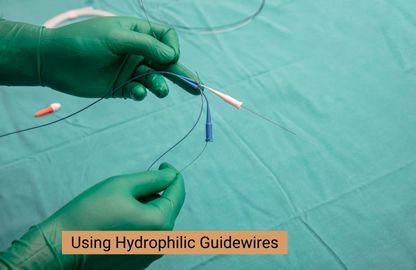
Once the hydrophilic guidewire is in place, it serves as a track for other devices, such as catheters, balloons, or stents. These instruments can be advanced over the guidewire to the target site, where they can perform their intended function, such as widening a narrowed artery or implanting a stent.
After the procedure is completed, the guidewire is carefully withdrawn. Hydrophilic guidewires are designed to be flexible and resistant to damage, which ensures that they can be safely removed without causing harm to the tissues.
It’s important to note that healthcare professionals should always follow the manufacturer’s instructions for the proper use and disposal of hydrophilic guidewires to avoid complications.

At St. Stone, we are committed to providing the highest-quality medical supplies, including a wide range of guidewires designed to meet the needs of healthcare professionals. Below are the types of guidewires we offer:
Stainless steel and nitinol guidewires are the most commonly used in a variety of medical procedures. Nitinol, a nickel-titanium alloy, provides a combination of flexibility and strength. This allows the wire to maintain its shape even after navigating through difficult or tortuous pathways. Stainless steel guidewires are ideal for procedures such as angioplasty, catheter insertion, and stent placement.
PTFE coated guidewires feature a smooth, low-friction surface that enhances their ability to pass through narrow or difficult pathways. The PTFE (Polytetrafluoroethylene ) coating reduces friction significantly, improving the wire’s maneuverability. These guidewires are often used in procedures where a high level of control is needed, such as in delicate vascular surgeries.
Our hydrophilic guidewires are coated with a special hydrophilic polymer that activates when exposed to water or saline. This results in a slippery surface that allows the guidewire to navigate through tight, narrow pathways with ease. These guidewires are perfect for procedures like angioplasty, urological surgeries, and catheterization, where smooth movement is essential.
The Zebra guidewire is designed with a unique, striped coating that helps increase visibility during procedures. This enhanced visibility allows healthcare professionals to track the wire’s position more easily under fluoroscopy, making it ideal for complex procedures like angioplasty or stent placement. The Zebra guidewire offers exceptional torque control, allowing for precise navigation through challenging vascular structures.
Hydrophilic guidewires have become an indispensable tool in modern medicine, offering numerous advantages, such as reduced friction, improved maneuverability, and enhanced safety. Whether you’re performing vascular surgery, urological procedures, or catheterization, hydrophilic guidewires provide the precision and reliability needed for successful outcomes.
As a trusted manufacturer and supplier of medical guidewires, St. Stone offers a comprehensive range of products, including stainless steel and nitinol guidewires, PTFE coated guidewires, hydrophilic guidewires, and Zebra guidewires. Each guidewire is engineered to support smooth navigation through complex anatomical structures and meet the demanding requirements of modern medical procedures.
For more information about our guidewires and medical devices, contact St. Stone, a reliable guidewire manufacturer, or visit our website today.
We are recognized as one of the leading manufacturers, exporters, and suppliers of a diverse range of high-quality medical devices in India. Our products, including Interventional Cardiology, Nephrology, Anaesthesia, General Consumables, and Critical Care Accessories, are designed to meet the highest standards of excellence, ensuring reliable performance and patient care.
A – 8, Kuraopokpi industrial Estate,
Thoubal (kakching) Imphal,
Manipur – 795001, India.