Choosing the Right Spinal Needle: A Guide for Healthcare Professionals


Key Considerations for Choosing the Right Spinal Needle:

This guide provides healthcare professionals with detailed insights into spinal needles, focusing on their selection, types, and applications. It covers everything from the importance of choosing the correct needle for medical procedures to understanding key factors like needle size, material, and the latest innovations in spinal needle technology. Additionally, we explore spinal needle manufacturers, suppliers, and exporters, with a special mention of STS Medical and its extensive product offerings.

Introduction: Understanding Spinal Needles and Their Role in Medical Procedures

Spinal needles are essential tools in medical procedures that require direct access to the spinal cord or epidural space, such as spinal anesthesia, lumbar punctures, and epidural injections. These needles are carefully designed to minimize patient discomfort while providing precise access to the spinal fluid and surrounding areas. Given the vital role these needles play in pain management, diagnostic procedures, and anesthesia administration, choosing the correct spinal needle is critical for both patient safety and treatment effectiveness.

Selecting the right spinal needle involves considering several factors, including the procedure’s purpose, the patient’s anatomy, and the type of needle that will ensure the best outcome. Whether you’re an anesthesiologist, pain management specialist, or surgeon, understanding these nuances helps ensure that your patients receive the highest quality care.

We are Available on Chat, Call, Email!
WhatsApp Email Us!

Types of Spinal Needles: Exploring the Variants

There are several types of spinal needles designed to address different medical needs. Each has unique features that make it suitable for specific procedures. The two main types are:

  • Epidural Needles vs Spinal Needles: While both types of needles are used for procedures that involve accessing the spinal cord or epidural space, epidural needles are used for administering epidural anesthesia, often during labor and delivery. In contrast, spinal needles are typically employed for lumbar punctures, spinal anesthesia, or diagnostic procedures like collecting cerebrospinal fluid.
  • Whitacre and Quincke Needles: These two spinal needle types differ in their design. The Whitacre needle has a pencil-point tip, which reduces the risk of causing a dural puncture headache compared to the Quincke needle, which features a cutting-edge tip. The Whitacre needle is generally favored for epidural anesthesia due to its smoother insertion and reduced trauma.
  • Blunt Tip vs. Pencil Point Needles: Blunt-tip needles are often used in procedures where precision is less critical, while pencil-point needles are ideal for spinal anesthesia due to their sharp, precise design that reduces the risk of leakage or postprocedure headaches.
  • Gauge Sizes: The gauge size of a spinal needle refers to its diameter. Typically, smaller gauges (e.g., 22G) are used for epidural procedures, while larger needles (e.g., 18G) are more common for spinal anesthesia.

By understanding the distinct types of spinal needles, healthcare providers can select the most appropriate option for each medical procedure.
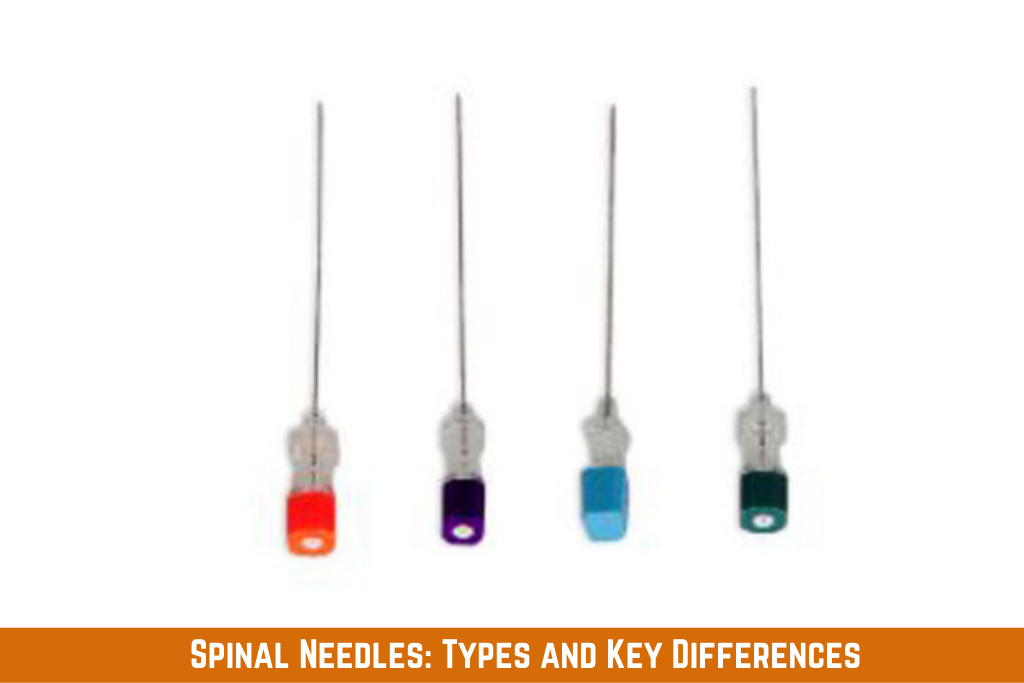
Spinal Needles Types Key Differences

Key Factors to Consider When Choosing a Spinal Needle

When selecting a spinal needle, healthcare professionals must consider several critical factors to ensure the best outcome for the patient. These include:

  • Patient Age and Size: Different age groups and body sizes may require different needle lengths and gauges. Pediatric patients, for example, may require smaller gauge spinal needles with shorter lengths, while adult patients may need larger needles for effective anesthesia or lumbar punctures.
  • Procedure Type: The specific procedure dictates the choice of needle. Spinal anesthesia typically requires a sharp pencil-point needle, while epidural anesthesia may use a blunt-tip needle. Diagnostic procedures, such as lumbar punctures, usually demand a smaller gauge needle for collecting spinal fluid.
  • Needle Length and Depth: The depth of the needle required depends on the patient’s anatomy. Individuals with obesity or greater body mass may require longer spinal needles to ensure access to the epidural space.
  • Patient Comfort and Needle Insertion: Needle comfort is critical for reducing patient distress. Modern spinal needles are designed with ergonomically shaped hubs and smooth surfaces for ease of insertion and minimal patient discomfort.

Selecting the right spinal needle for your patient’s specific needs can dramatically improve the success of your procedure and minimize complications.

Dressing Kit

Material and Coating: How Needle Composition Affects Performance

Spinal needles are typically made from stainless steel, which is durable, rust-resistant, and capable of maintaining a sharp point for precise insertion. However, needle composition can vary to accommodate specific procedural needs:

  • Stainless Steel: The most common material for spinal needles due to its strength and sharpness, ensuring precise insertion and minimal discomfort.
  • Plastic Coating: Some spinal needles come with a silicone coating, which reduces friction and ensures smoother insertion. This coating helps reduce patient discomfort and improves needle glide through the skin and tissues.
  • Biocompatibility: The material used must be biocompatible to avoid allergic reactions or complications. Modern spinal needles are designed to meet high biocompatibility standards, ensuring the patient’s safety.

As spinal needle technology advances, new materials and coatings are introduced to enhance the performance and comfort of these vital tools.

Let’s Discuss! Request a Call Now!
WhatsApp Call Now!

Safety Features in Modern Spinal Needles

Modern spinal needles are equipped with various safety features to minimize risks to both the patient and healthcare provider. These innovations include:

  • Ergonomic Design: Many spinal needles feature specially designed ergonomic hubs that enhance handling, stability, and control during insertion. This reduces the risk of accidental injury during the procedure.
  • Needle Hub Features: Advanced hub designs ensure that the needle remains securely connected to the syringe or injection site, preventing slippage or dislodgement during use.
  • Needlestick Injury Protection: Safety needles are designed to prevent needlestick injuries by automatically retracting the needle after use or including protective shields to cover the needle once the procedure is complete.
  • Infection Prevention: Modern spinal needle kits come with sterile packaging and single-use needles to minimize the risk of cross-contamination and infection.

These safety features ensure that spinal needles provide precise, effective treatment while maintaining the highest standards of safety for both the patient and healthcare provider.

Choosing Spinal Needles Based on Clinical Applications

Different clinical applications require different types of spinal needles. Understanding which needle is most appropriate for each procedure helps ensure patient safety and the effectiveness of the procedure.

  • Labor and Delivery: In epidural anesthesia for labor, blunt-tip spinal needles are commonly used to ensure that the needle does not cause injury to surrounding tissues.
  • Pain Management: Spinal needles are also used for chronic pain management procedures, such as nerve blocks or intrathecal drug delivery systems. Pencil-point needles are often chosen for these procedures to minimize the risk of complications.
  • Diagnostic Procedures: When performing a lumbar puncture to collect cerebrospinal fluid, a smaller gauge spinal needle is used to reduce patient discomfort and allow precise fluid collection.
  • Surgical Applications: Spinal needles are also used for surgical anesthesia, where needle precision and placement are essential for effective anesthesia without damaging surrounding tissues.

By understanding the clinical requirements, healthcare professionals can select the appropriate spinal needle for their patients’ specific needs.

Innovations in Spinal Needle Technology: The Future of Precision and Comfort

As with all medical devices, spinal needle technology continues to evolve. Modern advancements focus on improving needle precision, patient comfort, and minimizing risk.

  • Needleless Technologies: Researchers are exploring needleless injection systems for spinal procedures, which could potentially reduce patient discomfort and the risk of infection.
  • Fine Gauge Needles: Advances in needle gauge design offer ultra-fine needles, which reduce trauma and pain during insertion, making procedures more comfortable for patients.
  • Imaging-Enhanced Needles: Some spinal needles now come with integrated imaging capabilities, such as ultrasound or fluoroscopy, which assist in ensuring precise needle placement during procedures.

These innovations are helping healthcare professionals provide more efficient, comfortable, and safe spinal procedures for patients.

T-Guard

Conclusion: STS Medical - Your Trusted Spinal Needle Manufacturer and Supplier

Choosing the right spinal needle is crucial for effective patient care and successful medical procedures. Healthcare professionals must consider factors such as needle type, material, coating, and safety features to ensure they are providing the best treatment options.

STS Medical is a leading manufacturer, exporter, and supplier of high-quality spinal needles designed for precision, comfort, and safety. Our range includes epidural needles, spinal anesthesia needles, and other medical devices for a variety of clinical applications. With a commitment to innovative designs and strict quality standards, STS Medical ensures that healthcare professionals have access to the best tools for patient care.

For more information on our comprehensive range of spinal needles and other medical devices, contact STS Medical today. Our expert team is here to assist you with the selection of the right products tailored to your specific medical needs.

Quick Response Guaranteed
Contact Us!

Table of ContentsToggle Table of Content