

In nephrology and hemodialysis, access to the bloodstream is essential for effective treatment, especially for patients with chronic kidney disease (CKD) or acute kidney injury (AKI). Catheters are integral in facilitating various procedures such as hemodialysis, fluid management, and medication administration. Among the different types of catheters, single lumen, double lumen, and triple lumen catheters each have unique applications. This article explores the functions of these catheters in nephrology and hemodialysis, their advantages, and when to use each type.
A catheter is a medical device that is inserted into a patient’s body to facilitate the insertion of fluids, medications, or blood samples into the bloodstream. In nephrology, these catheters are primarily used for dialysis access and fluid management. In hemodialysis, catheters provide direct access to the patient’s central venous system for blood withdrawal and blood return after it has been filtered by the dialysis machine.
The number of lumens (tubes) in a catheter determines its functionality, with single lumen catheters being used for simpler procedures, double lumen catheters providing more flexibility for dialysis, and triple lumen catheters enabling simultaneous administration of multiple treatments.

A single lumen catheter features one lumen, typically used for basic blood withdrawal or medication administration in hemodialysis patients. Though it is not as versatile as the double or triple lumen types, it provides essential functionality for patients who may require short-term dialysis access.

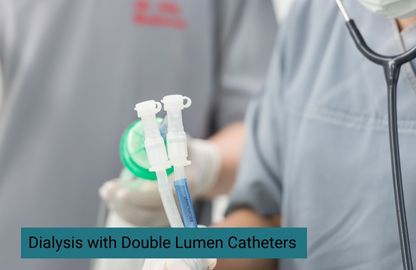
A double lumen catheter has two separate lumens, allowing the use of one lumen for blood withdrawal and the other for blood return. This design is ideal for hemodialysis, where it is critical to access the bloodstream efficiently for dialysis filtration.
A triple lumen catheter is the most versatile of the three, featuring three separate lumens. This type of catheter is designed for critical care situations and offers the ability to perform multiple functions simultaneously, making it ideal for hemodialysis, fluid management, and medication administration.

Choosing the correct catheter depends on several factors, including the patient’s condition, the type of treatment, and whether the catheter will be used short-term or long-term. Here are some general guidelines:
At St. Stone, we are proud to be one of India’s leading manufacturers and suppliers of a wide range of dialysis consumables and nephrology products. Our extensive product range includes dialyzers, AV fistula needles, introducer needles, catheters, hemodialysis catheter kits, and many other essential medical devices for hemodialysis and nephrology treatments.
We are committed to providing healthcare professionals with the highest quality products that ensure patient safety, efficiency, and optimal treatment outcomes. With our advanced manufacturing processes, strict quality controls, and dedication to innovation, St. Stone stands as a trusted partner for medical institutions across India and beyond.
For more information or to place an order, visit St. Stone and explore our full range of dialysis consumables and medical devices.
We are recognized as one of the leading manufacturers, exporters, and suppliers of a diverse range of high-quality medical devices in India. Our products, including Interventional Cardiology, Nephrology, Anaesthesia, General Consumables, and Critical Care Accessories, are designed to meet the highest standards of excellence, ensuring reliable performance and patient care.
A – 8, Kuraopokpi industrial Estate,
Thoubal (kakching) Imphal,
Manipur – 795001, India.