
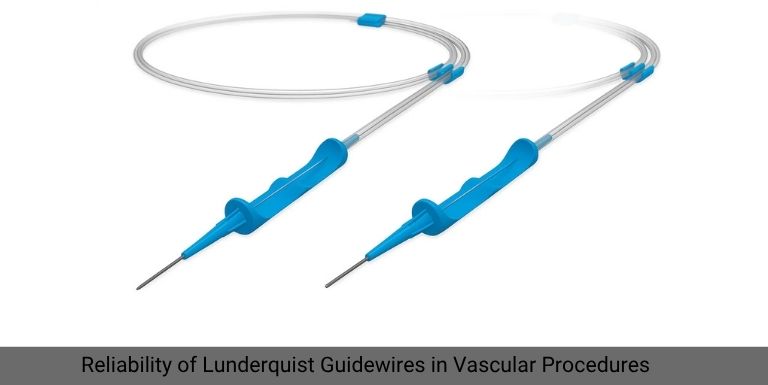
The purpose of this article is to explore the reasons why Lunderquist guidewires are highly trusted by cardiologists, vascular surgeons and radiologists in performing complex and high-risk vascular procedures. These guidewires have earned a reputation for providing exceptional performance, reliability and control, making them a preferred choice in demanding clinical environments.

In the field of interventional medicine, the precision and performance of the tools used are paramount to achieving successful outcomes. Lunderquist guidewires are widely regarded as one of the most trusted devices by medical professionals, particularly in cardiology, vascular surgery and radiology. These guidewires are engineered to navigate through tortuous and difficult-to-reach vascular anatomies with ease, offering enhanced support and control during procedures.
A Lunderquist guidewire is designed for demanding endovascular procedures, offering exceptional stiffness and column strength, which are critical for ensuring stability during vascular access. Whether used for procedures like Transcatheter Aortic Valve Implantation (TAVI), Endovascular Aneurysm Repair (EVAR) or other high-risk interventions, the Lunderquist wire consistently delivers reliability and precision.
In this article, we will explore into the design, function and clinical applications of Lunderquist guidewires to understand why they are trusted by experts across various medical fields.
The design of the Lunderquist guidewire is one of the key factors that set it apart in the world of interventional medicine. The combination of superior stiffness, strength and friction-reducing features makes these guidewires indispensable for complex vascular procedures. Some of the prominent features that make the Lunderquist wires stand out include:
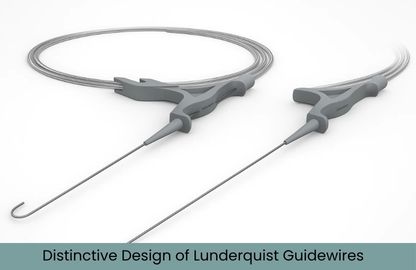
The Lunderquist guidewire is engineered with extra stiffness, particularly the 0.035-inch diameter model, which is designed to support the insertion of larger devices into the vascular system. The stiffness of the Lunderquist stiff wire provides excellent support, especially when advancing catheters or other endovascular devices through tortuous anatomy. This feature is crucial when a guidewire must maintain stability and prevent buckling during procedure execution.
The Lunderquist guidewire’s stiffness is tailored for high-demand procedures like EVAR and TAVI, where the guidewire needs to navigate through complex vascular systems while maintaining control and precision. The enhanced rigidity also helps in overcoming resistance from challenging vascular conditions, ensuring that the procedure can proceed smoothly.
In any vascular intervention, the potential for the guidewire to kink or buckle under pressure is a significant concern. The Lunderquist wire excels in this area, offering exceptional kink resistance. The braid construction of the wire adds to its durability, preventing it from deforming or losing its shape during the procedure. This feature is essential in ensuring that the guidewire remains functional throughout the intervention, particularly in situations where tight or curved vessels may cause other wires to fail.
The superior kink resistance of the Lunderquist guidewire ensures that clinicians can proceed with their procedures with confidence, knowing the wire will hold up under varying anatomical conditions without compromising performance.
One of the hallmarks of the Lunderquist guidewire is its smooth PTFE-coated surface, which significantly reduces friction during insertion and navigation through the vascular system. The PTFE coating ensures that the wire glides smoothly, even though challenging anatomies. This coating minimizes friction, making it easier to maneuver the guidewire through tight or constricted vessels without causing excessive trauma to the vessel walls.
The friction-reducing properties of the Lunderquist guidewire also improve the clinician’s ability to control the wire, allowing for more precise movements, which is critical when navigating complex vascular structures. The smoothness of the Lunderquist guidewire also contributes to reducing the risk of vessel injury and improving overall procedural safety.
The Lunderquiest wires is specifically designed for high-performance vascular interventions. It is frequently used in complex and high-risk procedures such as TAVI and EVAR, where precise navigation and stability are paramount. In TAVI, the guidewire must help guide the catheter to the aortic valve through intricate vascular pathways, while in EVAR, it facilitates the placement of stents in the abdominal aorta or iliac arteries, requiring a guidewire that can maintain its position under high mechanical loads.
The Lunderquist wire medical device is crafted to perform optimally in these high-pressure situations, where the stakes are high and accuracy is critical. This performance consistency in challenging conditions has earned the Lunderquist wire the trust of cardiologists, vascular surgeons and radiologists worldwide.
Lunderquist guidewires have become an essential tool in various medical fields, especially in procedures requiring intricate vascular access and device placement. The following are some of the most common applications:
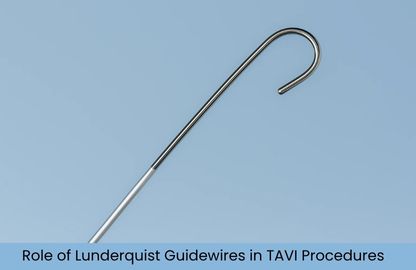
TAVI is a minimally invasive procedure used to replace a defective aortic valve in patients with severe aortic stenosis. The procedure involves navigating through the vascular system to position a new valve in the aorta. The Lunderquiest wire provides the necessary stiffness and stability for successfully guiding the catheter through the heart’s vascular network, ensuring precise placement of the valve and minimizing procedural complications.
EVAR is a procedure used to repair an aneurysm in the aorta without the need for open surgery. The Lunderquist guidewire is widely used in this procedure, helping to navigate stents into the aorta through the femoral arteries. The guidewire’s stiffness and resistance to kinking make it ideal for this type of vascular intervention, where precise stent placement is critical for patient safety and the success of the repair.
In addition to coronary and aortic interventions, lunderquist guidewires are frequently used in peripheral arterial procedures to treat conditions such as peripheral artery disease (PAD). The guidewire’s ability to navigate through smaller, more tortuous vessels is critical in these procedures, where precision and control are necessary to restore blood flow and alleviate symptoms.
Lunderquist guide wires are also employed in neurovascular procedures, including thrombectomy for stroke patients. The guidewire’s stiffness, control and smooth surface help clinicians navigate through the intricate brain vasculature, ensuring the safe and effective removal of clots during these time-sensitive procedures.

The Lunderquist guidewire has earned the trust of cardiologists, vascular surgeons and radiologists due to its exceptional design, high performance and reliability. The following reasons explain why these medical professionals consistently rely on the Lunderquist guidewire:
Lunderquist guidewires are an indispensable tool in modern interventional medicine, trusted by cardiologists, vascular surgeons and radiologists worldwide. Their high-performance design, featuring superior stiffness, kink resistance and a smooth PTFE coating, ensures that clinicians can confidently navigate complex vascular anatomies and perform precision-based interventions. The Lunderquist guidewire’s exceptional reliability and versatility make it a trusted companion in a wide range of procedures, from TAVI to EVAR and beyond.
As vascular interventions continue to evolve, the demand for Lunderquist guide wire will remain strong, ensuring that clinicians have the tools they need to provide safe and effective care in high-risk medical environments.
We are recognized as one of the leading manufacturers, exporters, and suppliers of a diverse range of high-quality medical devices in India. Our products, including Interventional Cardiology, Nephrology, Anaesthesia, General Consumables, and Critical Care Accessories, are designed to meet the highest standards of excellence, ensuring reliable performance and patient care.
A – 8, Kuraopokpi industrial Estate,
Thoubal (kakching) Imphal,
Manipur – 795001, India.