
A kidney biopsy is a medical procedure in which a small sample of kidney tissue is taken for examination. This procedure is critical for diagnosing various kidney diseases, determining their severity, and guiding treatment plans. Kidney biopsies are typically performed when a healthcare provider suspects the presence of glomerular diseases, kidney tumors, transplant rejection, or other kidney-related issues that require further investigation.
In this article, we will explore when and why kidney biopsies are performed, the role of biopsy needles and biopsy guns, and how these tools are used in nephrology to provide accurate diagnoses.
A kidney biopsy is a procedure where a small piece of kidney tissue is extracted for analysis. It is typically performed to understand the underlying cause of kidney disease, assess the extent of damage, and determine the appropriate treatment course.
The procedure is usually done under local anesthesia, and the tissue sample is taken using a biopsy needle or biopsy gun, both of which are specifically designed for collecting tissue from the kidney with precision.
Kidney biopsies are indicated in a variety of clinical scenarios. They help nephrologists diagnose acute kidney injury (AKI), chronic kidney disease (CKD), and other serious conditions affecting the kidneys. Below are the most common indications for performing a kidney biopsy:
When a patient’s kidney function begins to decline, and the cause is unclear, a kidney biopsy can help identify the underlying issue. This is especially important when common causes such as diabetes or hypertension are not clearly responsible for the damage.


Glomerulonephritis is inflammation of the kidney’s glomeruli, which are responsible for filtering blood. This condition can be caused by autoimmune diseases, infections, or other systemic conditions. A biopsy is often required to confirm the diagnosis and determine the type of glomerulonephritis.
Systemic diseases like lupus, diabetes, and hypertension can lead to kidney damage. A biopsy can help determine the extent of damage and the specific type of kidney disease caused by these conditions.
When a kidney tumor is suspected, a biopsy is often performed to determine whether the mass is benign or malignant. This is crucial for staging cancer and determining the most appropriate treatment plan, such as surgery, chemotherapy, or targeted therapy.
In kidney transplant patients, a biopsy is often used to evaluate kidney function and assess whether the transplant is being rejected. Rejection can occur when the immune system attacks the transplanted kidney, and a biopsy can help identify early signs of rejection.
In cases where proteinuria (high levels of protein in the urine) or hematuria (presence of blood in the urine) persists without a clear cause, a kidney biopsy can help identify glomerular diseases or other kidney disorders causing these abnormalities.
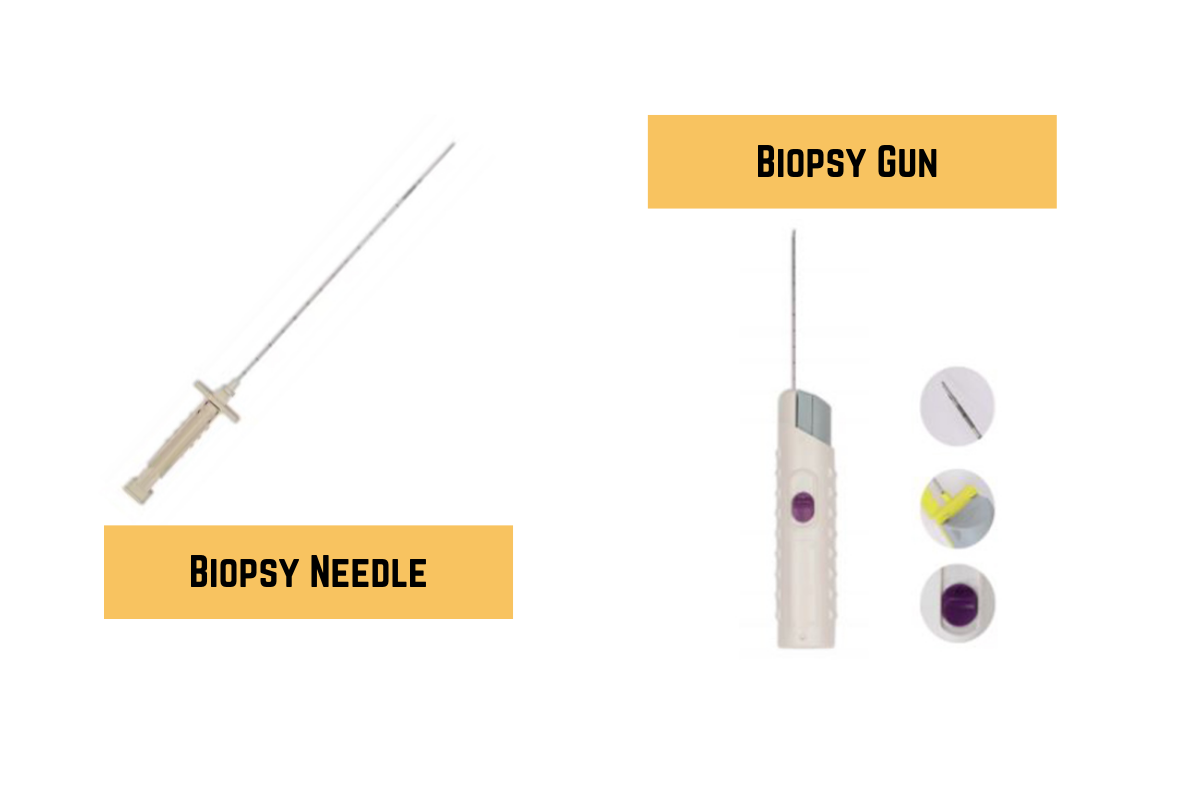
A biopsy needle is a hollow, sharp needle used to collect a small tissue sample from the kidney. There are two main types of biopsy needles used in nephrology:

A biopsy gun is a spring-loaded, automatic device used to perform core biopsies. It is designed to remove a larger, more intact piece of tissue from the kidney, which is essential when diagnosing more complex conditions such as kidney cancers or glomerulonephritis.

Kidney biopsies are essential tools in the diagnosis and management of various kidney conditions, from glomerulonephritis to kidney tumors. Both biopsy needles and biopsy guns are used to collect tissue samples, but their specific applications depend on the clinical situation, the type of tissue sample required, and the patient’s condition.
Understanding when and why a kidney biopsy is necessary, and knowing which tool to use, is crucial for providing accurate diagnoses and effective treatment plans for kidney disease patients.
If you are in need of biopsy needles or biopsy guns for your practice, St. Stone offers high-quality products to support your diagnostic needs. Our tools are designed to provide precision, accuracy, and patient safety during kidney biopsies and other medical procedures.
We are recognized as one of the leading manufacturers, exporters, and suppliers of a diverse range of high-quality medical devices in India. Our products, including Interventional Cardiology, Nephrology, Anaesthesia, General Consumables, and Critical Care Accessories, are designed to meet the highest standards of excellence, ensuring reliable performance and patient care.
A – 8, Kuraopokpi industrial Estate,
Thoubal (kakching) Imphal,
Manipur – 795001, India.