Read Our Article
Choosing the Right Long Term Hemodialysis Catheter Kit: What Healthcare Professionals Need to Know
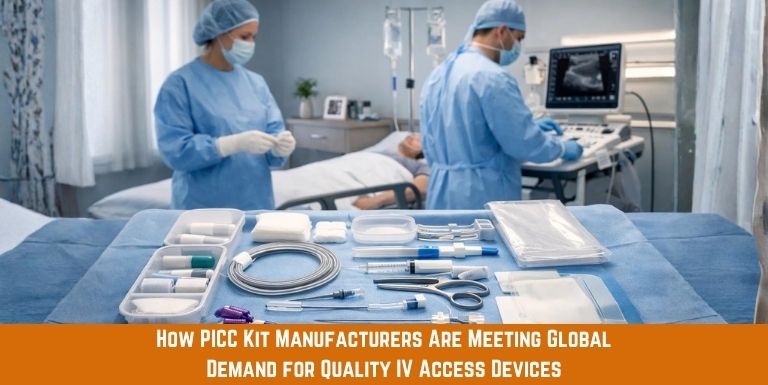
The global demand for PICC line products has surged significantly, driven by an ageing population, rising chronic disease burden and expanding hospital infrastructure across Europe. Leading picc catheter manufacturer companies are responding with innovation in materials, antimicrobial coatings and insertion kits to meet diverse clinical requirements. European markets – including Germany, France, Italy, the Netherlands and Poland – each present unique regulatory and procurement dynamics that manufacturers must navigate. A well-configured picc kit or picc line set now integrates ultrasound-guided components, securement devices and sterile barriers as standard. As healthcare systems prioritise patient safety and cost-efficiency, quality-certified peripherally inserted central catheter solutions are becoming indispensable across inpatient and home-care settings.
Intravenous access has become one of the most critical components of modern clinical care – and nowhere is this more evident than in the growing adoption of peripherally inserted central catheters across European healthcare systems. As hospitals manage increasingly complex patient profiles, the role of a reliable picc catheter manufacturer has never been more strategically important.
A PICC line catheter is a long, flexible tube inserted through a peripheral vein – typically in the upper arm – and advanced until the tip rests in a large central vein near the heart. Unlike short peripheral catheters, a peripherally inserted central catheter supports extended therapy periods, including chemotherapy, long-term antibiotics, parenteral nutrition and blood draws. This versatility makes the picc catheter a preferred choice for both acute and home-care environments across Europe.
The catheter’s biocompatible construction – usually polyurethane or silicone – reduces thrombotic risk and irritation, while single, double and triple lumen configurations allow clinicians to run multiple therapies simultaneously. European hospitals, particularly in Germany and France, have incorporated picc line protocols into their standard oncology and critical care pathways.
In spinal procedures, minimizing trauma and reducing complications are top priorities. While the Quincke-type spinal needle offers more precision in terms of puncture control, it may cause more tissue damage and increase the likelihood of complications such as headaches or a dural puncture. The pencil-point spinal needle, on the other hand, provides a gentler approach to tissue separation, which helps reduce the risk of bleeding, nerve injury and post-procedural pain.
Both needle types are designed with precision-ground stylets, which help minimize tissue coring and ensure smooth gliding. These features optimize the overall insertion process, reducing friction and improving ease of use. However, when choosing between the two, it’s important to consider the patient’s individual needs and the specific procedure being performed. For example, if the procedure requires a needle with minimal impact on surrounding tissues, a pencil-point needle would likely be the better choice. However, if the focus is on reaching a specific target with precision, a Quincke needle may be more suitable.
A complete picc kit goes well beyond the catheter itself. A standard picc line set typically contains a sterile drape, insertion needle, guidewire, introducer, catheter trimming tool, securement device, transparent dressing and chlorhexidine swabs. Many manufacturers now integrate ECG-based tip confirmation systems directly into the picc set, eliminating the need for post-insertion chest X-rays and reducing patient exposure to radiation.
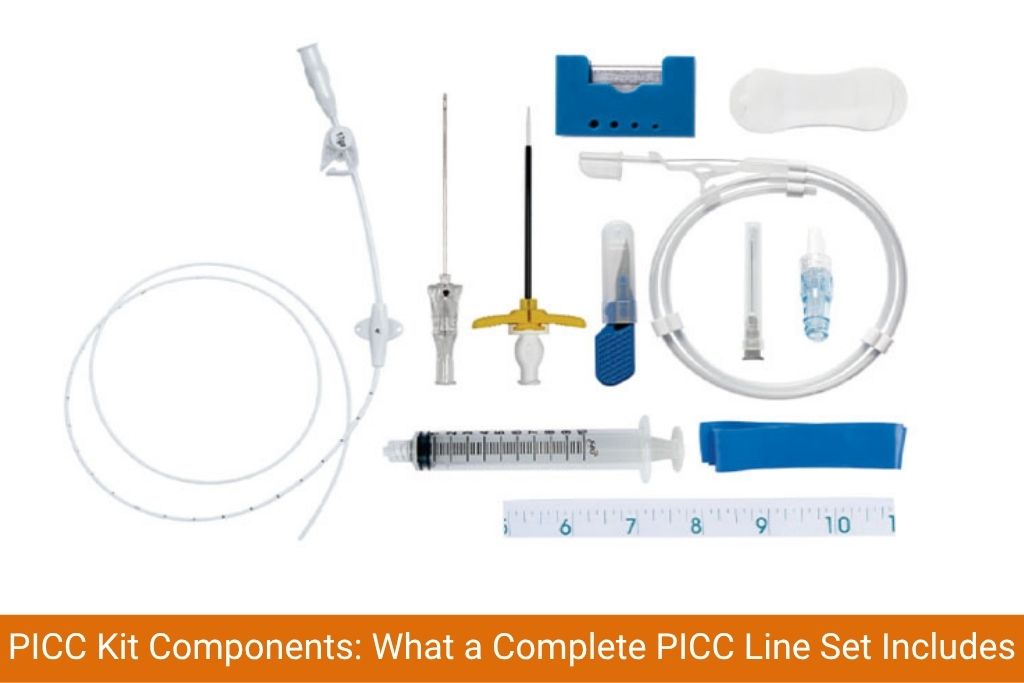
The move toward all-in-one picc line kit configurations reflects a growing demand from procurement teams in the UK, Netherlands and Scandinavia for standardised, ready-to-use bundles that simplify stock management and reduce insertion errors. Pre-assembled kits also support infection control by minimising touchpoints during the procedure.
Our Other Product
Nitinol GuidewireEuropean demand for picc line products is fragmented by healthcare model, reimbursement structure and clinical preference. In Germany, Krankenhäuser (hospitals) operating under DRG-based funding favour durable, high-specification peripheral central catheter options that reduce complication-related readmissions. French institutions under the national health insurance system (Assurance Maladie) prioritise cost-per-episode metrics, making competitive pricing from each peripherally inserted central catheter manufacturer a decisive factor.
Italy’s NHS equivalent – has shown strong uptake of antimicrobial picc catheter options in its northern industrial regions, where oncology centres are concentrated. In Eastern Europe, particularly Poland and Czech Republic, the market is expanding rapidly as EU structural funds support hospital modernisation. Manufacturers targeting these regions must comply with both CE marking requirements and evolving national procurement policies.
The Netherlands and Belgium represent mature picc line markets with established home-infusion programmes. Here, the emphasis falls on patient-friendly picc set designs – lower profile, reduced dressing bulk and clear patient instructions – that support self-management and district nursing workflows.
 Call Now!
Innovation from each leading peripherally inserted central catheter manufacturer is concentrated in three areas: antimicrobial protection, tip technology and catheter material refinement.
Antimicrobial coatings – including chlorhexidine-impregnated surfaces and silver-ion technology – have become a key differentiator in the European tender market. Catheter-related bloodstream infections (CRBSIs) carry significant financial and clinical penalties under European hospital accountability frameworks, pushing procurement to specify infection-resistant picc line kit options.
Tip confirmation technology has also evolved. Intracavitary ECG guidance, built into the picc line set, allows real-time positioning without fluoroscopy or X-ray, reducing procedure time and department dependency. Manufacturers supplying Spain and Portugal have reported particularly strong adoption of ECG-guided peripherally inserted catheters as hospitals upgrade their vascular access nursing programmes.
Catheter material innovations – including pressure-activated safety valves (PASVs) and hydrophilic coatings – reduce occlusion rates and improve patient comfort during extended therapy. These advances are especially relevant for home-care patients in Northern Europe, where picc catheters may dwell for weeks or months.
Every picc catheter, picc kit and associated picc line product sold in Europe must bear CE marking under the EU Medical Device Regulation (MDR 2017/745), which replaced the earlier Medical Devices Directive and raised the bar for clinical evidence, post-market surveillance and labelling. For any peripherally inserted central catheter manufacturer entering or expanding in Europe, compliance is not optional – it is the foundation of market access.
MDR’s requirements for class IIa and IIb devices (which include most PICC configurations) demand robust clinical data, traceability through UDI (Unique Device Identification) and ongoing vigilance reporting. Manufacturers from Asia and North America supplying European distributors must work with Authorised Representatives and Notified Bodies to maintain certification.
Our Other Product
Bone Marrow Biopsy NeedleThe picc line market in Europe is projected to grow steadily through the late 2020s, driven by demographic ageing, oncology expansion and the shift toward ambulatory and home-based care. The role of the picc catheter manufacturer is evolving from component supplier to clinical solutions partner – offering training programmes, insertion support and outcome tracking alongside the physical picc set.
Digital integration is on the horizon: smart peripherally inserted central catheters with embedded sensors capable of monitoring tip position, flow rate or infection markers are in development stages with several European research partnerships. Such picc line products would represent a significant leap in patient safety and remote monitoring capability.
For healthcare systems across Europe, the commitment to sourcing from a quality-certified picc catheter manufacturer – one that delivers compliant, innovation-led picc line kits – will remain central to safe vascular access practice.
Europe’s healthcare landscape presents both opportunity and complexity for the modern picc catheter manufacturer. From Germany’s rigorous procurement standards to Poland’s expanding hospital network, demand for quality picc line products is growing across every tier of the market. A well-designed picc kit – combining safe materials, infection control and ergonomic usability – is no longer a luxury but a clinical necessity. As European MDR compliance requirements tighten and patient outcomes become directly tied to procurement decisions, manufacturers who invest in innovation, certification and clinical education will define the next generation of peripherally inserted central catheter care.
A standard picc kit includes a catheter, introducer, guidewire, sterile drape, securement device, dressing and prep supplies for safe insertion.
A picc line catheter can dwell for weeks to months, making it suitable for extended IV therapies such as chemotherapy or long-term antibiotics.
All picc line products must comply with EU MDR 2017/745, requiring CE marking, clinical evidence, UDI traceability and post-market surveillance obligations.
A peripherally inserted central catheter reaches a central vein near the heart, supporting higher-volume or irritant therapies that would damage peripheral vessels.
An all-in-one picc line kit standardises the insertion process, reduces infection risks from multiple touchpoints and simplifies procurement and stock management.
We are recognized as one of the leading manufacturers, exporters, and suppliers of a diverse range of high-quality medical devices in India. Our products, including Interventional Cardiology, Nephrology, Anaesthesia, General Consumables, and Critical Care Accessories, are designed to meet the highest standards of excellence, ensuring reliable performance and patient care.
A – 8, Kuraopokpi industrial Estate,
Thoubal (kakching) Imphal,
Manipur – 795001, India.