
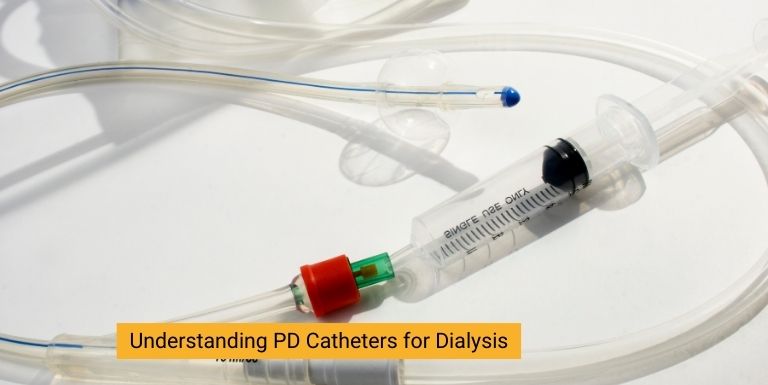
Peritoneal dialysis (PD) is a crucial treatment option for patients suffering from end-stage kidney disease (ESKD) or chronic kidney disease (CKD). Unlike hemodialysis, which requires access to the bloodstream, PD uses the peritoneum in the abdomen as a natural filter to remove waste products and excess fluid from the body. For effective peritoneal dialysis, patients rely on a peritoneal dialysis catheter, which is inserted into the abdominal cavity.
Choosing the right PD catheter is critical for ensuring the success of the dialysis process, minimizing complications, and improving patient comfort. This article will explore the different types of PD catheters, their benefits, and how to choose the best one based on individual patient needs.
A PD catheter is a medical device inserted into the abdominal cavity that allows for the infusion and drainage of dialysis fluid (dialysate) during the peritoneal dialysis process. The catheter provides access to the peritoneum, which acts as a filter to clear waste and fluid from the body.
The catheter generally consists of:

There are several different types of PD catheters, each designed for specific patient needs, depending on factors such as fistula quality, the need for long-term use, and patient anatomy. Here are the most common types of PD catheters used in peritoneal dialysis:
A straight PD catheter is one of the most basic designs, often used for continuous ambulatory peritoneal dialysis (CAPD). This type of catheter consists of a straight, single-lumen tube inserted into the peritoneal cavity.
Advantages of Straight PD Catheters:
Best Used For:
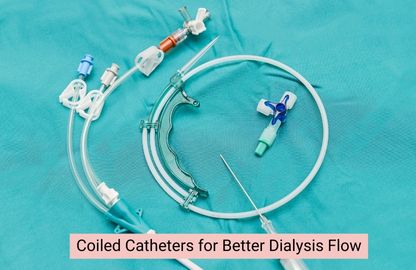
A coiled PD catheter has a coiled portion that resides inside the abdominal cavity. This design is intended to provide better flow dynamics and reduce the risk of the catheter kinking.
Advantages of Coiled PD Catheters:
Best Used For:
The Tenckhoff catheter is one of the most widely used PD catheters and is considered a gold standard for peritoneal dialysis access. It features a dual-lumen design that facilitates the inflow and outflow of dialysate during the dialysis process.
Advantages of Tenckhoff PD Catheters:
Best Used For:
The Dacron cuffed PD catheter is a variation of the Tenckhoff catheter, with a Dacron cuff that helps secure the catheter in place by promoting tissue growth around it. This design helps to anchor the catheter, reducing the risk of accidental dislodgement and lowering the likelihood of infections.
Advantages of Dacron Cuffed PD Catheters:
Best Used For:
Choosing the best PD catheter depends on several factors, each influencing the suitability of the device for a given patient. Here are key considerations to take into account:
The patient’s abdominal anatomy plays a crucial role in determining which catheter is best suited for them. Some patients have a smaller abdominal cavity or a less prominent peritoneal cavity, which may require a coiled or shorter catheter to fit more comfortably. Other patients may have a more substantial abdominal area, in which a straight or Tenckhoff catheter would work better.
The type of peritoneal dialysis the patient will undergo also affects catheter choice. For patients requiring manual exchanges (CAPD), a simpler straight catheter might be sufficient. However, for patients undergoing automated peritoneal dialysis (APD), a Tenckhoff or coiled PD catheter may be more appropriate due to their design, which supports continuous fluid flow.
For patients who will need long-term dialysis (such as those requiring dialysis for several years), a Tenckhoff or Dacron cuffed PD catheter would be more reliable and secure. These catheters provide long-lasting access and have a low risk of complications. On the other hand, for short-term dialysis, a straight or coiled PD catheter may suffice.
Infection prevention is paramount when selecting a PD catheter. Dacron cuffed PD catheters are designed with infection prevention in mind, as the cuff promotes tissue growth around the catheter, creating a barrier that reduces the risk of peritonitis.
Patient comfort and convenience are also critical factors. Some patients may prefer a more discreet and flexible catheter, like the coiled PD catheter, while others may prioritize ease of insertion and opt for a straight PD catheter.

Proper care and maintenance of the PD catheter are essential to ensure its function and reduce the risk of complications, such as infections or blockages. Patients and caregivers must be trained in the following:
At St. Stone, we are committed to providing the highest-quality medical supplies for peritoneal dialysis and nephrology. We offer a wide range of PD catheters, including Tenckhoff catheters, Dacron cuffed catheters, and coiled PD catheters, designed to meet the diverse needs of patients undergoing peritoneal dialysis.
Our PD catheters are crafted with precision and durability, ensuring that they provide reliable access to the peritoneum for efficient fluid exchange during dialysis. In addition, we offer other essential dialysis consumables, such as dialyzers, fistula needles, introducer needles, and hemodialysis catheter kits, to provide comprehensive solutions for kidney care.
St. Stone is dedicated to enhancing patient care and improving quality of life by offering top-of-the-line medical devices and dialysis consumables. For more information or to place an order, visit St. Stone and explore our full range of high-quality products.
We are recognized as one of the leading manufacturers, exporters, and suppliers of a diverse range of high-quality medical devices in India. Our products, including Interventional Cardiology, Nephrology, Anaesthesia, General Consumables, and Critical Care Accessories, are designed to meet the highest standards of excellence, ensuring reliable performance and patient care.
A – 8, Kuraopokpi industrial Estate,
Thoubal (kakching) Imphal,
Manipur – 795001, India.