Read Our Article
How Long-Term Dialysis Catheters Improve Patient Comfort and Treatment Efficiency?
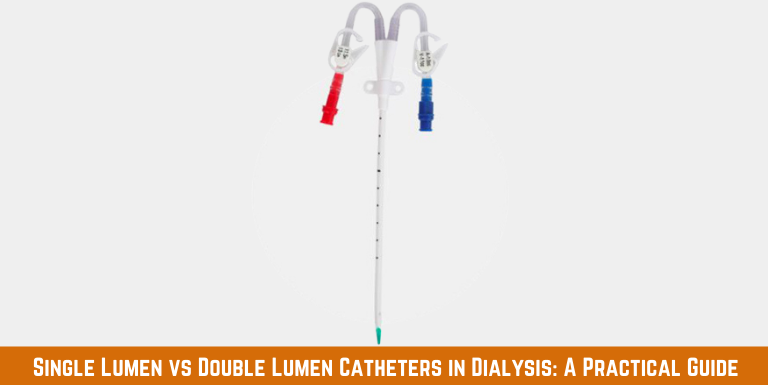
The objective of this article is to provide nephrologists, dialysis technicians, healthcare administrators, and medical procurement professionals with a comprehensive and practical understanding of single lumen and double lumen catheters used in nephrology. Dialysis catheter selection directly influences treatment efficiency, patient safety, and clinical outcomes. By explaining the structural differences, working principles, advantages, limitations, and clinical applications of each catheter type, this article aims to support informed decision-making when choosing the right dialysis catheter for different patient conditions and treatment settings. The content is structured to address both clinical and operational considerations, making it relevant for hospital-based dialysis units as well as standalone dialysis centers.
Dialysis catheters play a vital role in nephrology by providing vascular access for patients who require hemodialysis due to acute or chronic kidney failure. When the kidneys lose their ability to effectively remove metabolic waste, excess fluids, and toxins from the blood, dialysis becomes a life-sustaining therapy. For dialysis to function efficiently, reliable access to the bloodstream is essential.
Although arteriovenous fistulas and grafts are considered the gold standard for long-term dialysis access, they are not always immediately available. Many patients require urgent or temporary dialysis before permanent access matures. In such cases, dialysis catheters serve as the primary access solution. They are widely used in emergency dialysis, early-stage treatment, intensive care units, and in patients with complex vascular conditions.
Over time, dialysis catheter design has evolved to meet increasing demands for higher blood flow rates, improved safety, and better patient comfort. Early catheter designs were relatively simple and often limited in efficiency. Advances in material science, lumen design, and manufacturing techniques have led to more sophisticated catheter options, particularly the development of double lumen catheters that support modern dialysis workflows.
 Call Us Now!
The term “lumen” refers to the internal channel within a catheter through which fluids or blood flow. In nephrology catheters, lumen design is a critical factor because dialysis requires controlled, continuous blood circulation between the patient and the dialysis machine.
The number of lumens directly affects how blood is managed during treatment. A single lumen catheter allows blood flow in only one direction at a time, while a double lumen catheter enables simultaneous withdrawal and return of blood. This distinction has a significant impact on dialysis efficiency, session duration, and overall treatment effectiveness.
Nephrology places unique demands on catheter performance compared to other medical specialties. Hemodialysis requires higher and more consistent blood flow rates to achieve adequate clearance of waste products. As a result, catheter lumen design must support stable flow dynamics while minimizing complications such as recirculation, clot formation, and infection.
A single lumen catheter is designed with one internal channel that allows blood or fluid to flow in a single direction. In nephrology, this means that the catheter can either withdraw blood or return blood, but not perform both functions simultaneously through the same access point.
Structurally, single lumen catheters are relatively simple. Their smaller profile and straightforward design can make them easier to insert in certain clinical situations, particularly when vascular access is limited. They may also be used in scenarios where high blood flow rates are not required.
However, the functional limitations of single lumen catheters become apparent in dialysis settings. Because effective hemodialysis requires continuous circulation of blood, relying on a single lumen can increase treatment time and reduce efficiency. In some cases, two single lumen catheters may be used to achieve inflow and outflow, but this approach increases procedural complexity and patient discomfort.
Despite these limitations, single lumen catheters continue to have a defined role in nephrology, particularly in short-term or adjunctive applications.
Single lumen catheters are typically selected in specific, controlled situations where their limitations do not significantly impact treatment outcomes. These scenarios may include:
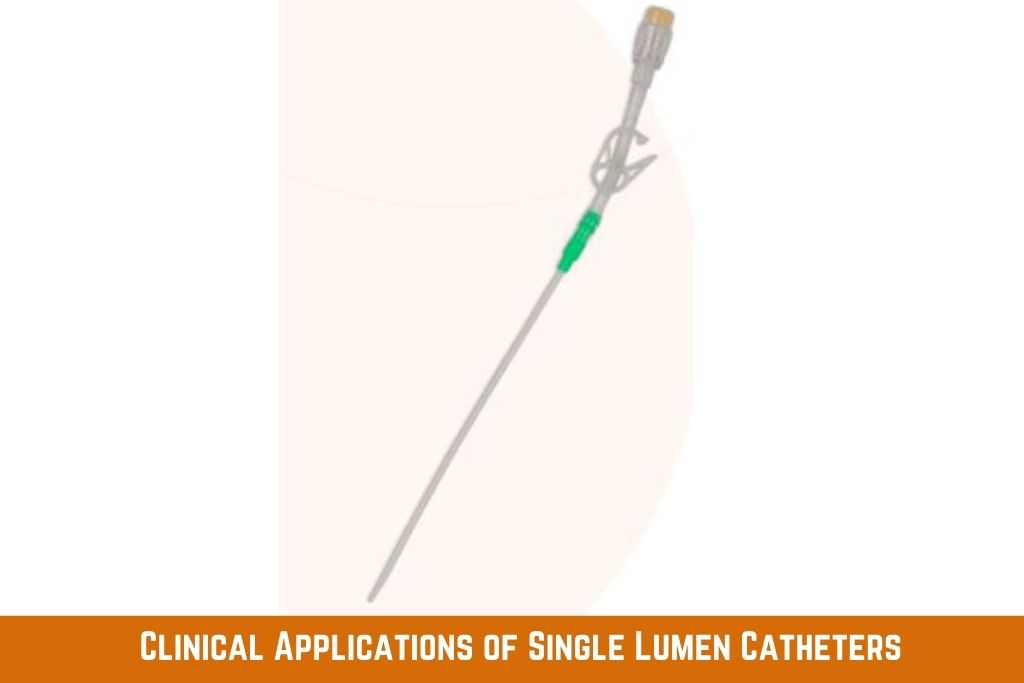
In these cases, the simplicity of a single lumen catheter can be advantageous. However, careful clinical judgment is required to ensure that treatment adequacy is not compromised.
Our Other Product
Peritoneal Dialysis CatheterA double lumen catheter is specifically engineered to meet the functional requirements of hemodialysis. It contains two separate internal channels within a single catheter body. One lumen, often referred to as the arterial lumen, withdraws blood from the patient. The second lumen, known as the venous lumen, returns filtered blood back into circulation.
This dual-lumen design allows simultaneous blood inflow and outflow, which is essential for maintaining efficient dialysis cycles. By separating the pathways for blood withdrawal and return, double lumen catheters reduce the risk of recirculation, where already filtered blood re-enters the dialysis circuit.
Flow dynamics in double lumen catheters are optimized to support higher blood flow rates, which directly improves dialysis efficiency. The design also simplifies catheter placement, as only one access site is required to manage the entire dialysis process. This reduces procedural time and minimizes patient discomfort.
In contemporary nephrology practice, double lumen catheters have become the standard choice for most hemodialysis procedures. Their ability to deliver consistent, high-flow performance makes them suitable for both short-term and long-term dialysis needs.
Dialysis centers benefit operationally from double lumen catheters because they streamline setup and reduce the need for repeated catheter manipulation. This improves workflow efficiency for dialysis staff and supports higher patient throughput without compromising care quality.
From a clinical perspective, double lumen catheters provide more predictable dialysis outcomes. Stable blood flow and reduced recirculation contribute to better toxin clearance and more consistent treatment sessions, which are essential for managing chronic kidney disease patients.
Read Our Article
Key Features of Short-Term Dialysis Catheter KitsUnderstanding the differences between single lumen and double lumen catheters is essential for making informed decisions in nephrology care. While both serve important purposes, their performance characteristics vary significantly.
Comparison Table: Single Lumen vs Double Lumen Dialysis Catheters
Parameter | Single Lumen Catheter | Double Lumen Catheter |
Number of lumens | One | Two |
Blood flow direction | One-way | Simultaneous inflow & outflow |
Dialysis efficiency | Limited | High |
Treatment duration | Longer sessions | Shorter sessions |
Risk of recirculation | Higher | Lower |
Patient comfort | Moderate | Improved |
Suitability for routine dialysis | Limited | Standard choice |
This comparison highlights why double lumen catheters are preferred in most dialysis settings, particularly when efficiency and consistency are priorities.
Selecting the appropriate dialysis catheter involves balancing clinical needs with practical considerations. Factors such as patient condition, urgency of treatment, vascular anatomy, and anticipated duration of dialysis all influence catheter choice.
Double lumen catheters are generally selected when immediate and efficient dialysis is required. They are particularly valuable in emergency situations, intensive care units, and for patients who require repeated dialysis sessions over an extended period.
Single lumen catheters may be considered when dialysis needs are temporary or when vascular access options are limited. However, their use requires careful monitoring to ensure that dialysis adequacy is maintained.
From a procurement standpoint, hospitals and dialysis centers often standardize on double lumen catheters to simplify inventory management and ensure consistent clinical performance across patient populations.
The choice of dialysis catheter has a direct impact on treatment efficiency and patient outcomes. Catheters that support stable, high blood flow enable shorter and more effective dialysis sessions. This improves waste clearance, reduces patient fatigue, and enhances overall treatment tolerance.
Double lumen catheters contribute to more predictable dialysis performance by minimizing flow interruptions and reducing the need for adjustments during treatment. This consistency benefits both patients and healthcare providers by improving scheduling reliability and reducing treatment-related complications.
In contrast, single lumen catheters may introduce variability in treatment efficiency, particularly if flow rates are insufficient. Over time, this can affect clinical outcomes and increase the burden on dialysis staff.
Our Other Product
Swan Neck Coil CathetersPatient safety is a central concern in nephrology, as dialysis patients are particularly vulnerable to infections. Catheter-related bloodstream infections and thrombosis can lead to serious complications, prolonged hospitalization, and increased healthcare costs.
Key factors influencing dialysis catheter safety include:
High-quality catheter design and manufacturing play an important role in reducing infection risk. Consistent product standards help ensure reliable performance across different clinical settings.
From both clinical and operational perspectives, the quality of nephrology catheters is closely linked to manufacturing standards. Healthcare providers increasingly seek manufacturers that demonstrate strong quality control systems and compliance with international medical device regulations.
Reliable manufacturers invest in precision engineering, rigorous testing, and continuous quality improvement. This commitment ensures that dialysis catheters perform consistently, reducing the likelihood of device-related complications.
Hospitals and dialysis centers also benefit from working with suppliers that offer a comprehensive range of nephrology and dialysis consumables. This integrated approach simplifies procurement, supports standardization, and enhances overall care delivery.
 Email Us
Choosing between a single lumen and double lumen catheter in nephrology is a decision that directly influences dialysis efficiency, patient comfort, and clinical outcomes. While single lumen catheters have specific, limited applications, double lumen dialysis catheters remain the preferred solution for effective and streamlined hemodialysis treatment.
As a trusted manufacturer and supplier of nephrology and dialysis consumables, STS Medicals supports healthcare providers with a comprehensive portfolio designed to meet the evolving demands of renal care. Beyond dialysis catheters, the company offers hemodialysis catheter kits, peritoneal dialysis accessories, AV fistula needles, PICC kits, guidewires, epidural sets, and a wide range of critical care consumables, all developed with a strong focus on quality, safety, and clinical reliability.
By combining informed catheter selection with dependable medical device solutions, healthcare institutions can enhance dialysis efficiency, improve patient outcomes, and deliver safer, more effective nephrology care.
We are recognized as one of the leading manufacturers, exporters, and suppliers of a diverse range of high-quality medical devices in India. Our products, including Interventional Cardiology, Nephrology, Anaesthesia, General Consumables, and Critical Care Accessories, are designed to meet the highest standards of excellence, ensuring reliable performance and patient care.
A – 8, Kuraopokpi industrial Estate,
Thoubal (kakching) Imphal,
Manipur – 795001, India.