Read Our Article
How Long-Term Dialysis Catheters Improve Patient Comfort and Treatment Efficiency?
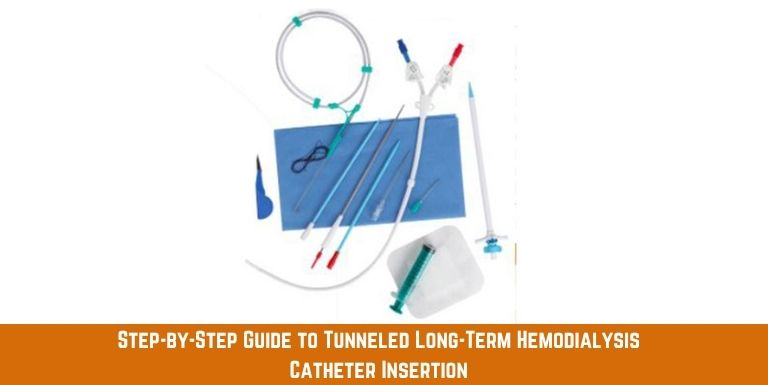
A tunneled long-term hemodialysis catheter is a surgically placed central venous access device designed for patients who require ongoing renal replacement therapy. Unlike temporary options, long-term hemodialysis catheters are anchored subcutaneously via a Dacron cuff to minimize infection risk and dislodgement. The insertion procedure involves ultrasound-guided venipuncture, tract dilation and precise catheter advancement into the right atrium under fluoroscopy. Proper technique at every stage – from patient positioning to dressing application – directly influences catheter longevity and patient safety. This article walks through the complete surgical workflow, from pre-procedural preparation to post-insertion care, with attention to the equipment requirements, including what to look for when sourcing a long-term dialysis catheter kit from a reliable long-term hemodialysis catheter manufacturer or wholesaler.
Patients with end-stage renal disease (ESRD) or acute kidney injury requiring extended treatment depend on reliable vascular access for long term hemodialysis. While arteriovenous fistulas remain the gold standard, many patients require a bridging or permanent catheter-based solution. A tunneled long-term hemodialysis catheter addresses this need by providing stable, repeated access to central venous circulation with a reduced risk of line-associated infections compared to non-tunneled options.
These catheters are specifically engineered for high blood-flow demands – needed for effective dialysis sessions. The subcutaneous tunnel and integrated Dacron cuff serve dual roles: anchoring the catheter mechanically and acting as a biological barrier against bacterial migration. For patients awaiting fistula maturation or those who are poor surgical candidates for arteriovenous access, a tunneled long-term dialysis catheter offers a functional and relatively safe alternative.
 Call Us Now!
A standard long-term hemodialysis catheter consists of a dual-lumen or split-tip design with separate arterial (red) and venous (blue) ports to maintain directional blood flow during dialysis. The catheter body is typically made from polyurethane or silicone – polyurethane is stiffer and easier to insert, while silicone is softer and associated with fewer vessel wall injuries over extended use.
Key specifications to assess when selecting from a long-term hemodialysis catheter manufacturer include: catheter length, lumen diameter, tip configuration (step-tip vs. split-tip), cuff position relative to the exit site and radiopaque markers for fluoroscopic visualization. Clinicians and procurement teams sourcing from a long term hemodialysis catheter wholesaler should verify that products meet ISO 10555 standards and carry appropriate regulatory certifications.
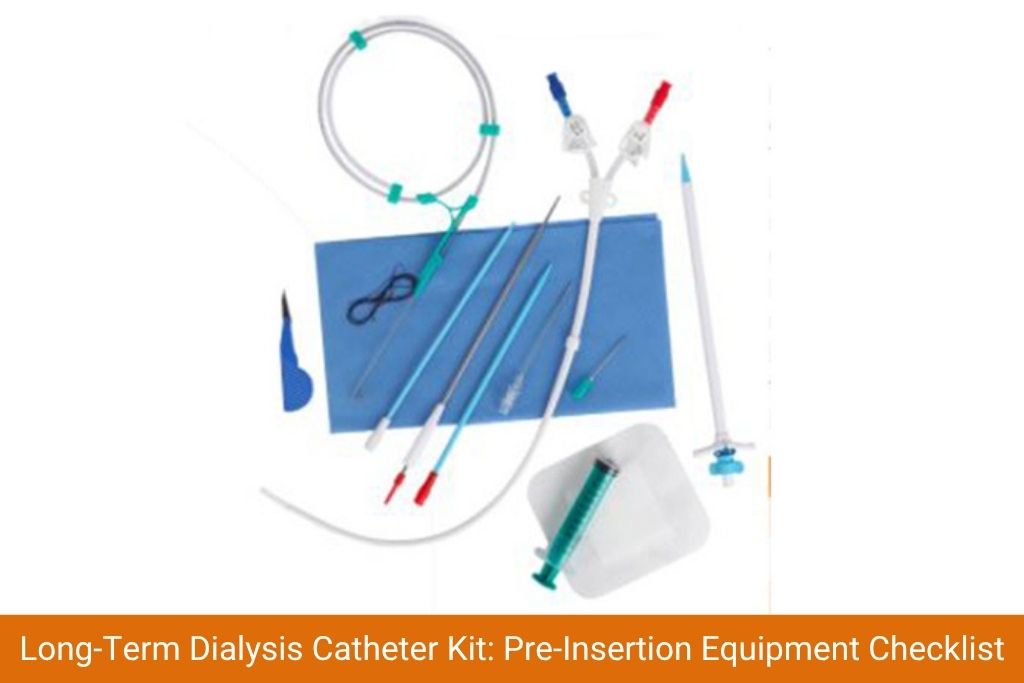
Organizing the procedural tray before beginning minimizes intraoperative delays. A complete acute long term dialysis catheter kit typically includes the catheter itself, a peel-away introducer sheath, dilators of graduated size, a guidewire, a tunneling device, syringe, needle, scalpel, suture material and sterile drapes. Some long term dialysis catheter kit configurations also include a heparin flush solution and transparent dressing.
Beyond the kit, the following equipment should be confirmed at the bedside: ultrasound machine with sterile probe cover, fluoroscopy, cardiac monitoring, emergency resuscitation access and local anesthetic. Confirm the patient has had pre-procedural imaging reviewed, INR is within acceptable range and platelet count is adequate.
Step 1 – Patient Positioning: Place the patient supine in mild Trendelenburg (10–15°) to distend central veins and reduce the risk of air embolism. Turn the head away from the insertion side and prep the neck and upper chest with chlorhexidine solution. Apply sterile draping to create a wide sterile field.
Step 2 – Venous Access: Using real-time ultrasound guidance, identify the internal jugular vein (right-sided preferred for shorter catheter path and lower risk of kinking). Insert the access needle at a 45° angle while visualizing in-plane. Confirm venous placement by aspiration of dark, non-pulsatile blood.
Step 3 – Guidewire Placement: Advance the J-tip guidewire through the needle into the superior vena cava (SVC). Confirm wire position fluoroscopically – the tip should rest at the SVC-right atrial junction. Remove the needle while securing the wire.
Step 4 – Tunnel Creation: Using the tunneling tool from the long-term dialysis catheter kit, create a subcutaneous tunnel from the venotomy site toward a chest exit point, approximately 2–3 cm below the clavicle. Pull the catheter through the tunnel so the Dacron cuff sits from the skin exit site. Trim the catheter to appropriate length if needed.
Step 5 – Tract Dilation and Sheath Insertion: Make a small skin incision at the venotomy. Pass serial dilators over the guidewire to expand the tract. Insert the peel-away sheath-dilator assembly, then remove the dilator and wire together.
Step 6 – Catheter Advancement: Advance the catheter through the peel-away sheath while splitting and removing the sheath simultaneously. Under fluoroscopy, confirm catheter tip position at the SVC-right atrial junction. Aspirate and flush both lumens to confirm patency.
Step 7 – Securing and Dressing: Apply a suture at the skin exit site to secure the catheter wing. Lock both lumens with heparin solution per institutional protocol. Apply a sterile occlusive dressing. Final fluoroscopic image confirms correct positioning before the patient is transferred.
Our Other Product
Peritoneal Dialysis CatheterSelecting a reliable long-term hemodialysis catheters manufacturer directly affects patient outcomes and procedural safety. Institutions should assess: material biocompatibility and thromboresistance, the availability of multiple catheter lengths and tip designs, sterility assurance levels and post-market surveillance records. Regulatory compliance with CE marking or FDA 510(k) clearance is non-negotiable.
Procurement teams working through a long term hemodialysis catheter wholesaler should request documentation of shelf-life testing, packaging integrity validation and lot traceability. Volume pricing negotiations should not come at the expense of verifying these technical benchmarks. In high-acuity dialysis settings, catheter failure carries significant clinical and economic consequences.
Read Our Article
Key Features of Short-Term Dialysis Catheter KitsPost-procedural care for long-term hemodialysis catheters focuses on infection prevention, catheter patency and early recognition of complications. Exit site care should follow a standardized protocol: dressing changes every 7 days, use of antimicrobial dressings where indicated and strict aseptic technique during access.
Early complications to monitor include pneumothorax, arterial puncture, air embolism and cardiac arrhythmias during wire manipulation. Late complications include catheter-related bloodstream infection (CRBSI), fibrin sheath formation causing poor flow, catheter kinking and central venous stenosis. Regular assessment of arterial and venous pressures during dialysis sessions helps flag declining catheter function before it becomes clinically significant.
 Email Us Now!
Successful insertion of a tunneled long-term hemodialysis catheter requires thorough pre-procedural planning, precise surgical technique and disciplined post-procedural management. Each step – from guidewire placement to tunnel creation – has a direct bearing on catheter longevity and patient safety. Choosing the right long term dialysis catheter kit and sourcing from a quality-assured long-term hemodialysis catheters manufacturer or wholesaler are equally important decisions that influence procedural outcomes. As the demand for long term hemodialysis access continues to grow alongside the global burden of chronic kidney disease, standardized insertion protocols and stringent device selection criteria will remain central to delivering safe, effective dialysis care.
Our Other Product
Biopsy GunA tunneled long-term hemodialysis catheter can remain functional for months to years with proper care; however, earlier replacement may be needed if infection or poor flow develops.
The right internal jugular vein is preferred for inserting a long-term dialysis catheter due to its direct path to the SVC and lower risk of catheter malposition or kinking.
An acute long term dialysis catheter kit should include the catheter, peel-away sheath, graduated dilators, a J-tip guidewire, tunneling device, scalpel, syringes and sterile draping.
When assessing a long term hemodialysis catheter wholesaler, verify regulatory certifications, lot traceability, sterility documentation and their record with post-market product complaints.
The most common complications of long term hemodialysis catheters include catheter-related bloodstream infection (CRBSI), fibrin sheath formation, kinking and central venous stenosis.
We are recognized as one of the leading manufacturers, exporters, and suppliers of a diverse range of high-quality medical devices in India. Our products, including Interventional Cardiology, Nephrology, Anaesthesia, General Consumables, and Critical Care Accessories, are designed to meet the highest standards of excellence, ensuring reliable performance and patient care.
A – 8, Kuraopokpi industrial Estate,
Thoubal (kakching) Imphal,
Manipur – 795001, India.