
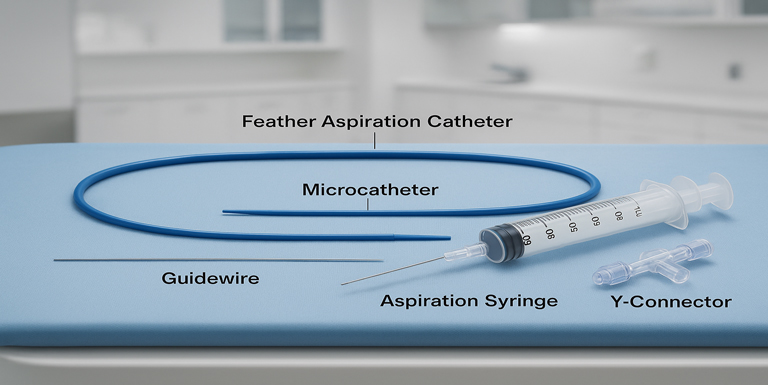
In the world of interventional medicine, the need for precise and effective catheter systems is paramount, particularly when addressing complex vascular conditions such as thrombosis. The feather aspiration catheter stands out as an innovative tool designed to balance essential features such as crossability, kink resistance and aspiration efficiency. It is an indispensable device in a variety of procedures, including coronary and peripheral interventions, where rapid and effective thrombus removal is critical.
With the rising prevalence of cardiovascular and peripheral vascular diseases, the demand for high-performance catheters has increased, particularly in cases requiring aspiration thrombectomy. The feather aspiration catheter is engineered to meet these demands, providing clinicians with a reliable tool that supports optimal procedural outcomes. This article explores the key features and advantages of the feather aspiration catheter, focusing on its ability to maintain crossability, resist kinking and ensure consistent aspiration efficiency during interventional procedures.
Aspiration catheters, such as the thrombus aspiration catheter, play a vital role in the treatment of thrombotic occlusions. These devices are designed to remove embolic material, including thrombi, from blood vessels during coronary and peripheral interventions. Their primary function is to restore blood flow by clearing the vessel lumen, significantly reducing the risk of complications like embolization, infarction or tissue damage.
Feather aspiration catheters are a critical component of aspiration thrombectomy procedures, offering a unique combination of features that support effective thrombus removal. Their design allows them to navigate through tortuous and narrow vascular pathways, ensuring that they can access and clear occlusions in both coronary arteries and peripheral vessels. The introduction of this catheter model has significantly improved the success rates of thrombectomy procedures, enhancing patient outcomes while minimizing the risk of further complications.

One of the most crucial challenges when designing aspiration catheters is ensuring that they can navigate tortuous or calcified vessels without losing functionality. The feather aspiration catheter is designed with several key features that optimize crossability and kink resistance – two critical aspects in ensuring successful thrombus aspiration.
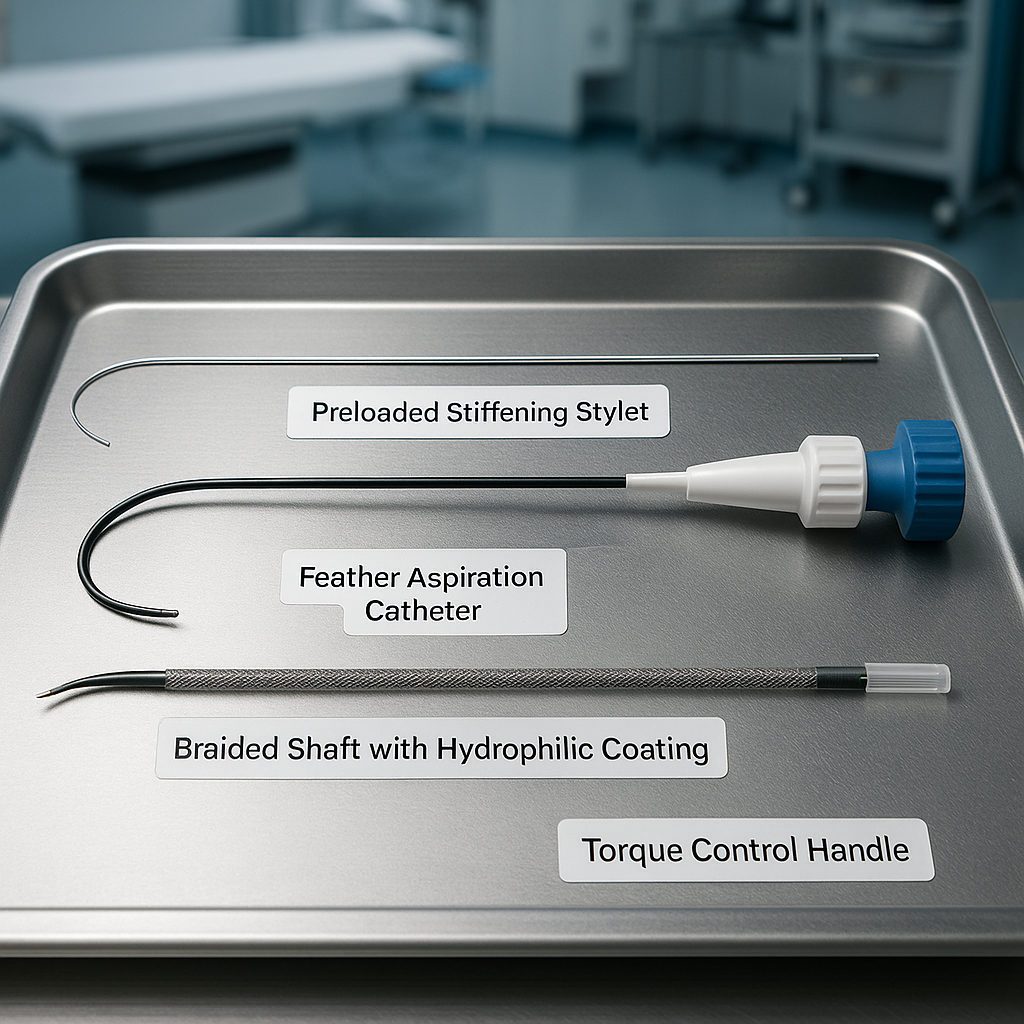
By combining these design elements, the Feather Aspiration Catheter offers unparalleled performance in challenging interventional procedures, ensuring that crossability is maintained without sacrificing the catheter’s ability to withstand the rigors of aspiration.
One of the most important considerations during thrombus aspiration procedures is the ability to visualize the catheter and the thrombus being aspirated. The radiopaque tip aspiration catheter provides clinicians with excellent fluoroscopic visibility, allowing them to accurately track the catheter’s position within the vessel.
The radiopaque tip is made from materials that are clearly visible under fluoroscopy, allowing for precise positioning and monitoring throughout the procedure. This feature reduces the risk of misplacement, ensuring that the catheter is always in the correct location to perform effective aspiration. Additionally, the ability to visualize the catheter helps minimize the risk of complications during insertion and thrombus removal, improving patient safety and procedural success.

The primary function of any Aspiration Catheter is to remove thrombi or embolic material effectively. The feather aspiration catheter is designed to optimize aspiration efficiency, ensuring that it can remove clots effectively and restore blood flow with minimal disruption.
By offering a large lumen size and constant aspiration performance, the high-performance aspiration catheter enhances the overall efficiency of thrombectomy procedures, enabling clinicians to remove thrombus more effectively and reduce the risk of complications.
The feather aspiration catheter is suitable for both coronary and peripheral interventions, addressing the unique challenges posed by each vascular area.
Whether in coronary or peripheral applications, the aspiration catheter offers clinicians a versatile tool for managing thrombotic blockages, providing reliable results with minimal complications.
The feather aspiration catheter represents a significant advancement in thrombus aspiration technology, offering a perfect balance between crossability, kink resistance and aspiration efficiency. By incorporating features such as a braided shaft, hydrophilic coating, radiopaque tip and large aspiration lumen, the feather aspiration catheters ensure that clinicians can effectively navigate through complex anatomies, remove thrombi efficiently and improve patient outcomes.
This innovative catheter is indispensable for coronary and peripheral vascular interventions, where fast and reliable thrombus removal is essential. ST Stone Medical Device, being a leader in aspiration catheter manufacturers and distributors, offering products is crucial to meet the demands of modern interventional procedures, enhancing procedural success and improving patient care. As catheter technology continues to evolve, devices will remain central to advancing the field of interventional medicine.
We are recognized as one of the leading manufacturers, exporters, and suppliers of a diverse range of high-quality medical devices in India. Our products, including Interventional Cardiology, Nephrology, Anaesthesia, General Consumables, and Critical Care Accessories, are designed to meet the highest standards of excellence, ensuring reliable performance and patient care.
A – 8, Kuraopokpi industrial Estate,
Thoubal (kakching) Imphal,
Manipur – 795001, India.