
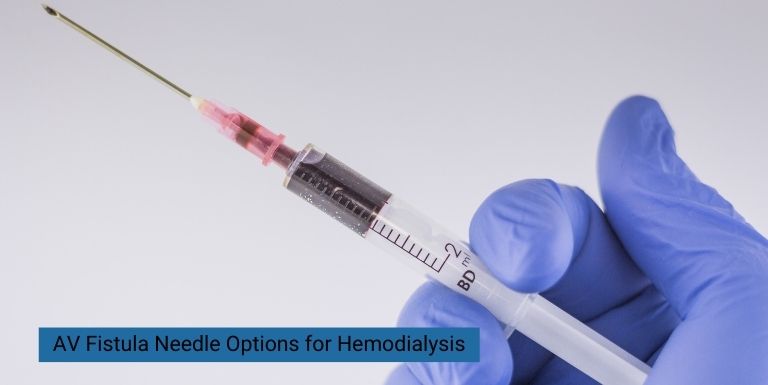
In hemodialysis, vascular access is one of the most critical aspects of treatment, especially for patients with end-stage kidney disease (ESKD) or chronic kidney disease (CKD). Arteriovenous (AV) fistulas are the preferred choice for dialysis access due to their durability and lower risk of complications compared to other access methods, like central venous catheters.
However, choosing the right AV fistula needle is essential to ensure efficient dialysis and patient comfort. Among the types of AV fistula needles, Fixed Wing AV Fistula Needles and Rotating Wing AV Fistula Needles are commonly used. This article will explore the differences, advantages, and best practices for using these needles in hemodialysis, with a special focus on their importance in achieving optimal blood flow during dialysis treatments.

An arteriovenous fistula (AV fistula) is a surgically created connection between an artery and a vein, typically in the forearm or upper arm, which allows for easier access to the bloodstream during hemodialysis. The primary goal of creating an AV fistula is to provide a durable, high-flow access point that can withstand frequent needle insertions for dialysis treatments.
Unlike central venous catheters or synthetic grafts, AV fistulas offer superior long-term outcomes with fewer complications such as infection, clotting, or narrowing (stenosis). However, proper needling technique is essential for ensuring effective dialysis and minimizing complications.
AV fistula needles are specialized needles designed for accessing the arteriovenous fistula to draw blood for filtration and return the cleaned blood to the patient’s body during hemodialysis. These needles are larger than traditional IV needles, typically ranging from 15 to 17 gauge, allowing for the rapid flow of blood during the dialysis procedure.
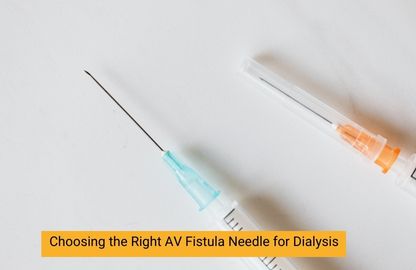
The needle insertion into the fistula is critical for efficient dialysis, as improper technique or the wrong needle can lead to poor blood flow, discomfort, or complications. Two commonly used types of AV fistula needles are Fixed Wing and Rotating Wing needles.
The Fixed Wing AV Fistula Needle features a rigid, non-moving wing that helps stabilize the needle during insertion. Once the needle is placed into the arteriovenous fistula, the fixed wings prevent the needle from shifting, ensuring that it stays in place during dialysis. These needles are designed for stability and reliable blood flow.
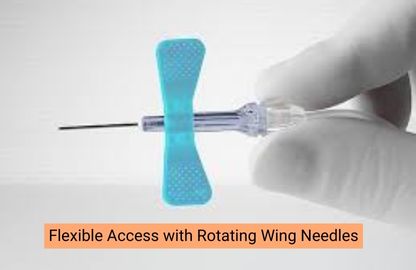
The Rotating Wing AV Fistula Needle features a winged design that can rotate around the needle’s axis, allowing for more flexibility in adjusting the needle during insertion. This type of needle is designed to improve blood flow and needle placement by allowing adjustments to the angle of insertion.
Both Fixed Wing and Rotating Wing AV fistula needles have their advantages depending on the patient’s fistula condition, experience with dialysis, and specific treatment needs. Here’s a comparison of the two:
Feature | Fixed Wing AV Fistula Needle | Rotating Wing AV Fistula Needle |
Stability | High stability | Flexibility in adjustment |
Ease of Use | Easy to insert | Slightly more complex |
Ideal for | Mature AV fistulas, stable veins | Smaller or difficult fistulas, new dialysis patients |
Patient Comfort | Provides steady support | Minimizes discomfort with adjustable angle |
Needle Displacement Risk | Low | Moderate, depends on insertion |
When choosing between Fixed Wing and Rotating Wing AV Fistula Needles, several factors must be considered:
In hemodialysis, the choice of needle is crucial for ensuring effective and safe treatment. Both Fixed Wing AV Fistula Needles and Rotating Wing AV Fistula Needles play important roles in providing reliable vascular access, but the correct needle type depends on the patient’s fistula, dialysis experience, and anatomical factors.
By selecting the right needle, healthcare professionals can enhance blood flow, reduce needle displacement, and improve patient comfort, all of which are critical for the success of hemodialysis.

At St. Stone, we are proud to be a leading manufacturer and supplier of high-quality hemodialysis consumables in India. We offer a wide range of AV fistula needles, including both Fixed Wing and Rotating Wing AV Fistula Needles, designed for optimal blood flow and patient comfort during dialysis.
In addition to fistula needles, we provide a comprehensive selection of biopsy needles, biopsy guns, skin staplers, manifolds, and inflation devices. All our products are crafted with precision, ensuring reliability and efficiency for healthcare professionals in nephrology. St. Stone is committed to advancing healthcare by offering innovative solutions that improve patient care and treatment outcomes.
For more information on our full range of dialysis consumables and medical devices, visit St. Stone today and discover the tools that make hemodialysis safer and more efficient.
We are recognized as one of the leading manufacturers, exporters, and suppliers of a diverse range of high-quality medical devices in India. Our products, including Interventional Cardiology, Nephrology, Anaesthesia, General Consumables, and Critical Care Accessories, are designed to meet the highest standards of excellence, ensuring reliable performance and patient care.
A – 8, Kuraopokpi industrial Estate,
Thoubal (kakching) Imphal,
Manipur – 795001, India.