Read Our Article
Radial Artery Compression Devices: A Global Buyer’s Guide for Hospitals and Distributors
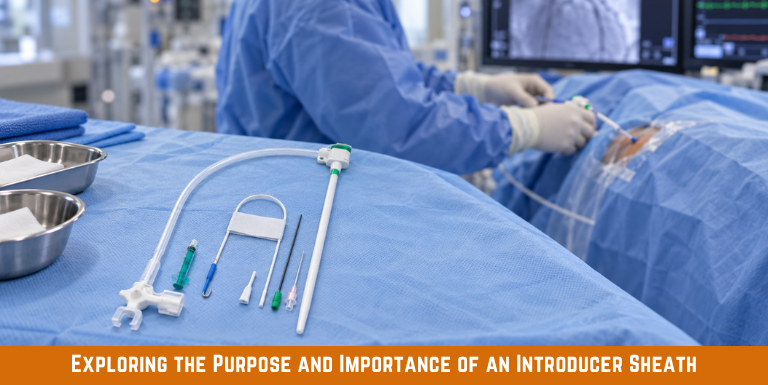
An introducer sheath is a short, hollow tube placed into a blood vessel, usually through the femoral artery in the groin or the radial artery in the wrist, to create a stable, self sealing opening through which catheters, guidewires, and other interventional devices can pass in and out during a procedure. Once the sheath is in place, the vessel wall is no longer repeatedly punctured every time the physician needs to exchange one device for another, which is what makes procedures involving multiple catheter changes, such as angiography, angioplasty, and diagnostic cardiac catheterization, practical to perform safely.
The sheath sits at the access site for the full duration of the procedure and is removed only once the intervention is complete and, in many cases, once the patient’s anticoagulation has been reversed or has fallen below its peak effect. Understanding this basic role helps explain why the sheath, despite being one of the simpler looking devices in a cath lab tray, has such a direct impact on how smoothly the rest of the procedure goes.
Introducer sheaths are sized using the French scale, where each French unit equals one third of a millimeter of outer diameter. A 6 French sheath, for example, has an outer diameter of about 2 millimeters. This sizing matters because every catheter, guiding catheter, or balloon system used later in the procedure has to pass through the inner lumen of the sheath, so the French size chosen at the start effectively sets a ceiling on what devices can be used without upsizing partway through.
Radial access procedures typically use smaller sheaths, often in the 5 to 6 French range, since the radial artery itself is a narrower vessel and the goal is to minimize trauma at the puncture site. Femoral access, which accommodates a larger vessel, commonly uses 4 to 8 French sheaths depending on the complexity of the planned intervention. Hospitals that run both radial and femoral programs need a broader French size range in stock than a facility that performs one access route almost exclusively.
 Call Now
The clinical shift toward radial access over the past decade has changed what hospitals look for in an introducer sheath. Radial access is generally associated with fewer bleeding complications at the puncture site compared with femoral access, largely because the radial artery is smaller, more superficial, and easier to compress after the sheath is removed. This has pushed manufacturers to develop thinner walled radial sheaths that maintain the same inner diameter as a standard sheath while reducing the outer profile, making entry more comfortable and reducing the risk of radial artery spasm or occlusion.
Femoral sheaths, by contrast, are generally built with a stronger focus on kink resistance and hemostatic control, since femoral procedures often involve larger French sizes and longer indwelling times. Some femoral sheaths include a side arm with a three way stopcock, allowing the team to draw blood samples or flush the line without disturbing the access site, a feature that is less commonly needed on the radial side.
A few design elements separate a well engineered introducer sheath from a basic one. The dilator, which sits inside the sheath during insertion, should have a smooth, tapered tip that transitions cleanly into the sheath body, reducing resistance and tissue trauma as the assembly enters the vessel. The hemostatic valve at the hub needs to seal reliably around whatever device is passed through it, preventing blood loss while still allowing smooth catheter exchange. A radiopaque marker band near the sheath tip helps the physician confirm placement under fluoroscopy without guesswork.
Coating also plays a role in performance. Many sheaths now include a hydrophilic or hydrophobic coating along the distal portion of the shaft, which reduces friction during insertion and can make the difference between a smooth single attempt placement and a more difficult, multi attempt one, particularly in patients with smaller or more tortuous vessels.
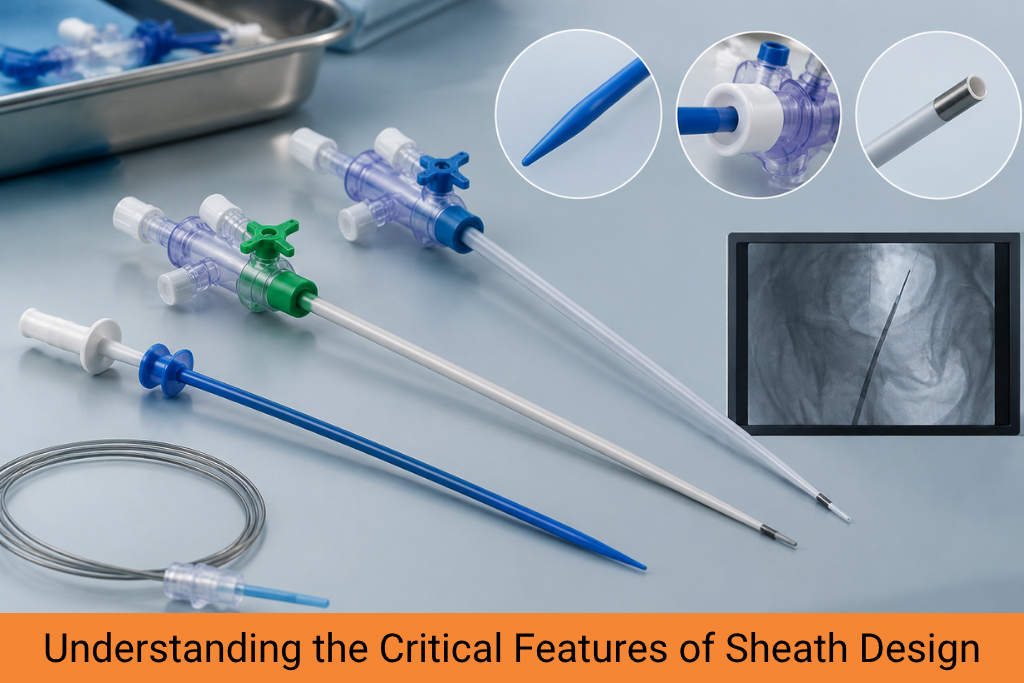
Most modern introducer sheaths use a polymer body, sometimes reinforced with a stainless steel coil, along with a PTFE inner liner. The coil reinforcement matters most in longer sheaths or in procedures where the sheath needs to navigate around a bend, since an unreinforced sheath can kink under those conditions and block device passage entirely. The PTFE liner reduces internal friction, letting catheters and wires move through the lumen with less drag, which becomes especially important during longer procedures involving several device exchanges.
Bleeding at the access site is one of the most commonly reported complications in cardiac catheterization, and the sheath itself plays a direct role in how well that risk is managed. A hemostatic valve that does not seal cleanly around a device, or that wears out after repeated exchanges during a long procedure, allows back bleeding that can extend procedure time and increase blood loss. Sheaths designed with a fixed valve for smaller French sizes and a removable valve for larger sizes give the team more flexibility, since a removable valve can be swapped out mid procedure if it begins to leak, without having to replace the entire sheath.
After the sheath is removed at the end of the procedure, manual compression is still the most common method of closure worldwide, and the length of compression time generally scales with the French size that was used, meaning a larger sheath calls for a longer period of compression before the patient can be mobilized. This is one more reason hospitals should not default to a larger French size than a case actually requires, since doing so extends recovery time without necessarily improving procedural outcomes.
Our Other Product
Hemodialysis Compound Catheter KitNot every procedure needs the same sheath. A purely diagnostic angiogram, where the goal is simply to visualize the coronary arteries, can often be completed through a smaller French sheath since the diagnostic catheters used are themselves narrow. If the diagnostic findings lead directly into an interventional procedure such as angioplasty or stent placement, the team may need to upsize to a larger sheath to accommodate the guiding catheter and delivery systems required. Hospitals that stock a broad French range can make this switch smoothly within the same procedure, while those with a narrow inventory may face delays waiting for the correct size to become available.
Procurement teams sourcing introducer sheaths should first confirm that the range on offer covers the full spread of French sizes their cath lab actually uses, rather than assuming a mid range size will cover most cases. Second, since sheaths are used across both diagnostic and interventional procedures, the supplier should be able to provide documentation confirming the sheath meets applicable medical device quality and regulatory standards for the target market, given that the device sits in direct, extended contact with the vascular system. Third, hospitals running high procedural volumes should ask about lead times and minimum order quantities, since an introducer sheath is one of the most frequently used disposables in any cath lab and a supply gap can disrupt scheduling quickly.
St Stone Medical Devices manufactures introducer sheaths across a range of French sizes for both femoral and radial access, built with reinforced, kink resistant shafts and reliable hemostatic valves, supplying hospitals and distributors who need dependable vascular access consumables for consistent procedural volume.
French size selection is sometimes treated purely as a function of which devices the procedure requires, but patient vessel size deserves equal weight in the decision. A smaller radial artery in a female or pediatric patient can spasm or occlude if a disproportionately large sheath is forced through it, even when that size is technically compatible with the planned devices. Some cath labs now routinely measure radial artery diameter using ultrasound before selecting sheath size, a practice that has been associated with lower rates of radial artery occlusion after the procedure. Hospitals building out a radial access program should consider whether this kind of pre procedure assessment fits their workflow, since it shifts sheath selection from a default choice to a patient specific one.
Sheathless guiding systems, which eliminate the traditional introducer sheath altogether by using a dilator that tapers directly into the guiding catheter, have also gained attention as a way to reduce the effective outer profile at the puncture site while still delivering a larger inner lumen. These systems are not yet standard in every cath lab, but hospitals evaluating their radial access strategy should be aware that the introducer sheath is not the only tool available for managing the balance between device size and vessel trauma.
 Email Us
Hospitals that have shifted the majority of their procedural volume toward radial access sometimes find their sheath inventory has not kept pace with that shift, still carrying a stock mix weighted toward femoral sizes and lengths from years earlier. Reviewing sheath inventory against actual access site data on a regular basis, rather than relying on historical purchasing patterns, helps procurement teams avoid both overstocking sizes that are rarely used and understocking the sizes a growing radial program actually needs. This kind of periodic review is a small operational habit that pays off directly in reduced waste and fewer mid procedure scrambles for the correct size.
The introducer sheath rarely gets the attention that the catheters and guidewires passing through it receive, yet it is the device that makes every subsequent step of a vascular procedure possible without repeated vessel trauma. Choosing the right French size range, access specific design, and material construction has a direct effect on procedural safety and efficiency, which is why hospitals and distributors benefit from working with a manufacturer who understands the practical differences between femoral and radial sheath requirements. St Stone Medical Devices continues to supply cath labs with introducer sheaths built around these clinical realities.
We are recognized as one of the leading manufacturers, exporters, and suppliers of a diverse range of high-quality medical devices in India. Our products, including Interventional Cardiology, Nephrology, Anaesthesia, General Consumables, and Critical Care Accessories, are designed to meet the highest standards of excellence, ensuring reliable performance and patient care.
A – 8, Kuraopokpi industrial Estate,
Thoubal (kakching) Imphal,
Manipur – 795001, India.