
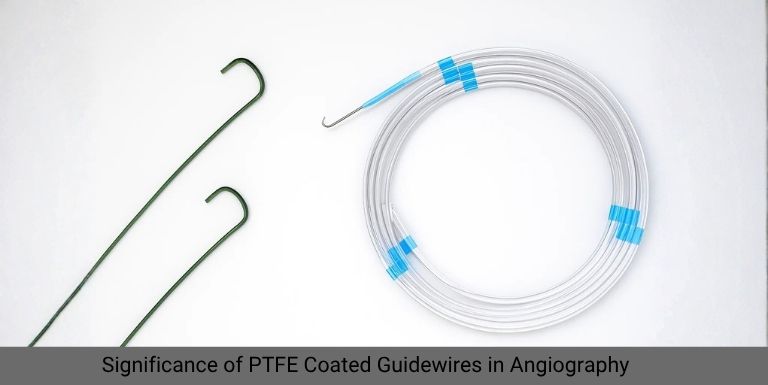
The primary objective of this article is to explore why PTFE coated guidewires are essential in angiography procedures. We will delve into their unique features, the advantages they provide during vascular interventions and how they help ensure precision, safety and efficiency in these complex procedures.

Angiography is a crucial diagnostic and therapeutic procedure used to visualize the blood vessels and assess conditions such as blockages, aneurysms and arterial diseases. It involves the use of guidewires, which are essential tools for accessing blood vessels, guiding catheters and ensuring accurate placement during the procedure. PTFE coated guidewires have become indispensable in modern angiography due to their numerous performance advantages.
The PTFE coating – comprising polytetrafluoroethylene – offers critical benefits such as reduced friction, improved maneuverability and enhanced durability, making it ideal for navigating through complex and delicate vascular systems. In this article, we will discuss why PTFE coated guide wires are fundamental for successful angiography procedures and how they contribute to achieving optimal outcomes.
PTFE coated guidewires provide several unique features that are specifically designed to address the challenges faced during angiography. These challenges include navigating narrow, tortuous blood vessels, reducing the risk of vessel injury and ensuring precise catheter placement. Here are the primary reasons why PTFE coated guidewires are essential for angiography.
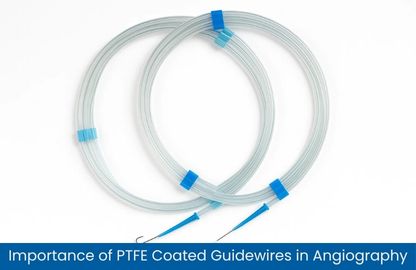
One of the most significant advantages of PTFE coated guidewires is their ability to offer smooth insertion and removal. The PTFE coating significantly reduces friction, allowing the guidewire to glide more easily through the vascular system. This smooth surface reduces the resistance encountered when inserting the guidewire, which is particularly helpful in difficult-to-access vessels or when navigating complex vascular anatomy.
The smoothness of insertion also reduces the risk of damaging the inner walls of the blood vessels, which could lead to complications such as thrombosis, bleeding or vessel rupture. This feature is essential in minimizing patient discomfort and ensuring a smoother, more efficient procedure.
PTFE coated guidewires are designed to be highly resistant to kinking, a common problem when navigating guidewires through tight or curved vessels. Kinking occurs when the guidewire bends sharply, potentially obstructing the catheter or causing difficulty in advancing the wire. The PTFE coating helps maintain the wire’s flexibility while providing resistance to kinking, ensuring that the guidewire remains intact even under challenging conditions.
Kink resistance is vital in angiography, as it allows for consistent and uninterrupted catheter movement through the vascular system, reducing the chances of complications and making the procedure faster and more reliable.
During angiography, precise catheter placement is essential for obtaining clear and accurate images of the blood vessels. PTFE coated guide wire enhance catheter tracking by providing better control and maneuverability. The PTFE coating facilitates smooth advancement and minimizes friction, allowing the guidewire to move through vessels with ease, which is particularly important when navigating smaller or more delicate vessels.
The ability to track the catheter accurately is essential for ensuring that the catheter reaches the correct position for imaging or therapeutic intervention. With PTFE Coated Guidewires, clinicians can be more confident in their ability to position the catheter correctly, which ultimately improves the quality of the diagnostic images and the success of the procedure.
A critical advantage of PTFE coated guidewires is the wide range of sizes, lengths and tip shapes available. These variations allow healthcare providers to choose the right guidewire based on the patient’s specific anatomy and the requirements of the procedure. Whether a straight or angled guidewire is needed or whether a larger or smaller size is required, PTFE coated guidewires offer the flexibility to handle diverse clinical scenarios.
For example, in challenging cases where the vascular anatomy is particularly complex, PTFE coat guidewires with specialized tips – such as angled or curved tips – can be used to improve maneuverability and enhance catheter placement. This customization helps ensure that the correct guidewire is available for each patient, enhancing procedural accuracy and improving patient outcomes.
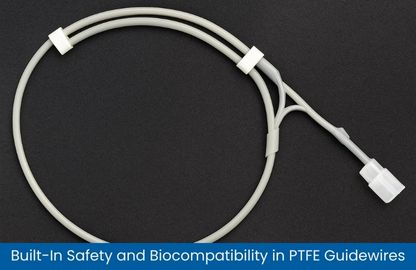
In addition to their mechanical properties, PTFE coated guidewires often come with built-in safety features that further enhance the safety of angiography procedures. Many PTFE coated guidewires feature a safety cover to protect the catheter tip from inadvertent damage, preventing it from accidentally puncturing or harming the blood vessel during insertion. This feature is particularly useful in preventing potential complications such as vessel rupture or dissection.
The PTFE coating itself is also biocompatible, ensuring that the wire is safe for use within the body and reduces the risk of adverse reactions at the insertion site. These safety features help protect both the patient and the clinician throughout the procedure, ensuring that angiography is carried out with minimal risk.
PTFE coated guidewires are available in both pre-coated and post-coated versions. Both types offer excellent performance, but the coating process differs between the two.

PTFE coated guide wires significantly contribute to improving the overall efficiency of angiography procedures. The key to any successful angiographic procedure is reducing time, minimizing complications and ensuring precise catheter placement. PTFE guidewires contribute to these objectives in several important ways.
PTFE coated guidewires are indispensable tools in angiography, offering numerous advantages that improve the safety, precision and efficiency of these procedures. The smooth insertion, kink resistance, accurate catheter tracking and versatility of these guidewires make them essential for navigating the complexities of the vascular system. By utilizing PTFE coated guidewires, healthcare professionals can optimize the angiography process, ensuring that patients receive accurate diagnostics and effective treatment in a timely manner.
As angiography continues to evolve, the role of PTFE coated guidewires in improving procedural outcomes and enhancing patient care remains critical. Their unique features ensure that clinicians are equipped with the best tools to perform successful angiographic interventions, ultimately improving both patient safety and procedural success.
We are recognized as one of the leading manufacturers, exporters, and suppliers of a diverse range of high-quality medical devices in India. Our products, including Interventional Cardiology, Nephrology, Anaesthesia, General Consumables, and Critical Care Accessories, are designed to meet the highest standards of excellence, ensuring reliable performance and patient care.
A – 8, Kuraopokpi industrial Estate,
Thoubal (kakching) Imphal,
Manipur – 795001, India.