
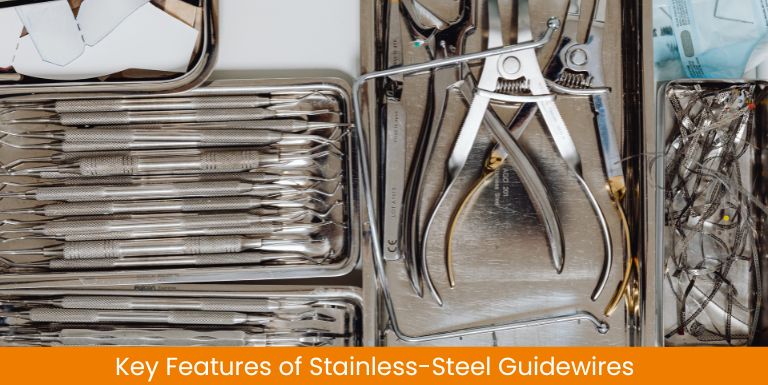
Stainless steel guidewires are essential tools in medical procedures such as catheterization and surgical interventions. This article highlights the key features that make stainless steel guidewires a reliable choice for healthcare providers. By understanding these features, healthcare professionals can make informed decisions on selecting the most suitable guidewires for their procedures, ensuring optimal patient outcomes.
In medical and surgical settings, precision is crucial, especially during procedures that require the introduction of instruments like catheters, stents or other medical devices into the body. One of the most important tools used in these procedures is the stainless steel guidewire. These guidewires provide guidance and support, helping healthcare providers navigate through vessels and anatomical structures with precision.
Made from high-quality stainless steel, these guidewires come in various designs and sizes, making them versatile for different medical applications, including catheterization and endovascular procedures. This article explores the essential features of stainless steel guidewires, shedding light on why they are the preferred choice for healthcare providers and how they enhance the safety and effectiveness of procedures.

One of the primary advantages of stainless-steel guidewires is their strength and durability. Stainless steel is a robust material known for its resistance to bending and breaking under pressure. This is particularly important in medical procedures where the guidewire must maintain its integrity as it is threaded through narrow and tortuous vessels or cavities. The flexible stainless-steel guidewire offers a balance between strength and flexibility, ensuring that it can withstand the mechanical stresses of catheterization while still being malleable enough to navigate complex anatomical structures.
Due to their durable construction, stainless steel guidewires can endure the rigors of repeated use, making them an essential tool for both short-term and long-term procedures. Their ability to maintain strength under pressure ensures that healthcare professionals can rely on them for precise navigation and optimal results.
Stainless steel guidewires are designed to provide exceptional precision during insertion. The material’s flexibility is one of its key characteristics. Unlike some other materials, stainless steel can be manufactured into guidewires that retain their shape while also being flexible enough to maneuver through tight spaces. This combination of rigidity and flexibility allows healthcare providers to guide medical instruments with greater accuracy.
Flexible stainless steel guidewires are particularly useful in catheterization procedures, where the guidewire must navigate through complex networks of blood vessels or other body cavities. The ability to control the guidewire’s path ensures that the catheter or other devices are positioned correctly, reducing the risk of injury or complications.
Stainless steel’s corrosion resistance is another critical feature that makes it an ideal material for medical devices. Medical procedures often involve exposure to bodily fluids, which can cause certain metals to degrade or corrode over time. Stainless steel guidewires, however, are resistant to corrosion, ensuring that they maintain their strength and integrity throughout the procedure.
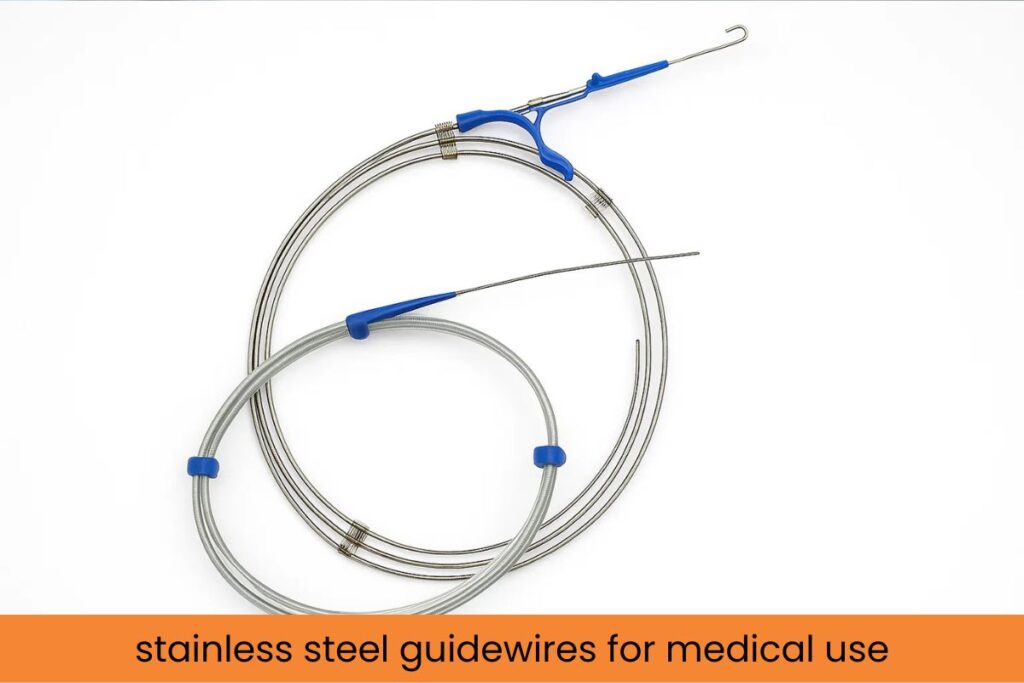
Additionally, stainless steel guidewires for medical use are biocompatible, meaning they are compatible with the human body and do not cause adverse reactions when in contact with tissues or fluids. This biocompatibility is essential for minimizing the risk of infection and promoting successful outcomes in medical procedures that require guidewires.
A significant feature of stainless steel guidewires is the ability to customize the tip design to suit the specific needs of a procedure. The tip of the guidewire is often tapered, which allows for easier insertion into narrow or difficult-to-reach areas. This tapered design helps minimize resistance, reducing the risk of tissue damage during insertion.
In addition to standard tapered tips, some surgical guidewires offer customizable tip configurations, allowing healthcare professionals to choose the most appropriate design for the procedure at hand. This flexibility ensures that the guidewire is ideally suited for various medical applications, improving both the precision and safety of the procedure.
The surface quality of a medical guidewire plays a crucial role in its performance. Stainless steel guidewires are manufactured with smooth surfaces, which reduces friction as the wire moves through vessels or other anatomical passages. A smooth surface ensures that the guidewire slides effortlessly, minimizing trauma to the surrounding tissue and reducing the risk of complications such as bleeding or vessel perforation.
The smoothness of the surface also ensures that the stainless steel guidewire for catheterization can be used with minimal resistance, which is particularly important during longer procedures. This feature enhances the overall experience for the patient by reducing the discomfort or potential risks associated with guidewire insertion.
Stainless steel guidewires are versatile instruments used in a wide range of medical procedures. From catheterization to endovascular procedures and surgeries, these guidewires play a central role in ensuring the safe and effective delivery of medical devices to the targeted site.
Another advantage of stainless steel guidewires is the availability of a wide range of sizes and designs. This variety allows healthcare providers to select the most appropriate guidewire for the specific needs of the procedure, ensuring that the guidewire can fit into different anatomical structures without causing damage.
Whether the procedure requires a thinner guidewire for pediatric patients or a thicker one for adults, stainless steel guidewire manufacturers produce guidewires that cater to diverse medical needs. The flexibility in design ensures that the guidewire is suitable for both routine and specialized medical procedures, further enhancing its reliability as a choice for healthcare providers.
In catheterization procedures, stainless-steel guidewires for catheterization help healthcare providers position catheters accurately within arteries, veins or other body cavities. Similarly, surgical guidewires are used in complex surgeries that require precision navigation of surgical instruments through intricate anatomical areas. The versatility of stainless steel guidewires makes them a reliable tool across various fields of medicine.
The precision, flexibility and smooth surface of stainless steel guidewires help healthcare providers perform procedures more efficiently. Since these guidewires are easy to maneuver, they reduce the time spent trying to navigate through vessels or other challenging anatomical areas. A faster procedure not only improves patient comfort but also reduces the risk of complications associated with prolonged insertion times.
By offering enhanced control, durability and corrosion resistance, stainless-steel guidewires reduce the risk of complications such as vessel perforation, injury to surrounding tissues or infection. The smoother surface and flexibility also minimize the potential for traumatic damage, ensuring that the procedure is as safe as possible for patients.

While there are alternative materials available for guidewires, stainless steel remains the go-to choice for healthcare providers due to its reliability, longevity and cost-effectiveness. Stainless steel guidewires can be used across a wide range of procedures, making them a versatile and economical choice for medical professionals.
Stainless steel guidewires have proven to be an indispensable tool in the medical field, offering healthcare providers a reliable, durable and precise solution for guiding medical devices through the body. The key features of stainless steel guidewires, including their strength, flexibility, corrosion resistance and versatility, make them the preferred choice for a wide variety of procedures, from catheterization to complex surgeries.
By understanding the critical features of stainless-steel guidewires, healthcare professionals can ensure safer, more efficient procedures, improving patient outcomes while minimizing complications. As a result, stainless steel guidewires remain a trusted and essential tool in modern medical practice.
We are recognized as one of the leading manufacturers, exporters, and suppliers of a diverse range of high-quality medical devices in India. Our products, including Interventional Cardiology, Nephrology, Anaesthesia, General Consumables, and Critical Care Accessories, are designed to meet the highest standards of excellence, ensuring reliable performance and patient care.
A – 8, Kuraopokpi industrial Estate,
Thoubal (kakching) Imphal,
Manipur – 795001, India.