Read Our Article
Central Venous Catheter Kit: Essential Tools for Safe and Effective Catheter Insertion

Selecting the right guidewire for a medical procedure is a critical decision that directly impacts the success and safety of a treatment. Guidewires are used across a range of procedures, from cardiovascular interventions to urological treatments, to help physicians navigate complex anatomical pathways. With an array of materials, coatings and designs available, choosing the right guidewire requires understanding the specific needs of the procedure at hand and the characteristics of the guidewire itself. This guide aims to provide a comprehensive overview of various types of guidewires and how to choose the best one for your medical procedures.
When selecting a guidewire, it’s essential to work with a trusted medical guidewire manufacturer. Manufacturers like St. Stone Medical Devices offer a broad selection of guidewires that cater to different specialties, ensuring high-quality products that adhere to international standards. A reputable manufacturer provides guidewires with superior flexibility, precision and reliability. They also focus on the material quality, coating types and design, which all contribute to the performance of the guidewire during medical procedures.
 Email Us!
The Nitinol guidewire is one of the most widely used guidewires due to its unique properties. Nitinol, an alloy of nickel and titanium, is known for its superelasticity and shape memory. This means it can return to its original shape after deformation, making it ideal for navigating through challenging or tortuous anatomical paths, such as those found in cardiovascular or neurovascular procedures. Nitinol core guidewires are particularly suited for angioplasty, stent placement and complex coronary artery interventions. Their excellent flexibility and resilience enable smoother movement through complex vessels, reducing trauma to the patient’s tissues.
For procedures requiring ease of advancement through narrow or tortuous vessels, hydrophilic coated guidewires are an excellent choice. The coating on these guidewires becomes slippery when activated by water, reducing friction and improving lubrication. This allows for smoother navigation, making them ideal for vascular surgery, nephrology and interventional radiology. Hydrophilic guidewires are particularly useful when performing procedures in delicate or hard-to-reach areas, as the coating minimizes the risk of vessel trauma and enhances maneuverability.
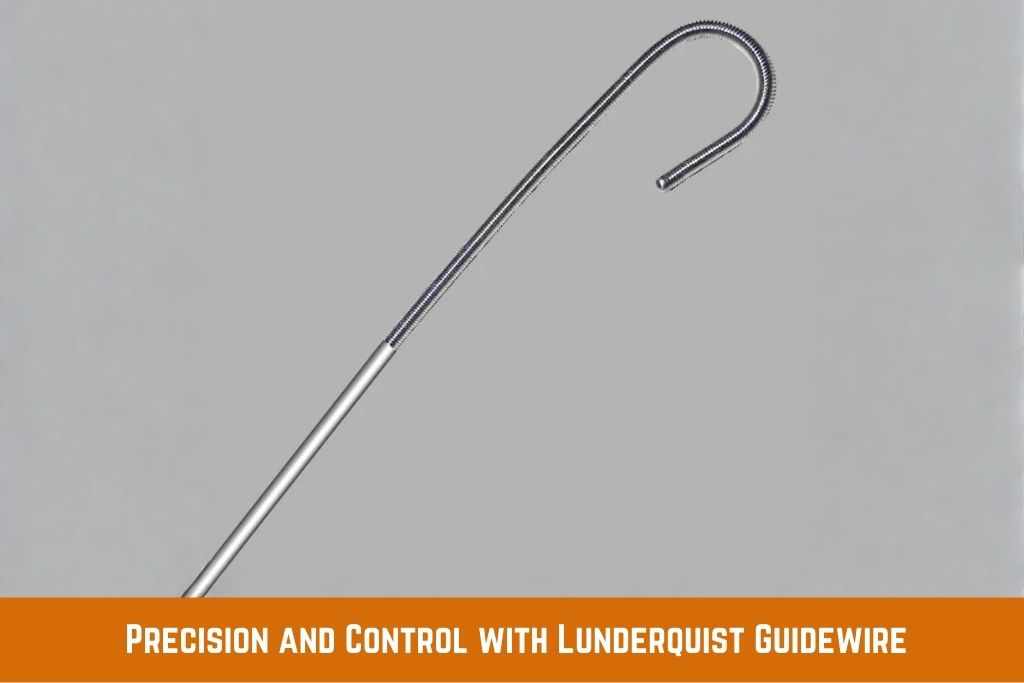
The Lunderquist guidewire is a type of guidewire known for its stiffness and torque control. This guidewire is highly effective when it is crucial to achieve precise positioning, particularly in interventional procedures such as vascular surgery. It can be especially helpful when the guidewire needs to navigate through tortuous vessels or when stents are being placed. Lunderquist guidewires combine strength with flexibility, allowing for greater control when positioning instruments in challenging anatomical pathways. For procedures that require extra pushability and the ability to advance through narrow or resistant vessels, this guidewire is a top choice.
PTFE coated guidewires are coated with polytetrafluoroethylene (PTFE), a material that provides a very smooth surface. The PTFE coating minimizes friction, allowing the guidewire to glide effortlessly through narrow or tortuous vessels. These guidewires are particularly useful in urological, nephrological and cardiovascular procedures, including catheter placements and stent insertions. The coating helps reduce the risk of trauma to the vascular walls, providing a safer and more effective procedure for the patient. PTFE-coated guidewires are an excellent option when smooth advancement is necessary for delicate procedures.
Our Other Product
Double Lumen CatheterStainless steel guidewires are well-known for their durability and strength. They offer a high level of torque control and pushability, making them a solid choice for general surgeries, cardiovascular procedures and catheter placements. Their robust structure allows them to navigate both straight and complex anatomical pathways, offering excellent performance in a variety of medical fields. For procedures requiring high pushability and precise control, stainless steel guidewires are a reliable choice. These guidewires are also less likely to kink or break, providing stability throughout the procedure.
 Call Now!
For procedures that require high precision and accurate placement, Zebra guidewires are a useful option. These guidewires feature distinct black-and-white markers, which enhance visibility under fluoroscopy. The enhanced visibility allows for better control during complex procedures such as angioplasty and catheter insertions, making them ideal for vascular and interventional cardiology procedures. The clear markers on Zebra guidewires ensure that healthcare professionals can precisely track the wire’s path, improving the overall success of the procedure.
When choosing the right guidewire for your medical procedure, consider the following factors:
The right guidewire can significantly influence the success and efficiency of a medical procedure. Whether you’re performing a complex vascular intervention or a simple catheter placement, understanding the different types of guidewires and their specific applications is essential for achieving optimal patient outcomes. By considering factors such as the type of procedure, the guidewire’s material, flexibility, coating and visibility, healthcare professionals can make informed choices that enhance the accuracy, safety and overall success of their medical interventions.
We are recognized as one of the leading manufacturers, exporters, and suppliers of a diverse range of high-quality medical devices in India. Our products, including Interventional Cardiology, Nephrology, Anaesthesia, General Consumables, and Critical Care Accessories, are designed to meet the highest standards of excellence, ensuring reliable performance and patient care.
A – 8, Kuraopokpi industrial Estate,
Thoubal (kakching) Imphal,
Manipur – 795001, India.