Read Our Article
Hydrophilic Guidewires: Definition, Uses, and How They Work in Medical Procedures

PTFE coated guidewires have become indispensable tools in dialysis procedures, offering unmatched lubricity, torque control and biocompatibility that make catheter navigation through complex vascular anatomy significantly safer and more precise. Whether manufactured as pre-coated PTFE guidewires applied before the drawing process or post coated PTFE guidewires applied as a final surface treatment, each variant serves specific clinical demands. Reputable PTFE coated guidewire manufacturers engineer these devices to rigorous medical standards to minimize friction, reduce trauma and improve placement accuracy. From angiography PTFE coated guidewires used in vascular imaging to specialized ptfe guide wire designs used in hemodialysis access procedures, these tools directly impact patient safety and procedural outcomes. As dialysis patient populations grow globally, demand for precision instruments from a trusted ptfe coated guidewire supplier continues to accelerate across interventional nephrology and radiology practices.
Accurate catheter placement during dialysis procedures depends heavily on the guidewire used to navigate the vasculature. A PTFE coated guidewire provides a low-friction pathway through tortuous vessels, allowing the catheter to track smoothly without excessive force. The polytetrafluoroethylene (PTFE) coating significantly reduces the coefficient of friction between the wire surface and the vessel wall, enabling precise directional control even in challenging anatomical environments. In hemodialysis access procedures – particularly tunneled catheter placements in the subclavian, jugular or femoral veins – this level of maneuverability directly reduces procedural complications such as vessel perforation or catheter malposition.
Understanding coating methodology helps clinicians and procurement teams make better product decisions. A pre-coated PTFE guidewire is manufactured by applying the PTFE material during the wire-drawing process, integrating the coating into the wire’s surface structure at a molecular level. This results in exceptional coating durability and consistency across the wire’s entire length. By contrast, a post coated PTFE guidewire receives its surface treatment after the core wire is formed, making the process more adaptable to different wire gauges and specialty designs. Both approaches are used by established manufacturers depending on the intended clinical application. A skilled Pre-Coated PTFE Guidewire Manufacturer optimizes bonding agents and curing temperatures to ensure the coating remains intact under repeated mechanical stress, such as rotation and axial movement inside a catheter sheath.
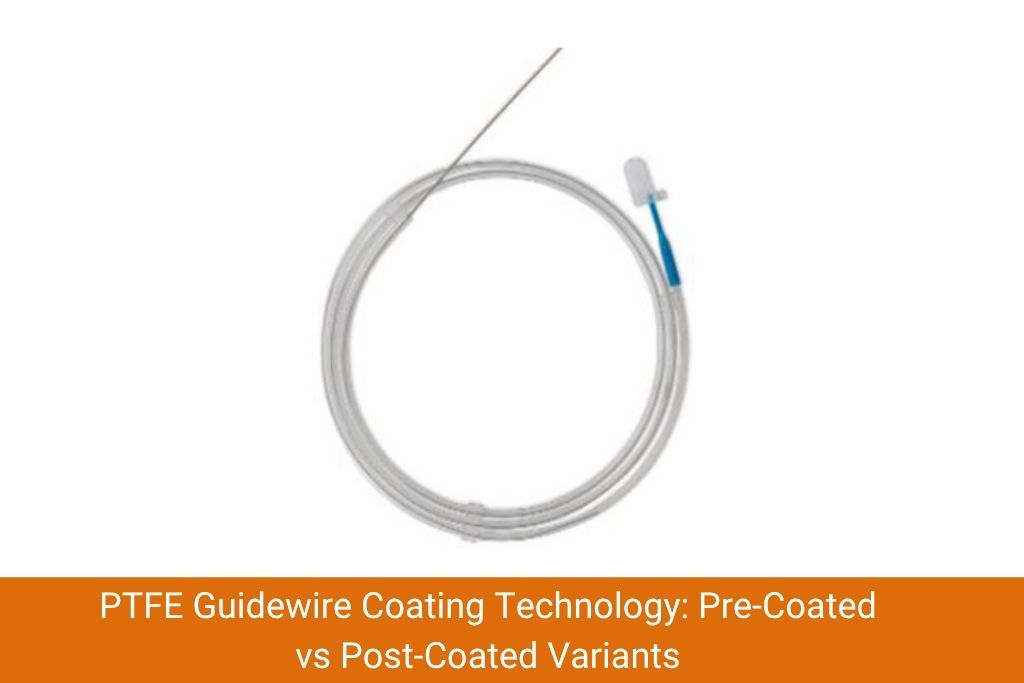
Selecting a reputable PTFE Coated Guidewire Manufacturer is critical for consistent clinical performance. Top-tier manufacturers comply with ISO 10555, ISO 11070 and FDA quality system regulations governing intravascular catheter guidewires. Their production processes include mandrel winding controls, tensile strength testing, kink-resistance evaluation and surface lubricity verification using standardized friction coefficient measurements. Leading manufacturers also conduct biocompatibility testing per ISO 10993 to confirm that coating materials do not cause cytotoxicity, sensitization or hemolysis when introduced into the bloodstream. Post Coated PTFE Guidewire Manufacturer facilities additionally validate their coating adhesion through peel-force testing under wet conditions simulating real intravascular environments. These benchmarks distinguish clinical-grade guidewires from lower-quality alternatives that may shed particles or lose lubricity mid-procedure.
 Email Us!
Imaging-guided placement of dialysis catheters frequently requires guidewires with defined radiopacity and precise tip flexibility. The Angiography PTFE Coated Guidewires combines a PTFE surface layer with a radiopaque distal coil or core, allowing real-time fluoroscopic visualization while maintaining low friction. During procedures such as tunneled hemodialysis catheter insertion or fistulagrams, interventionists rely on these wires to navigate from the access site to the target vessel without losing trackability. The slick PTFE surface prevents the wire from binding within the introducer sheath or catheter lumen, which is especially important when exchanging catheters over the wire during revision procedures. Fluoroscopic visibility combined with frictionless movement makes the angiography ptfe coated guidewire a preferred choice in interventional radiology suites performing dialysis access maintenance.
Our Other Product
Blood Line Set for Hemodialysis | Dialysis CathetersNot every ptfe guide wire configuration suits every dialysis scenario. Key selection parameters include wire diameter, tip shape, working length and core material. For central venous catheter placements, a J-tip ptfe coated guide wire minimizes the risk of subintimal wire passage by conforming to vessel curvature rather than piercing the vessel wall. For AV fistula or graft interventions, stiffer-core wires with PTFE coating provide better pushability through stenotic segments while the coating protects the endothelium from abrasion. Interventionists should also verify wire compatibility with the intended catheter inner diameter to prevent friction-induced catheter deformation during advancement.
Procurement decisions for dialysis facilities extend beyond product performance – supply chain reliability and regulatory compliance matter equally. A qualified ptfe coated guidewire supplier maintains consistent inventory of multiple wire specifications, offers batch traceability documentation and holds CE marking, FDA 510(k) clearance or equivalent regulatory approvals for their product lines. Long-term supplier relationships also provide access to custom wire specifications for high-volume centers with unique procedural requirements. Healthcare facilities evaluating a new supplier should request product samples for in-house performance trials, review published clinical data or validation studies and confirm that the supplier’s quality management system holds ISO 13485 certification. Transparent lead times and responsive technical support further distinguish reliable suppliers in the medical device market.
 Call Now!
The clinical case for ptfe coated guidewires in dialysis access procedures rests on measurable patient safety and efficiency gains. Studies across interventional nephrology consistently show that lubricious guidewire coatings reduce procedure time, decrease fluoroscopy exposure and lower the incidence of vessel trauma-related complications such as dissection or hematoma. For dialysis-dependent patients who undergo repeated access procedures throughout their treatment course, minimizing each procedural risk is medically significant. The reduced friction offered by a PTFE guidewire also lessens the physical effort required by the operator, decreasing the chance of inadvertent wire advancement beyond the intended target – a critical safety feature when working near the right atrium during central venous catheter placement. Enhanced torque response further helps operators correct wire position under fluoroscopic guidance without excessive manipulation.
Our Other Product
Bone Marrow Biopsy NeedlePTFE coated guidewires represent a foundational technology in safe and accurate dialysis catheter placement, combining surface lubricity, biocompatibility and precise navigational control into a single instrument. Whether clinical teams choose a pre-coated PTFE guidewire for integrated durability or a post coated variant for application-specific flexibility, the performance advantages over uncoated alternatives are well-established. Partnering with a credentialed PTFE Coated Guidewire Manufacturer and a reliable ptfe coated guidewire supplier ensures consistent access to devices that meet the clinical and regulatory standards demanded by modern interventional dialysis practice. As vascular access procedures continue to grow in complexity, the role of quality-engineered ptfe guidewires in protecting patient safety and improving procedural efficiency will only become more essential.
The PTFE coating dramatically reduces surface friction, allowing smoother catheter advancement through vessels with less trauma and shorter procedure times.
Pre-coated wires integrate PTFE during manufacturing for superior durability, while post coated wires receive surface treatment after forming, offering greater production flexibility.
Facilities should verify ISO 13485 certification, FDA/CE regulatory clearances, batch traceability, product range and the supplier's responsiveness to custom specifications.
It is indicated during fluoroscopy-guided procedures such as tunneled catheter insertion or dialysis access revision where real-time wire visualization is clinically required.
We are recognized as one of the leading manufacturers, exporters, and suppliers of a diverse range of high-quality medical devices in India. Our products, including Interventional Cardiology, Nephrology, Anaesthesia, General Consumables, and Critical Care Accessories, are designed to meet the highest standards of excellence, ensuring reliable performance and patient care.
A – 8, Kuraopokpi industrial Estate,
Thoubal (kakching) Imphal,
Manipur – 795001, India.