Our Other Product
Biopsy Gun
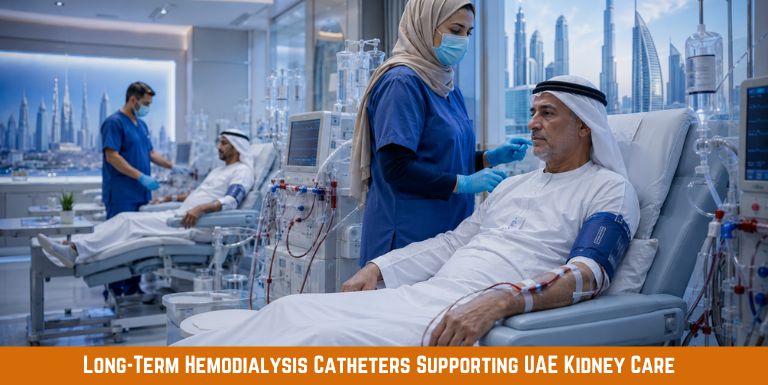
Kidney disease is rapidly becoming one of the most significant public health challenges across the UAE. With a rising prevalence of diabetes, hypertension and obesity – conditions deeply linked to chronic kidney disease (CKD) – the demand for reliable renal replacement therapy has never been greater. In this context, long-term hemodialysis has emerged as a cornerstone of kidney care management across the Emirates, particularly in cities like Dubai, Abu Dhabi, Sharjah and Ras Al Khaimah.
Long-term hemodialysis is the most widely used form of renal replacement therapy for patients with end-stage renal disease (ESRD) in the UAE. According to regional nephrology data, the UAE has one of the highest per-capita rates of ESRD in the Middle East, largely driven by the high incidence of Type 2 diabetes among both the national and expatriate population. As a result, public hospitals, private dialysis centers and specialty nephrology units across Abu Dhabi and Dubai have scaled up their infrastructure significantly to accommodate growing patient volumes.
Hemodialysis works by circulating a patient’s blood through a dialyzer that filters waste and excess fluids. For this process to function effectively, a reliable vascular access point is critical – and this is where the long-term dialysis catheter plays a defining role in clinical outcomes.
Our Other Product
Biopsy GunA long-term dialysis catheter, also referred to as a tunneled cuffed catheter, is surgically placed into a large central vein – most commonly the internal jugular or femoral vein. Unlike short-term or temporary catheters used in emergency settings, these devices are designed to remain in place for months or even years, offering a stable and consistent access route for patients on regular dialysis schedules.
Across nephrology departments in Sharjah, Ajman, Fujairah and Umm Al Quwain, tunneled catheters have become an essential part of managing patients who are not suitable candidates for arteriovenous (AV) fistulas or grafts – which remains a significant proportion of the dialysis population, especially among elderly patients and those with advanced vascular disease.
Long-term hemodialysis catheters are engineered with features that directly address the clinical demands of a diverse, high-risk patient population. The polyurethane or silicone construction of these catheters ensures biocompatibility, reducing the risk of infection and thrombosis – two major complications that can disrupt dialysis schedules and lead to hospitalisation.
The dual-lumen design enables simultaneous blood withdrawal and return, maintaining adequate flow rates essential for effective dialysis sessions. Many models also incorporate antimicrobial coatings or heparin-bonded surfaces, which have proven effective in reducing catheter-related bloodstream infections (CRBSIs) – a complication of particular concern in the UAE, where dialysis patients often attend sessions three times per week across extended periods.
Hospitals affiliated with the Dubai Health Authority (DHA) and Abu Dhabi Health Services Company (SEHA) have increasingly integrated these advanced catheter systems into their standard vascular access protocols to improve patient safety and reduce catheter replacement frequency.
Our Other Product
Short Term Hemodialysis CatheterSelecting a trustworthy long-term hemodialysis catheters manufacturer is a critical procurement decision for UAE healthcare institutions. Nephrology departments and hospital supply chains actively seek manufacturers whose products comply with international regulatory standards such as ISO 13485 certification and CE marking, alongside UAE’s own MOHAP (Ministry of Health and Prevention) device registration requirements.
A qualified manufacturer must demonstrate precision engineering, consistent quality control and the ability to supply devices that withstand the high-frequency use patterns common in UAE dialysis units. The ability to offer catheter variants that accommodate different patient anatomies – pediatric, adult and obese patient profiles – is another factor that influences procurement choices across major health networks in the Emirates.
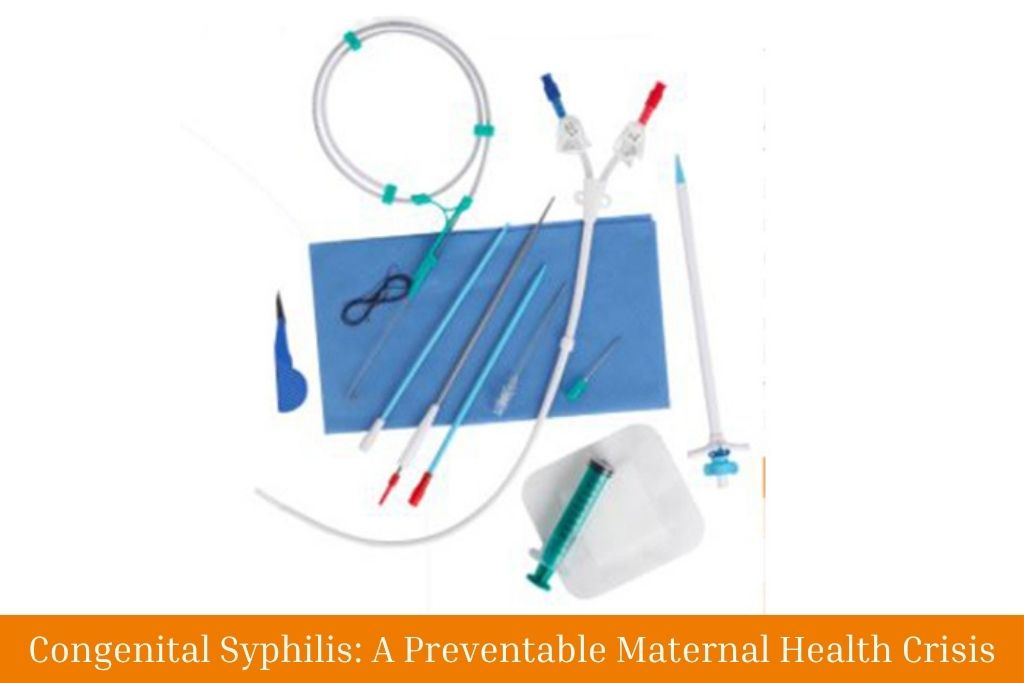
The acute long-term dialysis catheter kit is a packaged solution that enables nephrologists and interventional radiologists to efficiently place tunneled dialysis catheters in both elective and urgent clinical settings. These kits typically contain the catheter, dilators, a guide wire, a peel-away introducer sheath, a tunneling device and all necessary accessories – ensuring procedural completeness without requiring assembly of individual components.
In UAE hospitals, particularly in emergency nephrology scenarios such as acute kidney injury (AKI) requiring bridge therapy or in cases where a patient’s AV fistula has failed and dialysis must continue without interruption, these kits play an operationally vital role. Their standardised packaging also supports infection control protocols mandated by the UAE’s National Guidelines for Healthcare-Associated Infection Prevention.
A long-term dialysis catheter kit simplifies the procedural workflow by consolidating all placement components into a single sterile package. This is particularly beneficial for dialysis centers in secondary cities such as Al Ain, Ras Al Khaimah and Fujairah, where the availability of specialised vascular access equipment may be less consistent compared to major urban centers.
The standardisation offered by these kits also reduces procedural variability, minimises the risk of contamination from multi-component handling and shortens the time required for catheter insertion – a meaningful advantage in settings where operating theatre time is constrained. Healthcare institutions procuring these kits evaluate factors including catheter gauge compatibility, sheath size range and the manufacturers documented clinical validation data.
Our Other Product
Blood Line Set for Hemodialysis CathetersFor the UAE healthcare sector, partnering with a reliable long-term hemodialysis catheter supplier is as important as the device selection itself. Supplier relationships influence product availability, delivery timelines, technical training for clinical staff and post-market surveillance compliance – all of which directly affect patient care continuity.
Suppliers operating in the UAE must be registered with the relevant authorities and capable of navigating the country’s regulatory import framework for Class II and Class III medical devices. Given the UAE’s position as a regional healthcare hub with medical tourism drawing patients from across the GCC, Egypt, India and East Africa, the supply chain for hemodialysis consumables must be both resilient and scalable.
Several global manufacturers have established regional distribution hubs in Dubai’s Jebel Ali Free Zone (JAFZA) and Abu Dhabi’s industrial zones to serve the Middle East and North Africa (MENA) market efficiently, ensuring consistent catheter availability even during periods of elevated demand.
 Call Us Now!
The integration of advanced long-term hemodialysis catheters into UAE’s renal care framework reflects the country’s broader commitment to delivering world-class medical outcomes for its growing ESRD population. From the bustling dialysis units of Dubai and Abu Dhabi to the expanding healthcare networks of Ras Al Khaimah and Fujairah, reliable vascular access solutions remain fundamental to patient survival and quality of life. As demand for renal replacement therapy continues to grow, collaboration between qualified manufacturers, certified suppliers and healthcare institutions will be key to sustaining the standard of kidney care the UAE has set for the region.
We are recognized as one of the leading manufacturers, exporters, and suppliers of a diverse range of high-quality medical devices in India. Our products, including Interventional Cardiology, Nephrology, Anaesthesia, General Consumables, and Critical Care Accessories, are designed to meet the highest standards of excellence, ensuring reliable performance and patient care.
A – 8, Kuraopokpi industrial Estate,
Thoubal (kakching) Imphal,
Manipur – 795001, India.