Read Our Article
The Central Venous Catheter Kit: A Vital Tool for Central Line Placement and Vascular Access
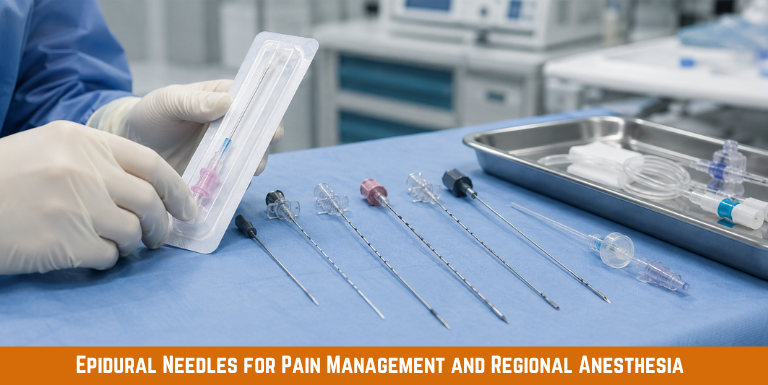
An epidural needle is a specialized hollow needle used to access the epidural space, the area surrounding the spinal cord, for the purpose of delivering anesthetic or analgesic medication. It plays a central role in labor pain management, surgical anesthesia, and chronic pain treatment, making it one of the most widely used devices in anesthesiology departments and labor wards worldwide.
Because the epidural space sits close to the spinal cord and its surrounding membranes, needle design directly affects both the safety and comfort of the procedure. Hospitals and distributors sourcing epidural needles need to understand the different tip designs, sizing conventions, and quality standards that influence clinical outcomes.
During an epidural procedure, the anesthesiologist advances the needle through the skin and ligaments of the lower back until it reaches the epidural space, most often using a technique called loss of resistance to confirm correct placement. Once positioned, a catheter can be threaded through the needle and left in place for continuous medication delivery, or a single dose can be administered directly through the needle itself.
Precision matters at every step. The needle must be rigid enough to pass through tough ligament tissue without bending, yet the tip design must minimize the risk of accidentally puncturing the dura mater, the membrane that contains cerebrospinal fluid.
Most modern epidural needles use a Tuohy tip, a curved, blunt edged design that directs the catheter smoothly into the epidural space rather than toward the dura. This curved tip reduces the likelihood of accidental dural puncture compared to straight, sharp tipped needles used in earlier eras of regional anesthesia.
The needle hub is typically marked with directional wings or a flat indicator that allows the anesthesiologist to feel and confirm the orientation of the tip’s curve without needing to look at the needle directly, which is particularly useful during procedures performed with the patient positioned to one side.
Epidural needles are commonly available in gauges ranging from 16 to 18, a sizing convention where a lower gauge number indicates a larger needle diameter. Larger bore needles allow smoother passage of the epidural catheter, while length is selected based on patient body habitus, since a needle that is too short may fail to reach the epidural space in a larger patient.
Depth markings along the needle shaft, typically at one centimeter intervals, allow the clinician to track how far the needle has advanced, providing an additional safety reference alongside the loss of resistance technique used to confirm space entry.
Many hospitals now purchase epidural needles as part of a complete procedure kit that includes the needle, an epidural catheter, a loss of resistance syringe, a bacterial filter, and connectors, allowing the full procedure to be performed with components validated to work together. This approach reduces setup time in busy labor wards and operating theaters and helps standardize technique across different anesthesia providers.
Combination kits that pair an epidural needle with a spinal needle, known as combined spinal epidural sets, are increasingly used for labor analgesia because they allow rapid onset spinal anesthesia alongside the sustained relief provided by an epidural catheter.
Hospitals purchasing at scale for maternity wards often standardize on a single kit configuration across the department to reduce training variability among rotating anesthesia staff and to simplify inventory management, particularly in facilities handling a high volume of deliveries each month.
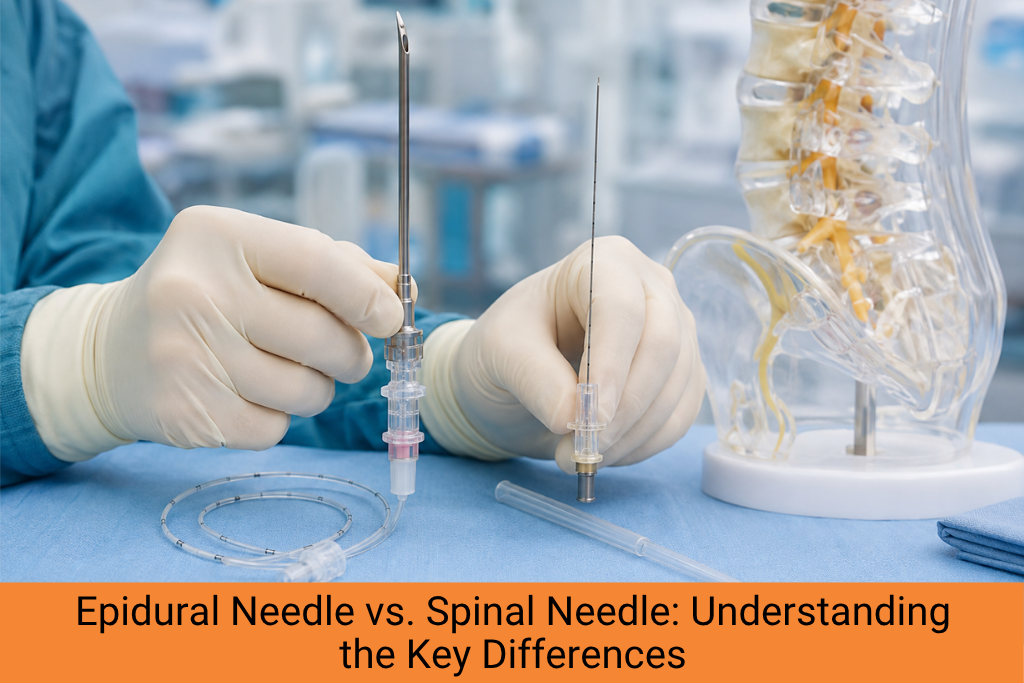
Although both are used in regional anesthesia of the lower back, an epidural needle and a spinal needle serve different purposes and are built differently. A spinal needle is thinner, sharper, and designed to pass through the epidural space into the subarachnoid space to deliver a single dose of anesthetic directly into the cerebrospinal fluid, producing a rapid, dense block.
An epidural needle is larger in diameter, blunt tipped, and designed to stop at the epidural space rather than continue further, allowing a catheter to be threaded through it for continuous or repeated dosing over hours or days. Understanding this distinction helps procurement teams avoid stocking the wrong device for a given anesthesia protocol, particularly in labor wards where both techniques may be used depending on clinical circumstances.
Our Other Product
Long Term Hemodialysis Catheters KitEpidural needles are supplied as sterile, single use devices with a defined shelf life printed on the packaging, and hospitals need to manage stock rotation carefully in departments where usage volume can vary month to month. Packaging is generally double sealed, with an outer pouch that can be opened onto a sterile field without contaminating the inner sterile barrier.
Staff are trained to inspect packaging integrity before opening, checking for any tears, moisture staining, or expired dating, since a compromised seal at any point in the supply chain can affect sterility regardless of how the device was originally manufactured. Distributors that maintain stable, climate controlled warehousing help preserve packaging integrity between manufacture and final hospital use, which matters over long international shipping routes.
The most closely monitored complications associated with epidural needle use include accidental dural puncture, which can cause a post dural puncture headache, and epidural hematoma, a rare but serious complication more common in patients on anticoagulant therapy. Professional anesthesiology societies publish detailed guidance on patient screening, needle technique, and coagulation status assessment to reduce these risks.
Needle material and finish also play a role in patient comfort. A smooth, consistently ground bevel reduces tissue trauma on insertion, while radiopaque or echogenic markings on some modern designs assist with ultrasound guided epidural placement, a technique gaining adoption for patients with difficult spinal anatomy.
Epidural needles are manufactured under an ISO 13485 certified quality management system and tested against needle specific standards covering sharpness, bend resistance, and biocompatibility of patient contacting surfaces. Products intended for the European market carry CE marking, and those entering the United States generally follow the Food and Drug Administration’s premarket notification pathway.
Hospitals and distributors sourcing for government tenders should request documentation of these certifications along with sterility validation records, since many public sector procurement processes across the Middle East, Africa, and Asia require this paperwork as part of vendor approval.
 Drop Us an Email!
St Stone Medical Devices Pvt Ltd manufactures epidural needles in multiple gauges alongside complete epidural and combined spinal epidural kits, forming part of its broader anesthesia and critical care consumables range. The company’s facility operates under ISO 13485 and WHO GMP certification and exports to hospitals and distributors across multiple countries.
Anesthesia departments, hospital procurement teams, and distributors seeking a dependable epidural needle manufacturer with export documentation ready for tender submissions can contact St Stone Medical Devices for specifications, samples, and bulk pricing.
The company also offers customized kit configurations, allowing hospitals to specify filter type, catheter length, and connector style to match existing departmental protocols rather than adapting local practice to a fixed, one size fits all kit.
Distributors representing St Stone Medical Devices in their local market receive access to detailed product literature and compliance documentation, which speeds up hospital vendor registration and tender submission timelines significantly compared to sourcing paperwork after an order has already been placed.
Epidural needles are a precision instrument where tip design, gauge, and manufacturing quality directly influence both procedural success and patient safety. Hospitals selecting a supplier should evaluate Tuohy tip consistency, depth marking accuracy, and available kit configurations alongside documented regulatory certification.
For anesthesia departments and distributors seeking a reliable epidural needle and kit manufacturer, St Stone Medical Devices offers a certified, export ready range built to support safe regional anesthesia practice.
We are recognized as one of the leading manufacturers, exporters, and suppliers of a diverse range of high-quality medical devices in India. Our products, including Interventional Cardiology, Nephrology, Anaesthesia, General Consumables, and Critical Care Accessories, are designed to meet the highest standards of excellence, ensuring reliable performance and patient care.
A – 8, Kuraopokpi industrial Estate,
Thoubal (kakching) Imphal,
Manipur – 795001, India.