Read Our Article
Choosing the Right Spinal Needle: A Guide for Healthcare Professionals
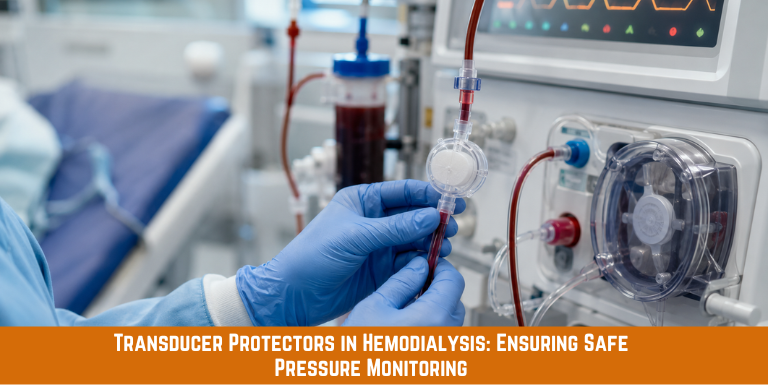
During hemodialysis, blood pressure within the extracorporeal circuit is continuously monitored to detect early signs of clotting, line disconnection, or access complications. This monitoring relies on a pressure transducer connected to the dialysis machine, and a transducer protector, sometimes marketed as a filterset, sits between the blood circuit and the machine to prevent blood or fluid from reaching and damaging the sensitive transducer.
Without an effective barrier at this connection point, dialysis centers face both equipment damage risk and, more importantly, a potential pathway for cross contamination between patients sharing the same machine across different shifts.
A transducer protector is typically a small housing containing a hydrophobic membrane filter that allows air pressure to pass through and be sensed by the machine’s transducer while physically blocking blood, plasma, and other fluids from crossing to the machine side of the connection. This membrane is engineered to remain effective even under the pressure fluctuations that occur during a typical dialysis session.
The device connects at one end to the blood line’s pressure monitoring port and at the other to the dialysis machine’s transducer line, forming a sealed pathway that protects the machine while still allowing accurate, real time pressure readings throughout treatment.
 Call Us Now!
Public health guidance on dialysis safety, including recommendations referenced by national health authorities in multiple countries, identifies transducer protector failure as a documented pathway for bloodborne pathogen transmission between patients using shared hemodialysis machines. When a membrane fails or is bypassed, blood can travel back through the pressure line into the machine’s internal transducer housing, which is extremely difficult to clean and disinfect between patients.
This is why dialysis centers are generally advised to use a new transducer protector for every treatment session, per patient, rather than reusing or sharing these components, and to inspect the membrane for signs of wetting or blood staining immediately after each session as a routine safety check.
Transducer protectors are generally designed to be compatible with specific dialysis machine models, since connector geometry and pressure line specifications vary between manufacturers. Dialysis centers should confirm compatibility with their installed equipment before switching suppliers, and should request documentation confirming the membrane’s fluid barrier performance under standard dialysis operating pressures.
Some designs incorporate a secondary safety feature, such as a color change indicator or a visibly wetted membrane, that alerts staff immediately if fluid has breached the barrier, adding a layer of protection beyond the membrane itself.
Most dialysis units incorporate transducer protector inspection into their pre and post session checklists, alongside checks of the blood lines, dialyzer, and vascular access site. Staff training typically covers correct connection technique, since an improperly seated transducer protector can allow air or fluid bypass even if the membrane itself is functioning correctly.
Centers running high patient volumes on shared machines throughout the day place particular emphasis on this step, since a single lapse in transducer protector use across multiple shifts represents a meaningful cumulative infection control risk across the patient population served by that machine.
Staff are trained to watch for specific warning signs during a dialysis session that may indicate a transducer protector has been compromised. These include visible moisture or blood tracking along the pressure line toward the machine side of the connection, unusual or erratic pressure readings on the monitor that do not match the clinical picture, or an audible alarm pattern inconsistent with a simple access issue.
When any of these signs appear, protocol generally calls for immediately stopping treatment, replacing the transducer protector, and having biomedical engineering staff inspect the machine’s internal transducer housing before the equipment is returned to service for another patient. Documenting these events supports the center’s broader infection control surveillance and helps identify whether a particular batch or supplier requires closer scrutiny.
Our Other Product
Long Term Hemodialysis Catheters KitBecause transducer protectors are a per session, per patient consumable, their unit cost multiplied across a center’s daily treatment volume represents a meaningful recurring expense. Centers sometimes face pressure to reduce this cost by extending use beyond a single session, a practice that directly conflicts with infection control guidance and introduces liability risk that generally outweighs any short term savings.
A more sustainable approach to cost management involves negotiating volume based pricing with a manufacturer capable of consistent, large scale supply, rather than compromising on session by session replacement. Centers that standardize on a single, well documented supplier also reduce the administrative burden of managing multiple compatibility specifications across different transducer protector brands.
Transducer protectors are manufactured under an ISO 13485 certified quality management system, with membrane fluid barrier performance and biocompatibility tested against recognized standards for dialysis accessories. Products intended for the European market carry CE marking, and centers sourcing for government tenders should request documentation confirming batch specific quality testing and sterilization validation.
Given the direct link between transducer protector performance and patient safety, many dialysis center accreditation bodies now include verification of correct transducer protector use as part of their routine infection control audits.
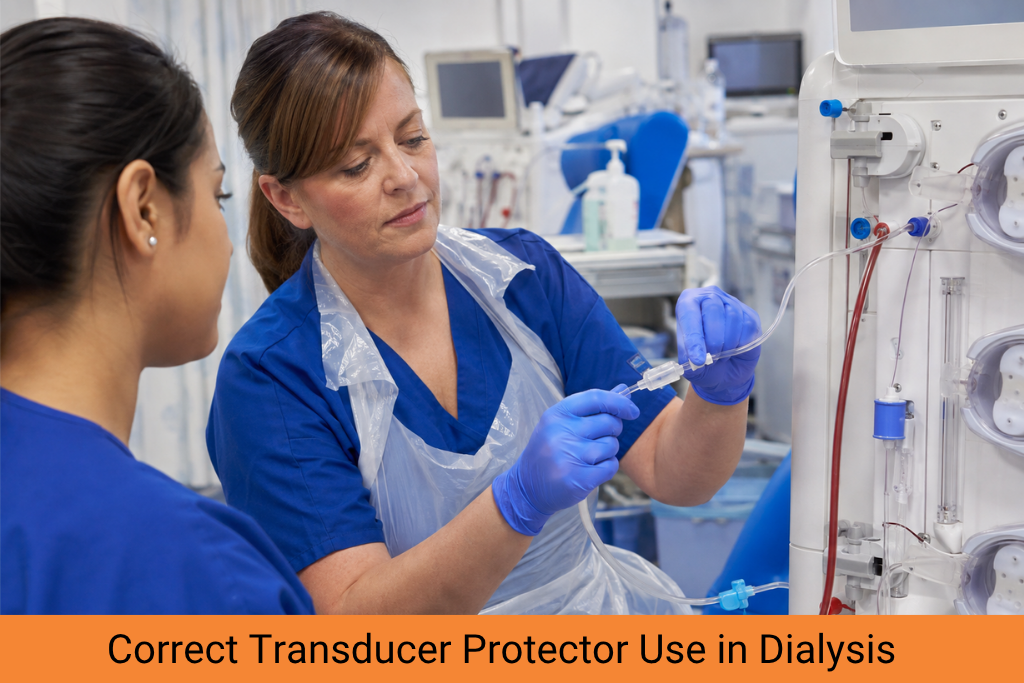
Even a well designed transducer protector depends on correct handling to function as intended. Staff training typically covers the correct orientation for connection, since some designs are directional and will not seal properly if connected backward, as well as the importance of avoiding excess tension on the connecting tubing that could loosen the seal during a session.
New staff onboarding at many dialysis centers now includes a hands on demonstration of transducer protector connection alongside the broader machine setup checklist, reinforced with periodic competency checks. Centers that treat this as a standing training topic, rather than a one time orientation item, tend to maintain more consistent compliance across rotating shifts and agency staff who may be less familiar with a particular machine model.
Centers running multiple shifts across many machines each day depend on an uninterrupted supply of transducer protectors, since running short mid day can force difficult choices between delaying treatment and compromising on safety protocol. Reliable manufacturers support this need with consistent batch quality and predictable lead times, allowing centers to maintain buffer stock without overordering.
For distributors serving multiple dialysis centers across a region, standardizing on a manufacturer that can scale production to match seasonal demand fluctuations, such as periods of higher patient volume, reduces the operational risk of stockouts that could otherwise disrupt treatment schedules across an entire network of clinics.
Our Other Product
Long Term Hemodialysis Catheters KitSt Stone Medical Devices Pvt Ltd manufactures transducer protectors and filtersets alongside its wider dialysis consumables range, including blood lines, mini caps, and hemodialysis catheter kits, produced at an ISO 13485 and WHO GMP certified facility that exports to dialysis centers and distributors worldwide.
Dialysis centers and distributors seeking a dependable transducer protector supplier with export documentation and consistent batch quality can contact St Stone Medical Devices for product specifications, compatibility information, and bulk pricing.
Transducer protectors and filtersets are a small but critical safeguard in the hemodialysis circuit, protecting both machine integrity and patient safety by preventing blood from reaching shared equipment. Dialysis centers should treat these devices as a routine, per patient consumable rather than a reusable accessory, and should select suppliers who can document membrane performance and sterilization quality.
For dialysis centers and distributors seeking a reliable transducer protector manufacturer, St Stone Medical Devices offers a certified, export ready range built to support safe, consistent hemodialysis practice.
We are recognized as one of the leading manufacturers, exporters, and suppliers of a diverse range of high-quality medical devices in India. Our products, including Interventional Cardiology, Nephrology, Anaesthesia, General Consumables, and Critical Care Accessories, are designed to meet the highest standards of excellence, ensuring reliable performance and patient care.
A – 8, Kuraopokpi industrial Estate,
Thoubal (kakching) Imphal,
Manipur – 795001, India.