
Key Features of Short-Term Dialysis Catheter Kits


Short-term hemodialysis catheters are crucial medical devices used in emergency or acute care settings for patients experiencing kidney failure. These catheters provide rapid access to the central venous system, facilitating the necessary hemodialysis treatment to remove waste products, excess fluids and maintain electrolyte balance. Acute Dialysis Catheter Kits are specifically designed for this purpose, ensuring a safe and efficient procedure while minimizing complications.

Understanding the key features of these kits is essential for medical professionals, healthcare institutions and device distributors. High-quality Hemodialysis catheter kits contribute significantly to patient safety, comfort and treatment efficacy during short-term dialysis sessions. This article delves into the key features of acute dialysis catheter kits, exploring how these components enhance the dialysis process and improve patient care.

The Importance of Short-Term Dialysis Catheters in Acute Care

Short Term Hemodialysis Catheters are vital in providing quick and reliable vascular access for patients undergoing dialysis. Unlike long-term dialysis catheters, which are designed for extended use, short-term dialysis catheters are typically employed in acute settings where patients require immediate dialysis access. These catheters are commonly used in hospital emergency departments, intensive care units and other critical care environments.

The central venous catheter for dialysis allows healthcare providers to efficiently perform hemodialysis when other vascular access methods, such as arteriovenous (AV) fistulas or grafts, are not yet suitable or available. Short-Term Hemodialysis Catheters may be inserted temporarily until more permanent solutions are viable, making them indispensable for managing acute kidney injury or end-stage renal disease (ESRD) in emergency situations.

Given their temporary nature, these catheters need to be easy to insert, effective in delivering treatment and secure to reduce the risk of complications such as infections or catheter displacement. The short-term dialysis catheter kit contains all the necessary components to facilitate these objectives.
Key Components of Short-Term Dialysis Catheter Kits

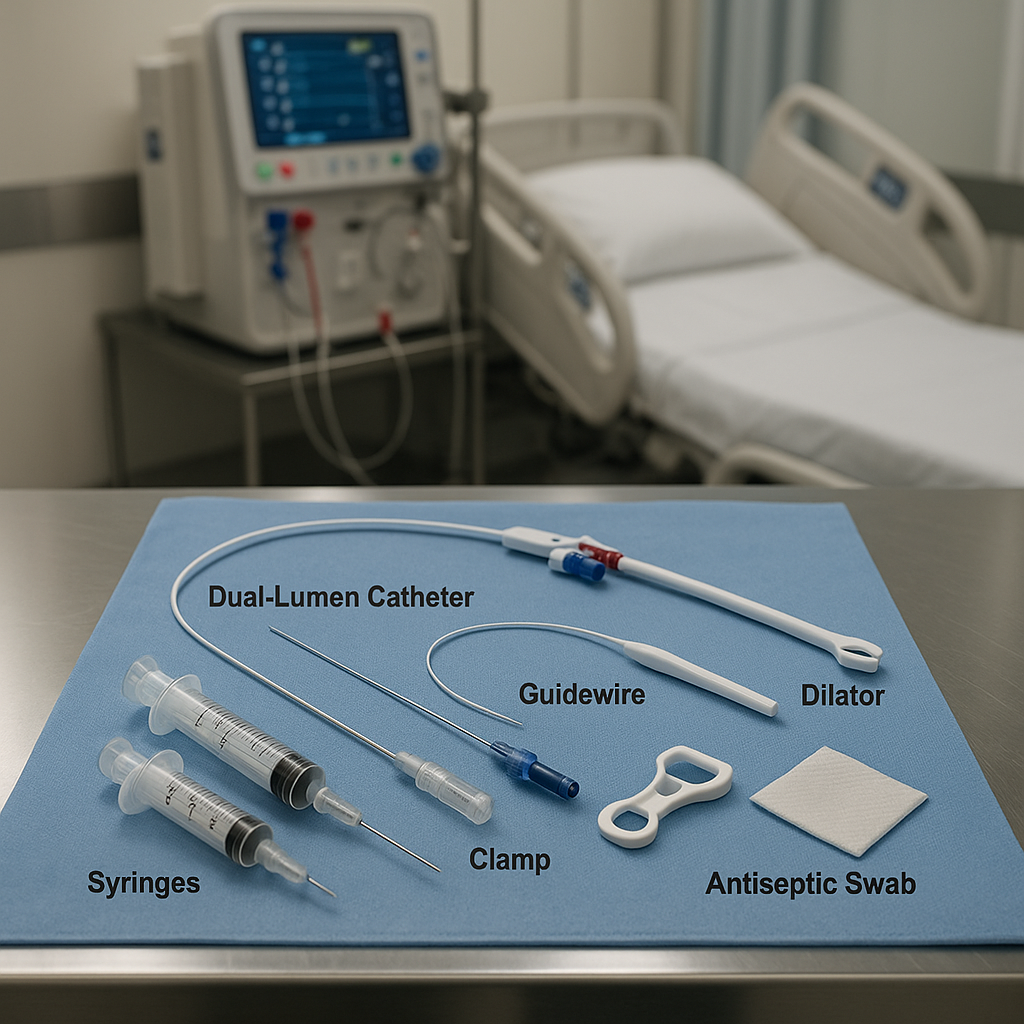
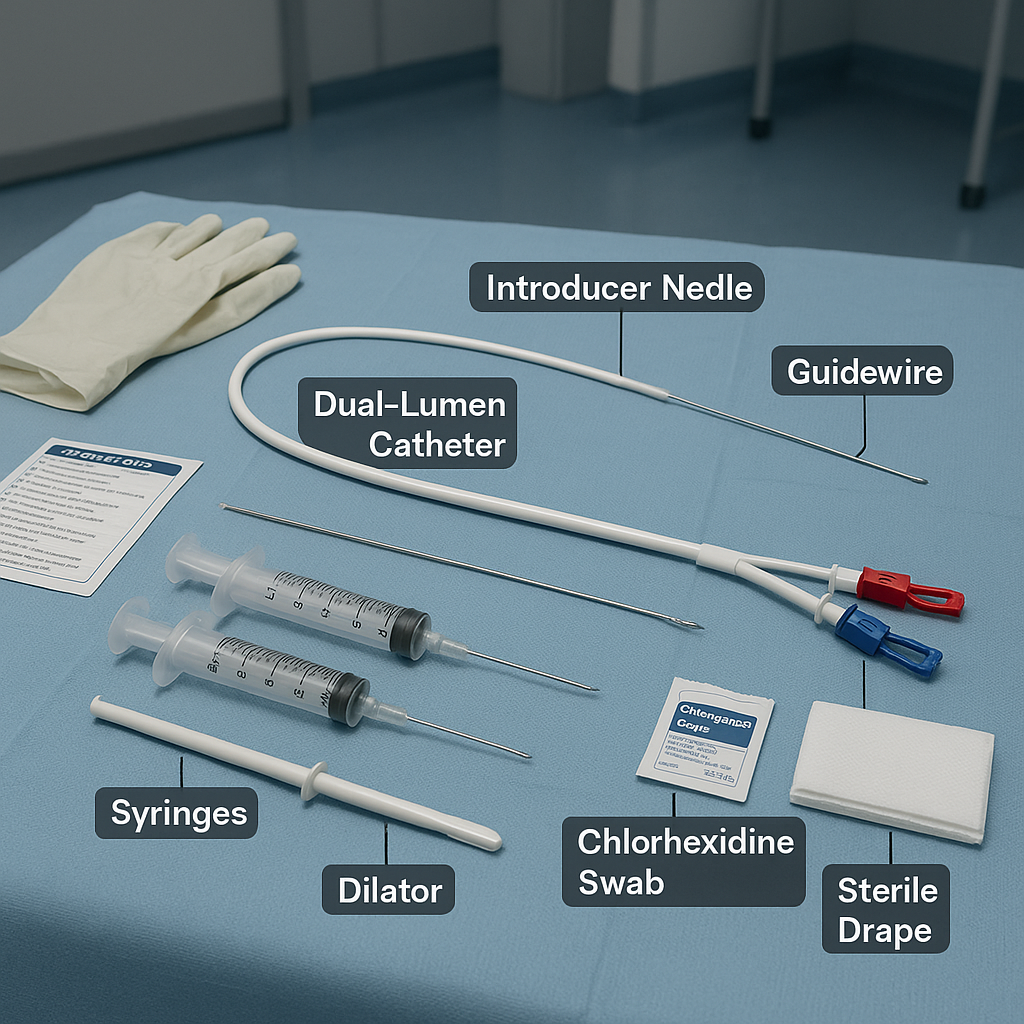
A short term hemodialysis catheter kit includes a variety of components that are designed to facilitate the smooth insertion and secure use of the catheter for short-term dialysis. The following key components are typically found in a short-term dialysis catheter kit:

  • Polyurethane Catheter: The catheter is typically made from medical-grade polyurethane, which is durable, flexible and biocompatible. Polyurethane’s smooth surface minimizes the risk of thrombosis and irritation within the vein, promoting a safe dialysis process. Depending on the catheter design, it can be either straight or curve-tipped to suit different patient anatomies and insertion techniques.
  • Nitinol Core Guidewire: The guidewire is used to help position and secure the catheter in the correct location within the central venous system. The nitinol core provides strength and flexibility, ensuring that the guidewire can navigate through veins and assist with catheter insertion without causing damage to the vessel walls.
  • Introducer Needle: This needle, typically an 18-gauge, 7cm device, is used to puncture the vein and create an initial access point for the catheter. The introducer needle is designed for quick and precise insertion, which is crucial in emergency situations where time is of the essence.
  • Guiding Syringe: The guiding syringe is used to flush the catheter during insertion, ensuring that it is free of air bubbles and correctly placed in the venous system. It also helps maintain the patency of the catheter by allowing for quick interventions during the insertion process.
  • Vessel Dilators: Vessel dilators are used to gently expand the vein, facilitating easier catheter insertion. These are critical when working with smaller veins or when precise catheter placement is needed for effective dialysis treatment.
  • Scalpel #11: A sterile scalpel is included for making an incision in the skin to access the vein. The #11 scalpel is commonly used for this purpose, ensuring a controlled and accurate incision that allows for safe catheter insertion.
  • Injection Cap and Heparin Cap: The injection cap is used to maintain sterility and prevent contamination of the catheter lumen. The heparin cap helps prevent clot formation within the catheter, ensuring that it remains patent throughout the dialysis session.
  • Drape Sheet and Patient Identification Sticker: A sterile drape sheet is included to maintain a sterile field during the insertion process, while the patient identification sticker ensures that the catheter is appropriately labeled for patient safety and tracking purposes.

Advantages of Using Short-Term Dialysis Catheter Kits

The use of acute dialysis catheter kits offers several key advantages in clinical settings, both for patients and healthcare providers. These benefits include:

  • Efficiency and Speed: Short-term hemodialysis catheters are designed for quick and efficient insertion, allowing healthcare providers to address acute kidney failure or other dialysis needs without delay. The complete kit, containing all necessary components, minimizes setup time and facilitates a smoother procedure.
  • Reduced Risk of Complications: A well-designed short-term dialysis catheter kit reduces the likelihood of complications such as infection, catheter malposition or thrombosis. The inclusion of features like Dacron cuffs and heparin caps ensures that the catheter remains secure and functional, reducing the need for frequent adjustments or replacements.
  • Patient Comfort: The materials used in short term dialysis catheters, such as polyurethane, are flexible and biocompatible, minimizing discomfort and irritation during the insertion and treatment processes. Moreover, the streamlined design of the acute dialysis catheter kit ensures that the procedure is as minimally invasive as possible, improving overall patient comfort.
  • Versatility: Short-term dialysis catheters can be used in a variety of clinical settings, from emergency rooms to intensive care units, for patients experiencing acute kidney failure or those who cannot undergo other forms of vascular access. The central venous catheter for dialysis provides a versatile solution for a broad range of patients with diverse needs.
  • Reduced Risk of Infection: The use of high-quality, sterile components in short-term dialysis catheter kits significantly reduces the risk of infections. The inclusion of a sterile drape sheet and other components designed to maintain sterility ensures that the procedure is conducted in a controlled, hygienic manner, minimizing contamination during catheter insertion.

Best Practices for Short-Term Dialysis Catheter Use

To maximize the benefits of short-term dialysis catheters, healthcare providers should adhere to best practices for insertion and maintenance. These include:
  • Proper Insertion Technique: Ensure that the catheter is inserted in the correct location, following sterile procedures to prevent infections and complications. The use of a guidewire and vessel dilators can facilitate precise and safe insertion.
  • Sterile Handling: Use sterile components throughout the procedure, including gloves, drapes and syringes, to minimize the risk of infection and ensure the safety of both the patient and healthcare provider.
  • Regular Monitoring: Once the catheter is in place, continuous monitoring is necessary to ensure that it remains functional and free from complications. This includes regular checks for infection, clotting and proper blood flow.

Conclusion

Short-term hemodialysis catheters are essential tools for managing patients with acute kidney failure or those who need immediate dialysis access. The acute dialysis catheter kits provide everything necessary for the safe, efficient and comfortable insertion of these catheters. With components designed to minimize complications, reduce the risk of infection and enhance patient comfort, these kits are integral to providing high-quality care in emergency settings.

For healthcare providers, understanding the key features and benefits of short-term dialysis catheter kits ensures that they can offer optimal care to patients in need of urgent dialysis treatment. By focusing on patient safety, ease of use and efficiency, these catheters remain an essential component of dialysis therapy in acute care environments.

Table of ContentsToggle Table of Content