Read Our Article
How Long-Term Hemodialysis Catheters are Addressing Kidney Disease in the UAE?
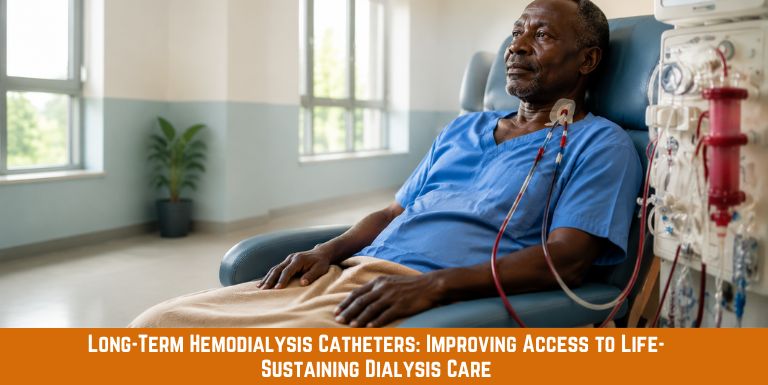
Kidney disease is quietly becoming one of the most pressing public health challenges in Sub-Saharan Africa. From Lagos to Nairobi, Accra to Dar es Salaam, the burden of end-stage renal disease (ESRD) is growing faster than healthcare infrastructure can accommodate. In this environment, long term hemodialysis catheters are emerging as a critical bridge – enabling life-sustaining dialysis therapy in settings where permanent vascular access options remain limited or surgically inaccessible.
Across Sub-Saharan Africa, fewer than 10% of patients who need renal replacement therapy actually receive it. Countries like Nigeria, Ethiopia, Ghana, Kenya, Uganda and Senegal are grappling with a severe shortage of nephrologists, dialysis centers and functional vascular access infrastructure. The arteriovenous (AV) fistula – considered the gold standard for permanent dialysis access – requires skilled vascular surgeons, proper post-operative monitoring and a waiting period of several weeks before use. In most sub-Saharan clinical settings, this timeline simply isn’t viable.
This is where long term hemodialysis catheters become clinically and logistically significant. Rather than waiting months for AV fistula maturation – or forgoing dialysis entirely – patients can receive immediate, reliable access through tunneled central venous catheters designed for extended use.
In high-burden cities like Kampala, Addis Ababa, Abidjan, Lusaka and Kinshasa, hospitals managing rising ESRD caseloads are increasingly relying on long-term dialysis catheters as a primary access strategy rather than a temporary measure. The catheter is inserted into a central vein – most commonly the internal jugular – and tunneled subcutaneously with a Dacron cuff that anchors it in place and acts as a bacterial barrier.
This subcutaneous tunneling technique has changed the clinical calculus in resource-limited environments. Unlike short-term non-tunneled catheters that carry high infection risks and require frequent replacement, a properly placed long-term hemodialysis catheter can remain functional for months, sometimes over a year, under appropriate care protocols. For dialysis units operating across West, East and Central Africa with limited surgical backup, this durability makes a significant operational difference.
A properly assembled long-term hemodialysis catheter kit eliminates the logistical complexity of sourcing individual components – a real challenge in Sub-Saharan Africa where medical supply chains are fragmented. A comprehensive kit typically contains a silicone catheter, valved peelable introducer, introducer needle, guide-wire, vessel dilator, tunneler, scalpel, needle with suture, syringes, gauze sponges, adhesive wound dressings and heparin caps.
Silicone as a catheter material is particularly well-suited for prolonged vascular use. It offers excellent biocompatibility with the vascular endothelium, minimizes the risk of vessel wall trauma and reduces thrombus formation along the catheter lumen – concerns that are especially relevant in regions where anticoagulation monitoring may be inconsistent. The Dacron cuff embedded along the catheter shaft promotes tissue ingrowth, securing the device and creating a mechanical seal against ascending microbial migration – directly reducing catheter-related bloodstream infection (CRBSI) incidence.
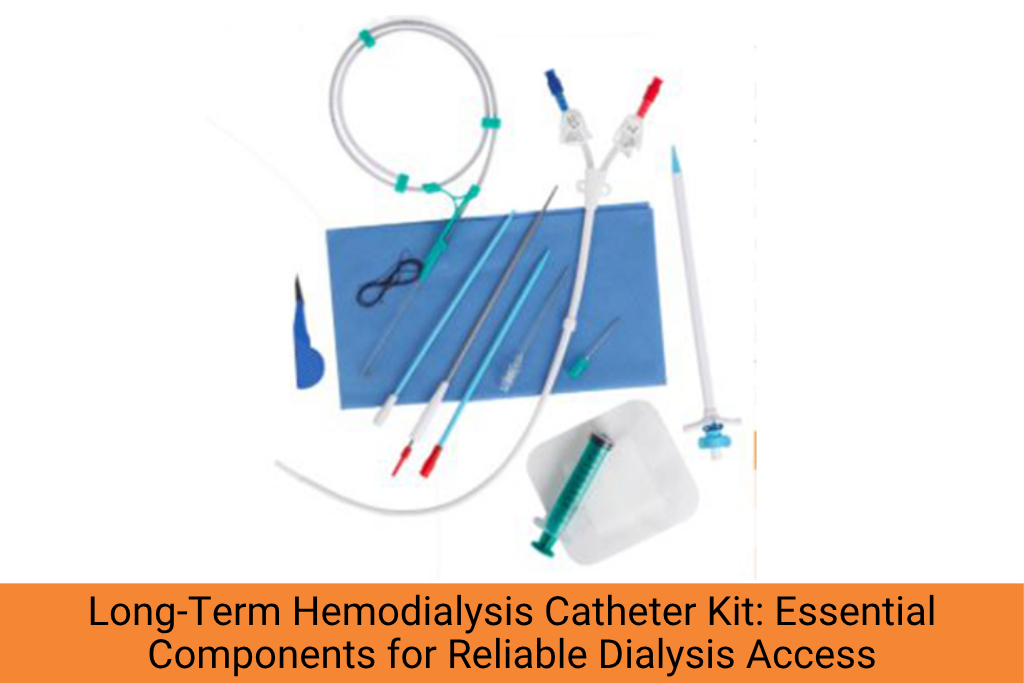
For clinicians working in under-resourced hospitals in Bamako, Lomé or Kigali, receiving a single sterile, all-inclusive long term dialysis catheter kit simplifies procedural preparation and reduces the margin for error during insertion.
Our Other Product
Hemodialysis Compound Catheter KitWest Africa – particularly Nigeria and Ghana – carries a significant burden of ESRD driven by high rates of hypertension and diabetic nephropathy in the general population. Both countries have urban dialysis centers managing growing patient loads, yet the availability of trained vascular surgeons and advanced access technology outside major cities remains uneven. This gap makes long term hemodialysis catheters the most practical access solution for a large segment of patients presenting for dialysis initiation.
East Africa presents a similar picture. In Kenya, Tanzania and Uganda, urban dialysis centers are expanding, but the specialist workforce to create and manage AV fistulas has not scaled proportionately. Long term hemodialysis catheters are filling this clinical gap, particularly in referral hospitals across Nairobi, Dar es Salaam and Kampala where patient volumes are rising but surgical capacity remains stretched.
In Francophone Africa – Senegal, Côte d’Ivoire, Cameroon and the Democratic Republic of Congo – dialysis programs are at earlier stages of development. Here, the reliance on long-term dialysis catheters as the primary vascular access modality is even more pronounced, as fistula creation services may only be available in capital cities.
Southern African nations like Zambia, Zimbabwe and Mozambique face dual challenges: growing ESRD prevalence and systemic underinvestment in nephrology infrastructure. In this context, the availability of quality long term hemodialysis catheter kits from reliable manufacturers is not just a clinical preference – it is a system-level necessity.
For healthcare procurement teams and hospital administrators across Sub-Saharan Africa, sourcing from a dependable long term hemodialysis catheters manufacturer is critical. The consistency of catheter quality, sterility assurance, kit completeness and availability of technical documentation directly affects patient outcomes in environments where troubleshooting resources are limited.
Sub-Saharan health systems – whether through government procurement, NGO supply chains or private hospital purchasing – require manufacturers who can offer validated products that meet international biocompatibility and sterility standards, alongside stable supply logistics. Poor-quality catheters with substandard luminal design or inadequate cuff anchoring directly translate into higher catheter failure rates, increased patient hospitalizations and avoidable mortality.
Regional distributors and procurement officers in cities like Accra, Nairobi, Lagos and Johannesburg are increasingly evaluating manufacturers not just on price, but on product quality, documentation standards and the ability to support consistent supply volumes across multiple facilities.
Catheter-related bloodstream infections represent the most significant clinical risk associated with long-term hemodialysis catheters and their management in Sub-Saharan Africa requires deliberate protocol design. Dialysis units in the region often operate with nursing staff who rotate across multiple wards and strict catheter care training may not always be standardized.
The Dacron cuff mechanism, when combined with proper exit site care and routine heparin locking between sessions, significantly reduces CRBSI rates even in these settings. Many nephrology programs across East and West Africa are adopting structured catheter maintenance bundles – modeled on WHO infection prevention guidelines – that include antiseptic dressing changes, catheter-specific nursing checklists and defined criteria for catheter removal.
Adoption of a quality long term hemodialysis catheter that supports these protocols through its design – including secure cuff positioning, dual-lumen flow optimization and biocompatible material selection – makes a measurable difference in how well these protocols perform in real-world African hospital environments.
 Call Now
STS Medicals, reliable manufacturer and supplier of high-quality dialysis access products, including the series of long term hemodialysis catheters. The company offers a complete long-term hemodialysis catheter kit built with premium silicone and precision-engineered components designed for extended vascular access. With a focus on biocompatibility, infection prevention and procedural simplicity, STS Medicals supports healthcare professionals across global markets with reliable, clinically validated solutions.
Our Other Product
Double Lumen CatheterThe dialysis access gap in Sub-Saharan Africa is a complex, multi-layered challenge – but long term hemodialysis catheters are providing an immediate, scalable and clinically sound response to it. From major referral hospitals in Lagos and Nairobi to emerging dialysis programs in Lusaka and Yaoundé, these catheters are sustaining patient lives where permanent access options remain out of reach. As regional healthcare systems invest in expanding renal care capacity, access to quality long term dialysis catheter kits from credible manufacturers will remain foundational to closing the gap between dialysis need and dialysis delivery across the continent.
We are recognized as one of the leading manufacturers, exporters, and suppliers of a diverse range of high-quality medical devices in India. Our products, including Interventional Cardiology, Nephrology, Anaesthesia, General Consumables, and Critical Care Accessories, are designed to meet the highest standards of excellence, ensuring reliable performance and patient care.
A – 8, Kuraopokpi industrial Estate,
Thoubal (kakching) Imphal,
Manipur – 795001, India.