Read Our Article
Peritoneal Dialysis Transfer Sets and Kits: Streamlining Clinical Workflow
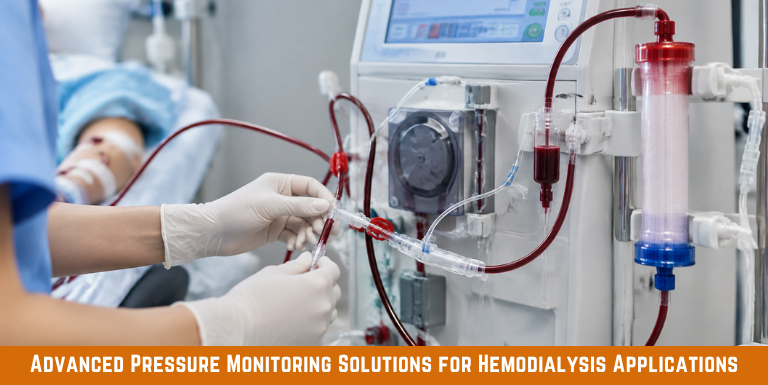
During hemodialysis, blood leaves the patient through the arterial side of the access, passes through tubing to the blood pump, continues through the dialyzer where waste and excess fluid are removed, and then returns to the patient through the venous line. At several points along this circuit, the dialysis machine needs a continuous, accurate reading of blood pressure to confirm the system is working correctly. A pressure monitoring line is the small bore tubing that connects a branch point on the blood circuit to the pressure sensor inside the dialysis machine, carrying that pressure signal without allowing blood itself to reach the machine’s internal components.
Arterial pressure, typically measured before the blood pump, and venous pressure, measured as blood returns to the patient, are both tracked continuously throughout a treatment session. A drop or spike in either reading can signal a problem, such as access recirculation, a kinked line, or a developing clot, well before it becomes visible in any other way, which is why the integrity of the pressure monitoring line itself is not a minor detail in dialysis safety.
 Call Now!
The monitoring line works on a simple fluid principle. Pressure changes within the blood circuit create corresponding pressure changes in the air or fluid column inside the monitoring line, and this pressure is transmitted along the line to a sensor, often a diaphragm connected to a strain gauge, inside the dialysis machine. As the diaphragm deforms slightly in response to pressure, the resulting change in electrical resistance is converted into the numeric pressure reading displayed on the machine’s monitor. This entire system depends on the line remaining patent and free of any obstruction that would dampen or distort the signal.
Because the pressure monitoring line connects directly to the extracorporeal blood circuit, there is a real risk of blood traveling along the line toward the dialysis machine itself, particularly if pressure spikes or if the line becomes contaminated with fluid over the course of treatment. A transducer protector, placed as an inline barrier between the monitoring line and the machine’s internal sensor, prevents this. It contains a hydrophobic membrane that allows air pressure to pass through freely while blocking any liquid, including blood, from crossing to the machine side. Every pressure monitoring line in clinical use should be paired with a transducer protector rather than connected directly to the machine, since a compromised line without this barrier creates both an infection control risk and a risk of permanent damage to the pressure sensor itself.
Dialysis circuits typically require monitoring at more than one point, which is why pressure monitoring lines are supplied in both single and double configurations. A single line monitors one point in the circuit, most often the venous pressure, while a double configuration allows simultaneous monitoring of both arterial and venous pressure through a single connected set. Dialysis centers should stock both configurations, since the specific monitoring setup required can vary by machine model and by the clinical protocol the center follows for a given patient.
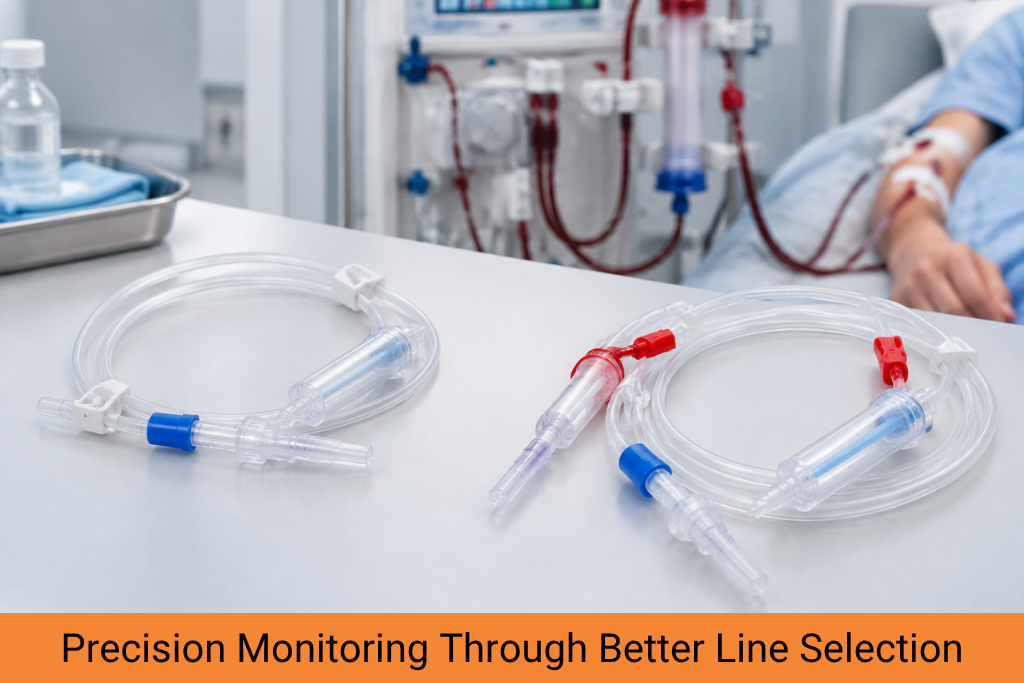
Pressure monitoring lines are made from medical grade tubing designed to hold its internal diameter under the pressure fluctuations of a dialysis session without collapsing or kinking, since either failure would distort the pressure reading the machine relies on. The connectors at each end need to form a secure, leak free seal, typically using a luer lock design, since any small leak in the line introduces air into the system and produces an inaccurate reading on the monitor. Dialysis centers sourcing these lines should confirm the tubing material and connector design have been validated for compatibility with their specific dialysis machine models, since not all pressure lines are interchangeable across different manufacturers’ equipment. Color coded ports and clearly labeled connectors also help clinical staff distinguish arterial from venous lines quickly during setup, reducing the chance of a misconnection during a busy shift with multiple patients being prepared for treatment at once.
Our Other Product
Long Term Hemodialysis Catheters KitDialysis machines are programmed to alarm when arterial or venous pressure readings fall outside an expected range, and while these alarms are most often triggered by genuine clinical events such as access problems or a developing clot in the circuit, a compromised pressure monitoring line can produce the same alarm pattern without any underlying patient issue. A kinked line, a loose connector, or a transducer protector membrane that has become wet can all generate pressure readings that trigger repeated false alarms, interrupting treatment and requiring staff time to investigate. Dialysis centers experiencing frequent unexplained pressure alarms should include the physical integrity of the monitoring line and transducer protector as part of their troubleshooting checklist, rather than assuming every alarm reflects a patient related cause.
Because pressure monitoring lines are single use, disposable components replaced with essentially every treatment session, a dialysis center running multiple shifts across a large patient population consumes these lines at a volume that few other cath lab or interventional consumables match. This makes consistent, predictable supply especially important for this category. A distributor working with dialysis centers should plan procurement around this high turnover rate and maintain enough buffer stock to absorb short term demand spikes, since a shortage of pressure monitoring lines has an immediate and direct impact on a center’s ability to run its scheduled treatment sessions. Centers expanding capacity or opening new treatment stations should factor this consumable into their planning early, rather than treating it as an afterthought once machines and staffing are already in place.
Procurement teams sourcing pressure monitoring lines should first confirm availability in both single and double configurations, since most dialysis centers need both depending on machine setup and treatment protocol. Second, the line should be supplied together with, or be explicitly compatible with, a transducer protector, since these two components function as a matched safety system rather than independent parts. Third, given the high frequency of use, since a functioning dialysis center may go through pressure monitoring lines with nearly every single treatment session, distributors need a manufacturer capable of sustaining high volume, consistent supply without production gaps that could disrupt a center’s daily patient schedule.
St Stone Medical Devices manufactures pressure monitoring lines in single and double configurations, alongside compatible transducer protectors, supplying dialysis centers and distributors who need dependable, high volume consumables for the extracorporeal circuit safety systems that every hemodialysis session depends on. The company works closely with distribution partners to understand the specific machine platforms in use at each center, helping ensure the lines and protectors supplied are validated for the equipment they will actually be connected to.
Before a treatment session begins, dialysis staff need to prime the pressure monitoring line and confirm the transducer protector membrane is dry and properly seated, since any residual air or fluid in the wrong place at setup can distort readings from the very start of treatment rather than only becoming apparent partway through. Staff training on this setup step should emphasize that priming is not a generic step to be rushed through, but a specific procedure that directly protects the accuracy of two safety critical readings for the full duration of the session. Centers that build a consistent, checklist driven setup routine around pressure line priming tend to see fewer mid treatment pressure alarms traced back to setup errors rather than genuine clinical events.
Dialysis centers running more than one machine brand or model across their treatment floor need to confirm that pressure monitoring lines and transducer protectors are validated for compatibility with each platform in use, since connector design and pressure sensor specifications are not always standardized across manufacturers. A line that fits physically onto a machine but was not specifically validated for that model introduces uncertainty into the accuracy of the pressure readings it produces. Distributors serving centers with mixed machine fleets should be able to clearly confirm platform compatibility for every configuration in their catalog, rather than leaving that verification to be discovered by clinical staff during setup.
A pressure monitoring line is easy to overlook among the more visible components of a hemodialysis setup, yet it is the component responsible for one of the machine’s core safety functions, giving the clinical team continuous, real time insight into how the blood circuit is behaving throughout treatment. Sourcing lines that hold their shape under pressure, seal reliably at every connection, and pair correctly with a transducer protector is not a minor procurement detail but a direct contributor to patient safety during every single dialysis session. St Stone Medical Devices continues to support dialysis centers with pressure monitoring lines built around these clinical requirements.
We are recognized as one of the leading manufacturers, exporters, and suppliers of a diverse range of high-quality medical devices in India. Our products, including Interventional Cardiology, Nephrology, Anaesthesia, General Consumables, and Critical Care Accessories, are designed to meet the highest standards of excellence, ensuring reliable performance and patient care.
A – 8, Kuraopokpi industrial Estate,
Thoubal (kakching) Imphal,
Manipur – 795001, India.