Read Our Article
Epidural Kits for Pain Relief: Benefits and Risks
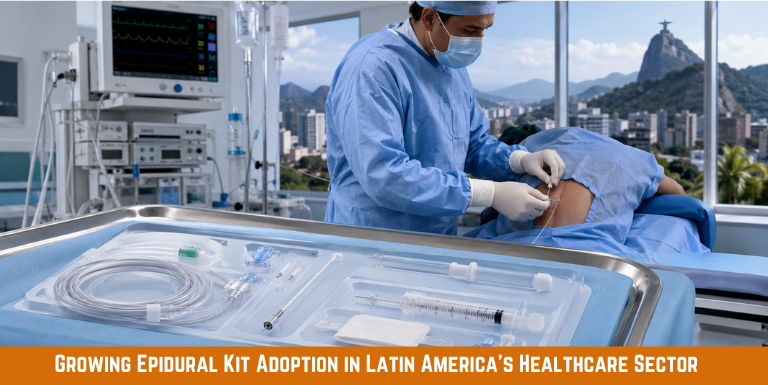
Latin America is witnessing a significant uptick in the adoption of regional anaesthesia techniques, particularly neuraxial pain management. Countries such as Brazil, Mexico, Colombia, Argentina and Chile are actively scaling up their tertiary care and obstetric facilities, which is directly increasing procedural volumes involving epidural anaesthesia. The surge in surgical volumes – especially elective caesarean sections orthopaedic procedures and post-operative pain management – has placed epidural kits at the centre of procurement discussions across both public hospital networks and private surgical centres. Healthcare infrastructure investments, driven partly by post-pandemic reform agendas, are pushing procurement managers to prioritise clinically standardised, single-use regional anaesthesia consumables.
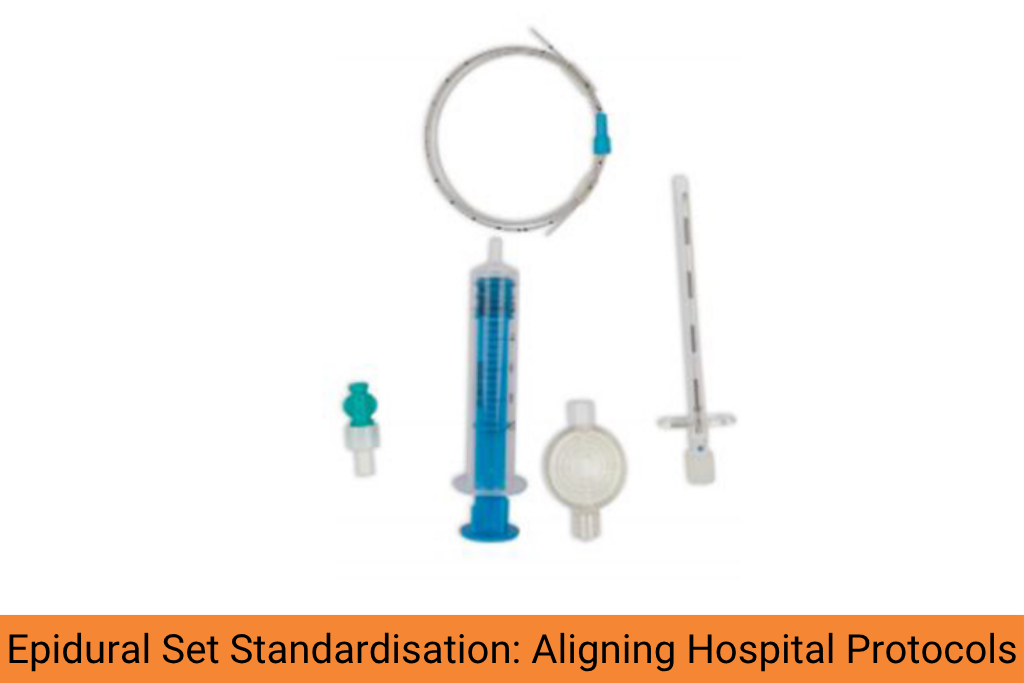
Anaesthesia departments across Latin America are moving away from multi-component procurement toward pre-assembled, sterile epidural catheter kits that minimise intraoperative handling time. The clinical preference is shifting toward kits that integrate a Tuohy needle, a loss-of-resistance syringe, a bacterial filter, a fixation device and a radiopaque catheter within a single sterile field. Institutions managing high obstetric throughput – particularly in Brazil’s SUS public health network and Mexico’s IMSS hospitals – are seeking catheter sets with consistent assembly tolerances to reduce placement errors during high-volume shifts. This is driving procurement toward suppliers who offer validated, traceable and consistently manufactured epidural catheter kits rather than individually sourced components.
One of the most defining clinical procurement trends in Latin America currently is the growing insistence on DEHP-free and plasticizer-free catheter materials. Regulatory pressure originating from the European Union’s REACH directives has begun influencing purchasing standards among Latin American hospital groups with international affiliations. Additionally, neonatal and obstetric associations in several countries are recommending plasticizer-free epidural catheter sets for use in labouring patients, given the potential phthalate exposure risk to neonates during prolonged epidural infusions. Procurement tenders issued by Brazilian federal health institutions and Colombia’s health ministry supply chains increasingly carry specifications mandating phthalate-free polyurethane or polyamide catheter materials. This material-safety demand is one of the clearest differentiators now shaping vendor selection.
Read Our Article
Epidural Kits for Pain Relief: Benefits and RisksBeyond obstetrics, the expansion of chronic pain management programmes in Latin America is generating consistent demand for the epidural transfer kit in outpatient and day-care pain clinic settings. Complex regional pain syndrome, cancer-related pain and failed back surgery syndrome are increasingly managed through continuous epidural infusion protocols, where the epidural transfer kit – connecting the catheter hub to the infusion system – plays a critical role in maintaining a closed, sterile circuit. Pain management centres affiliated with oncology networks in São Paulo, Bogotá and Lima are specifying transfer kits with anti-siphon connectors, needle-free injection ports and secured Luer-lock fittings to prevent accidental disconnection during ambulatory movement. The transfer kit is no longer treated as a secondary accessory but as a clinical-safety-critical component in its own right.
The discussion around atraumatic needle design is gaining clinical traction among Latin American anaesthesiologists. Traditional cutting-tip Quincke-style epidural needles are progressively being supplemented – and in some centres replaced – by pencil-point or Tuohy-variant designs that reduce the incidence of post-dural puncture headache and accidental dural breach. Neurology and obstetric anaesthesia societies in Brazil and Argentina have published guidance recommending atraumatic configurations for high-risk patient populations. The epidural needle gauge selection – typically 16G to 18G for adult epidural anaesthesia – is now paired with discussions on bevel orientation, echogenicity for ultrasound guidance and material stiffness in morbidly obese patients, a population whose prevalence is growing rapidly across the region.
Our Other Product
Spinal NeedleHospital accreditation drives in Latin America, notably JCI certification adoption in larger private hospital networks, are compelling anaesthesia departments to standardise its consumable inventories around a defined epidural set configuration. Standardisation reduces training variability, supports drug delivery consistency and simplifies biomedical procurement audits. Countries with national quality frameworks – such as Mexico’s CENETEC and Brazil’s ONA accreditation body – are encouraging kit-based procurement that aligns with clinical pathway documentation. For the epidural set, this means fixed kit compositions, documented shelf lives and supplier certifications such as ISO 13485 and CE marking are now baseline procurement criteria rather than optional preferences.
The criteria for selecting an epidural set manufacturer within Latin America’s public procurement ecosystem are shifting toward a multi-parameter evaluation framework. Beyond price, tender committees are scoring manufacturers on regulatory certification, sterility assurance levels, post-market surveillance records and supply chain continuity during disruptions. Following global supply chain vulnerabilities exposed during 2020 to 2022, Latin American health ministries have begun incorporating supply redundancy and regional distribution capability as weighted scoring criteria. Manufacturers with ISO 13485:2016 certification, WHO-GMP compliance and dual manufacturing-distribution infrastructure are being positioned more competitively in these public bids. CE-marked epidural sets that meet EN ISO 10993 biocompatibility standards are gaining preference over non-certified alternatives, particularly in Brazil where ANVISA importation requirements are aligning more closely with European safety standards.
Latin America is experiencing rapid demographic aging – by 2030, individuals over 60 will represent more than 15% of the population in Brazil, Chile and Uruguay. This demographic shift is driving a corresponding increase in hip replacement, knee arthroplasty and colorectal surgeries among elderly patients, where epidural catheter-based continuous anaesthesia offers significant respiratory and haemodynamic advantages over general anaesthesia. Geriatric anaesthesia units are specifying catheter sets with soft-tip, kink-resistant catheters that maintain patency over 48 to 72 hours of infusion, reducing the need for catheter reposition and minimising procedure-related trauma in patients on anticoagulant therapy. The epidural catheter is increasingly seen as a central instrument in enhanced recovery after surgery (ERAS) protocols being rolled out across Latin American surgical departments.
Mexico and Colombia have established themselves as leading medical tourism destinations for North American and European patients seeking elective orthopaedic, bariatric and plastic surgery procedures. Private surgical facilities catering to international patients are procuring epidural catheter sets that comply with European CE and American FDA standards to meet patient expectations around safety documentation. This sector is less price-sensitive and more brand-quality-oriented, making it an important premium segment for global and Indian medical device manufacturers looking to enter the Latin American anaesthesia consumables market. The preference here skews toward complete, pre-assembled sets with clearly printed component labeling in both Spanish and English and with extended shelf-life packaging.
 Call Us Now!
St. Stone Medical Devices Pvt. Ltd. is an ISO 13485:2016 and WHO-GMP certified medical device manufacturer established in 2012, headquartered in New Delhi with a manufacturing facility in Imphal, Manipur. The company manufactures and exports a wide range of critical care and anaesthesia products – including epidural sets, spinal needles, central venous catheter kits and haemodialysis consumables – to over 20 countries across Africa, the Middle East and Asia. Holding CE certification and CDSCO licensing, St. Stone is positioned as a reliable, compliance-oriented partner for healthcare systems seeking quality-assured anaesthesia consumables at competitive price points.
Our Other Product
Arterial Line Catheter KitLatin America’s epidural pain management market is evolving beyond price-driven procurement into a clinically sophisticated, safety-first purchasing environment. The demand for plasticizer-free materials, atraumatic needle designs, pre-assembled sterile catheter sets and ISO-certified manufacturers reflects a regional healthcare sector that is maturing rapidly under the influence of accreditation frameworks, demographic changes and international regulatory alignment. For manufacturers and distributors serving this market, material transparency and supply reliability are the differentiators that will determine long-term positioning across both public tender networks and the growing private surgical segment.
We are recognized as one of the leading manufacturers, exporters, and suppliers of a diverse range of high-quality medical devices in India. Our products, including Interventional Cardiology, Nephrology, Anaesthesia, General Consumables, and Critical Care Accessories, are designed to meet the highest standards of excellence, ensuring reliable performance and patient care.
A – 8, Kuraopokpi industrial Estate,
Thoubal (kakching) Imphal,
Manipur – 795001, India.