Read Our Article
How to Prevent Complications with the Short-Term Hemodialysis Catheter Kit: Tips for Medical Staff?
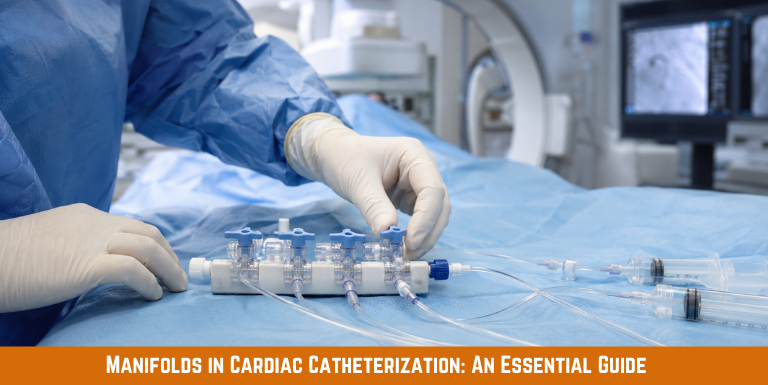
A manifold is one of the most frequently used accessories in a cardiac catheterization lab, yet it rarely receives the attention given to catheters or guidewires. During coronary angiography, peripheral angioplasty, and other interventional procedures, the manifold allows the operator to inject contrast media, flush saline, and monitor arterial pressure without repeatedly disconnecting and reconnecting devices at the access site.
For hospitals, distributors, and procurement teams sourcing cathlab consumables, understanding how manifolds work, what separates a reliable product from a substandard one, and which certifications matter can directly influence procedural safety and cost efficiency. This guide covers the technical and practical aspects buyers should evaluate before placing an order.
A manifold is a compact assembly of stopcocks connected through a common body, typically fitted with a set of syringe ports on one side and a single patient line connector on the other. Each stopcock can be rotated to open, close, or redirect flow between the contrast syringe, the flush line, and the pressure monitoring transducer.
This design allows the physician to switch between injecting contrast for imaging and flushing the line with heparinized saline, all while keeping the catheter connected to the patient. The internal channels are engineered to minimize dead space, which reduces the amount of contrast wasted and helps maintain accurate pressure readings throughout the procedure.
Most manifolds are molded from medical grade polycarbonate, chosen for its clarity, chemical resistance, and ability to withstand repeated stopcock rotation without cracking. The syringe ports are usually fitted with color coded handles so the surgical team can identify the contrast, flush, and monitoring channels at a glance, which becomes particularly useful during longer or more complex procedures where quick recognition reduces the chance of operator error.
The terms high pressure and medium pressure refer to the burst pressure rating of the manifold body and its stopcocks, usually expressed in pounds per square inch. High pressure manifolds are built to withstand the forces generated by power injectors used in coronary and peripheral angiography, where contrast is delivered at controlled but forceful rates.
Medium pressure manifolds are generally used for manual hand injection procedures where flow rates and pressures are lower. Selecting the correct type is not simply a matter of preference. Using an underrated manifold with a power injector can lead to leakage or component failure mid procedure, which is why manufacturers test and certify these products against internationally recognized connector and catheter standards, including those maintained by the International Organization for Standardization.
A two port manifold is a simpler configuration suited to procedures that only require a contrast line and a flush line, such as straightforward diagnostic angiography. A three port manifold adds a dedicated channel, most often used for continuous pressure monitoring alongside contrast injection and saline flushing.
Complex coronary interventions, multivessel procedures, and cases requiring simultaneous hemodynamic monitoring generally call for the three port configuration. Hospitals that stock both types can match the manifold to the complexity of the case rather than defaulting to a single option for every procedure, which improves workflow efficiency in a busy cathlab.
Some interventional teams also prefer three port designs for peripheral vascular procedures where contrast volume needs to be tracked closely alongside continuous pressure readings. Stocking both configurations gives a cathlab the flexibility to standardize its procedure trays without over ordering ports that a particular case does not require, which helps control per procedure supply costs over time.
Procurement teams evaluating manifold suppliers should look beyond price and confirm several technical attributes. A clear polycarbonate body allows the operator to visually confirm blood backflow and detect air bubbles before injection. Rotating stopcock handles with tactile position indicators reduce the risk of an operator misreading whether a channel is open or closed.
Secure luer lock connections that comply with small bore connector standards help prevent accidental disconnection during a procedure. A low internal priming volume reduces contrast dye usage per case, which matters both clinically and financially given the cost of contrast media. Finally, single use, individually sterilized manifolds, packaged and validated to ethylene oxide sterilization protocols, support infection prevention practices recommended by public health authorities such as the World Health Organization and the United States Centers for Disease Control and Prevention.
Our Other Product
Long Term Hemodialysis Catheters Kit
The global shift toward transradial access for coronary and peripheral interventions has changed how manifolds are used at the bedside. Radial procedures often involve tighter working space and a greater reliance on precise pressure monitoring to detect early signs of spasm or occlusion, making a dependable manifold connection critical.
Whether the access route is radial or femoral, the manifold remains the central hub connecting the inflation device, contrast syringe, and monitoring line to the introducer sheath. A well engineered manifold reduces the number of manual reconnections needed during a case, which in turn lowers the risk of contamination and air embolism.
Reprocessing invasive devices that come into direct contact with a patient’s bloodstream carries a documented risk of cross contamination between cases, which is why most national health authorities now recommend single use manifolds for interventional procedures. The internal channels of a manifold are difficult to fully clean and sterilize between patients due to their narrow bore design.
Hospitals that switch from reused to single use manifolds typically do so as part of a broader infection prevention policy rather than as an isolated purchasing decision. Distributors supplying government and private hospitals should be able to provide sterilization validation documentation for every batch, since many tender boards now require this as a condition of vendor approval.
Government hospitals, tender boards, and private healthcare groups across the Middle East, Africa, and Southeast Asia typically require documented compliance before approving a supplier. Manifolds intended for export should be manufactured under an ISO 13485 certified quality management system, carry CE marking for the European market where applicable, and be produced in a facility that follows World Health Organization Good Manufacturing Practice guidelines.
Buyers are encouraged to request test reports covering burst pressure, leak testing, and biocompatibility, along with sterilization validation records. These documents are typically requested during government tender submissions and hospital vendor registration processes, and their availability is often a faster indicator of manufacturing discipline than marketing claims alone.
Export compliant packaging is another factor procurement teams often overlook. Labeling that meets destination country requirements, including batch traceability and shelf life information consistent with guidance from bodies such as the US Food and Drug Administration and the European Medicines Agency, helps avoid customs delays and simplifies hospital inventory audits once the product arrives on site.
Our Other Product
Stainless Steel and Nitinol GuidewireSt Stone Medical Devices Pvt Ltd manufactures a range of cathlab accessories, including two port and three port manifolds in both high pressure and medium pressure configurations, alongside its broader portfolio of dialysis, nephrology, and critical care consumables. The company operates from an ISO 13485 and WHO GMP compliant facility and exports to healthcare distributors and hospitals across multiple countries.
Hospitals, distributors, and procurement teams looking for a reliable manifold manufacturer with export documentation ready for government tenders and private hospital vendor approval processes can reach out to St Stone Medical Devices for product specifications, certifications, and bulk pricing.
 Call Us Now!
Manifolds may be a small part of the overall cathlab procedure tray, but their design, pressure rating, and configuration directly affect procedural safety, contrast usage, and workflow speed. Buyers who evaluate suppliers on documented quality certifications, port configuration options, and pressure ratings rather than price alone are better positioned to standardize procurement across their facilities.
For healthcare providers and distributors seeking a dependable manifold supplier backed by international quality certifications, St Stone Medical Devices offers a full range of manifolds engineered for both diagnostic and complex interventional procedures.
We are recognized as one of the leading manufacturers, exporters, and suppliers of a diverse range of high-quality medical devices in India. Our products, including Interventional Cardiology, Nephrology, Anaesthesia, General Consumables, and Critical Care Accessories, are designed to meet the highest standards of excellence, ensuring reliable performance and patient care.
A – 8, Kuraopokpi industrial Estate,
Thoubal (kakching) Imphal,
Manipur – 795001, India.