Read Our Article
Quality Checklist for Procuring Short-Term HD Catheter Kits in Middle East Hospitals
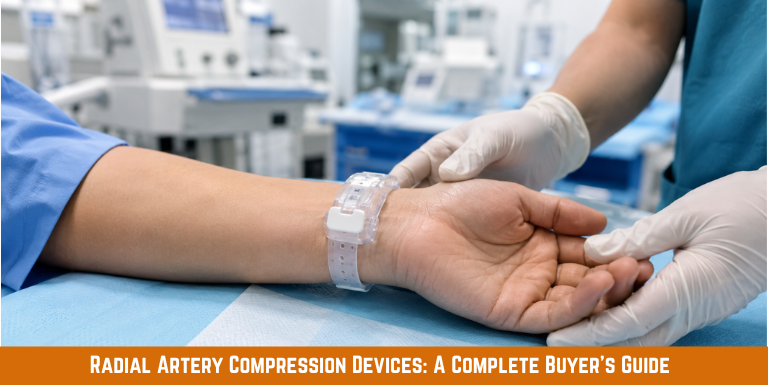
Radial artery compression devices, often called radial bands, are used after transradial cardiac catheterization or angioplasty to achieve hemostasis at the wrist access site. As transradial access has become the preferred approach for coronary interventions in many countries, demand for reliable, easy to apply compression devices has grown steadily across hospitals, cath labs, and day care procedure centers.
For hospital procurement teams and medical device distributors, understanding how these devices work, what clinical outcomes they support, and which markets are actively purchasing them helps build a stronger sourcing and export strategy.
 Email Us
A radial artery compression device is typically a wrist band fitted with an inflatable balloon or adjustable compression pad positioned directly over the arterial puncture site. After the sheath is removed following a procedure, the device is secured around the wrist and gradually inflated or tightened to apply focused pressure over the artery while allowing blood flow to continue through the ulnar artery.
This targeted compression, known as patent hemostasis, is designed to stop bleeding at the puncture site while preserving blood flow through the radial artery itself, reducing the risk of radial artery occlusion compared to older methods that applied broad, non specific pressure across the wrist.
Clinical guidelines from cardiology societies in North America, Europe, and Asia increasingly recommend transradial access as the default approach for coronary angiography and percutaneous coronary intervention, largely due to lower rates of access site bleeding and shorter patient recovery time compared to the traditional femoral approach.
This shift has directly increased demand for radial compression devices in both developed and emerging healthcare markets. Government hospitals and private cardiac centers across India, the Middle East, Southeast Asia, and parts of Africa are expanding transradial programs, creating steady procurement demand for compression bands as a routine part of the post procedure care pathway.
Procurement teams typically evaluate radial compression devices on several practical factors. Ease of application matters in a busy cath lab, since nursing staff need to secure the band quickly and consistently across many patients per day. A clear window over the puncture site allows visual monitoring of the wound without removing the device.
Adjustable, graduated deflation mechanisms allow clinicians to gradually reduce pressure over a monitored period, which supports the patent hemostasis technique associated with lower rates of radial artery occlusion. Latex free materials and single use, individually sterilized packaging are also standard expectations for hospital tenders in most export markets.
After sheath removal, the compression device is applied and inflated to the point where bleeding stops while a weak radial pulse remains palpable, confirming that the ulnar artery is maintaining collateral flow. Nursing staff then follow a stepwise deflation protocol, gradually releasing pressure over a period defined by hospital policy, often between one and two hours depending on the sheath size and anticoagulation status of the patient.
Monitoring during this window typically includes checking for hematoma formation, assessing hand color and warmth, and confirming pulse oximetry readings on the thumb to detect early signs of radial artery compromise. Standardizing this protocol across nursing teams is one of the most effective ways hospitals reduce access site complications.
Our Other Product
Double Lumen CatheterRadial artery occlusion is the most commonly reported complication following transradial procedures, occurring when the artery narrows or closes off after compression. Research published in interventional cardiology journals has consistently linked longer compression times and higher applied pressure with increased occlusion risk, which is why patent hemostasis protocols that maintain some blood flow through the artery during compression have become the preferred clinical approach.
Adequate anticoagulation during the procedure, appropriately sized sheaths, and shorter total compression duration all contribute to lower occlusion rates alongside proper device selection. Hospitals that train nursing staff on graduated deflation techniques, rather than removing the device abruptly once bleeding appears controlled, tend to report better long term patency outcomes for their transradial patients.
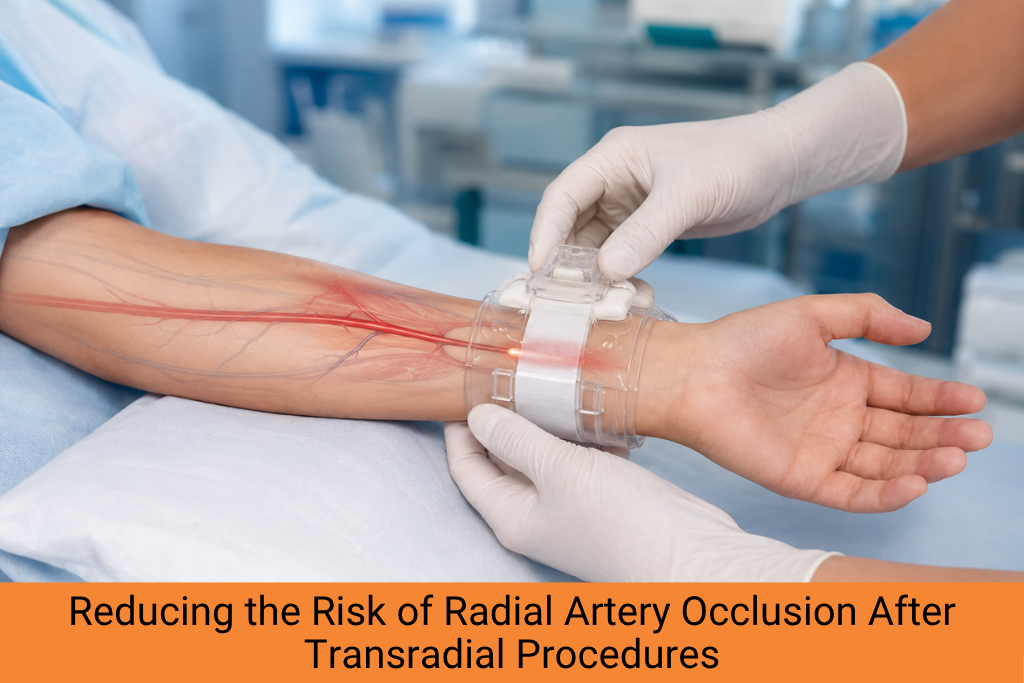
Radial compression devices generally fall into two broad design categories. Pneumatic devices use an inflatable balloon connected to a syringe port, allowing staff to add or release air in small increments to fine tune pressure. Mechanical devices instead use a screw or dial mechanism that physically tightens a pad against the puncture site.
Pneumatic designs tend to offer more precise, gradual pressure adjustment, which supports the patent hemostasis approach favored in current clinical guidance, while mechanical designs can sometimes be simpler to apply in high volume settings with less staff training. Hospitals often choose between the two based on nursing familiarity, procedure volume, and the compression protocol already established in their cath lab.
Search and market data show consistent interest in radial artery compression devices across a wide range of countries, including India, the United Kingdom, Spain, Germany, and parts of South America, reflecting the global expansion of transradial cardiology programs. Government health ministries in several of these regions have published interventional cardiology guidelines that reference radial access as a preferred technique, indirectly driving procurement volume for compression devices at the hospital level.
For exporters, this distributed demand pattern means opportunities exist beyond traditional high volume markets, particularly in countries where cath lab infrastructure is expanding and transradial adoption is still increasing year over year.
As a Class I or Class II medical device in most jurisdictions, radial artery compression devices are manufactured under an ISO 13485 certified quality management system, with biocompatibility testing of patient contacting materials conducted according to internationally recognized standards. Products intended for the European market require CE marking, while entry into the United States generally follows the Food and Drug Administration’s premarket notification process.
Hospitals and distributors evaluating suppliers for government tenders should request documentation confirming these certifications, along with batch specific sterilization records, since compliance paperwork is frequently reviewed as part of the vendor registration process for public sector healthcare procurement.
Our Other Product
Blood Line Set for HemodialysisSt Stone Medical Devices Pvt Ltd manufactures radial artery compression devices designed for patent hemostasis protocols, alongside a broader catalog of cathlab accessories including manifolds, introducer sheaths, and PTCA guidewires. The company’s manufacturing facility operates under ISO 13485 and WHO GMP certification and supports export documentation required for hospital tenders across multiple countries.
Hospital procurement teams and distributors seeking a dependable radial compression device supplier with export ready certification and bulk order capability can contact St Stone Medical Devices for product specifications, sample requests, and pricing.
The company also supports distributors with training material covering correct application and graduated deflation technique, helping new customers align their nursing protocols with current transradial care standards from the first order onward rather than treating the device as a standalone purchase.
Beyond the compression device itself, St Stone Medical Devices supplies compatible introducer sheaths and guiding catheters sized for radial access, allowing hospitals to source a matched set of transradial procedure components from a single manufacturer rather than coordinating specifications across several separate vendors.
 Call Now
Radial artery compression devices have become a standard part of post procedure care as transradial access continues to expand across global cardiology practice. Hospitals benefit from selecting devices that support patent hemostasis and simplify nursing workflow, while distributors benefit from partnering with manufacturers who can provide documented quality certification suited to government and private sector tenders.
For healthcare providers and distributors looking for a reliable radial compression device supplier, St Stone Medical Devices offers a certified, export ready product built to support modern transradial cardiology programs.
We are recognized as one of the leading manufacturers, exporters, and suppliers of a diverse range of high-quality medical devices in India. Our products, including Interventional Cardiology, Nephrology, Anaesthesia, General Consumables, and Critical Care Accessories, are designed to meet the highest standards of excellence, ensuring reliable performance and patient care.
A – 8, Kuraopokpi industrial Estate,
Thoubal (kakching) Imphal,
Manipur – 795001, India.