Read Our Article
Y Connectors in Vascular Access: Types, Uses, and Buying Considerations for Hospitals
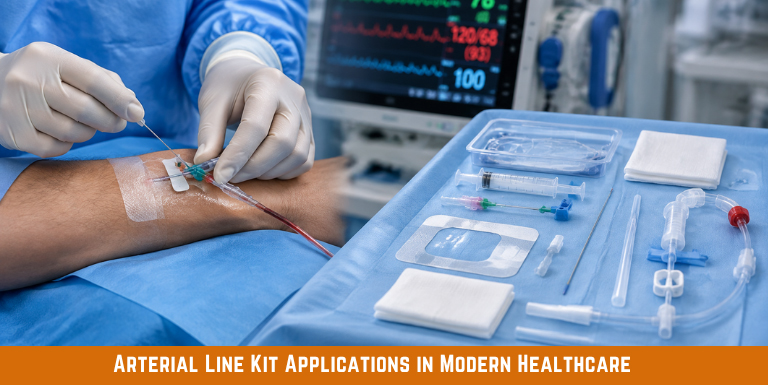
An arterial line kit provides everything a clinical team needs to place an indwelling arterial catheter using the Seldinger technique, giving continuous access to a peripheral artery for direct blood pressure monitoring and repeated arterial blood sampling. This access is used in intensive care units and operating theatres whenever a patient’s blood pressure is unstable or expected to fluctuate significantly, when vasoactive medications need to be titrated closely against real time pressure readings, or when a patient requires frequent blood draws that would otherwise mean repeated needle sticks. Anesthesiology teams also place arterial lines routinely before major surgeries where significant blood loss or hemodynamic swings are anticipated, giving the surgical team second by second visibility into the patient’s status throughout the operation. Compared with a standard non invasive blood pressure cuff, an arterial line delivers continuous, beat to beat pressure data, which matters considerably in patients whose condition can change quickly.
Because arterial cannulation combines a sterile procedure with several small, specific components, needles, guidewire, catheter, local anesthetic, and dressing supplies among them, hospitals rely on a single packaged kit rather than assembling these items individually at the bedside each time. This saves setup time and reduces the chance that a needed component is missing when the procedure begins.
A typical arterial line kit is built around a Seldinger access set, which usually includes an introducer needle for initial vessel puncture, a spring wire guide with a straight soft tip on one end and a J shaped tip on the other, and a radiopaque indwelling catheter, commonly 20 gauge, that is advanced over the guidewire into the artery. The guidewire’s dual tip design gives the operator flexibility during placement, since the soft straight tip reduces trauma during initial advancement while the J tip helps the wire follow the natural curve of the vessel in more difficult anatomy.
Beyond the access components, most kits include local anesthetic, typically a small ampule of lidocaine along with an appropriately gauged injection needle for delivering it, a blunt fill needle for drawing medication from the ampule without dulling the injection needle, and one or more Luer lock syringes. A fenestrated drape, antiseptic skin preparation solution, gauze, and suture material round out the kit, allowing the team to maintain a sterile field and secure the catheter once placement is complete.
Not every arterial line kit is built the same way, and the differences matter when hospitals are deciding what to stock. Basic kits provide the minimum needed for access and securement, while more comprehensive kits add surgical apparel such as a gown, bouffant cap, and mask with eye shield, additional antiseptic applicators, sharps disposal containers, and advanced dressing options. Hospitals following a maximal sterile barrier protocol for arterial access, an approach increasingly favored to reduce catheter related infection risk, need the more comprehensive kit configuration rather than a basic one, since assembling barrier precautions separately at the bedside defeats much of the efficiency a kit is meant to provide.
Catheter length and guidewire length also vary between kit configurations, generally ranging from short catheters intended for straightforward radial access to longer options suited to deeper or more difficult vessels. A hospital that performs arterial access primarily at the radial artery has different length requirements than one that also places femoral or axillary arterial lines regularly, which is a detail worth reviewing rather than assuming a single kit length fits every access site the hospital uses.
Many modern arterial line kits incorporate sharps safety features, such as needles with a shielding or retracting mechanism that engages automatically after use, along with dedicated sharps disposal cups included directly in the kit. These features reduce the risk of accidental needlestick injury to clinical staff during and immediately after the procedure, a real occupational safety concern given how many small gauge needles are handled during a single arterial line placement. Hospitals evaluating suppliers should treat sharps safety as a standard expectation rather than an optional upgrade, particularly for kits used at high frequency in busy intensive care settings.
The radial artery remains the most common site for arterial line placement because it is relatively superficial, easy to palpate, and has good collateral circulation through the ulnar artery, which reduces the consequences of a complication at the access site compared with a vessel lacking that backup blood supply. Femoral arterial access is used less frequently for routine monitoring but becomes more relevant in patients with poor radial perfusion, in shock states where peripheral pulses are difficult to locate, or when a larger bore catheter is needed for a specific clinical indication. Hospitals with a busy intensive care unit that regularly manages hemodynamically unstable patients should ensure their kit inventory covers both access routes rather than assuming radial access will always be feasible.
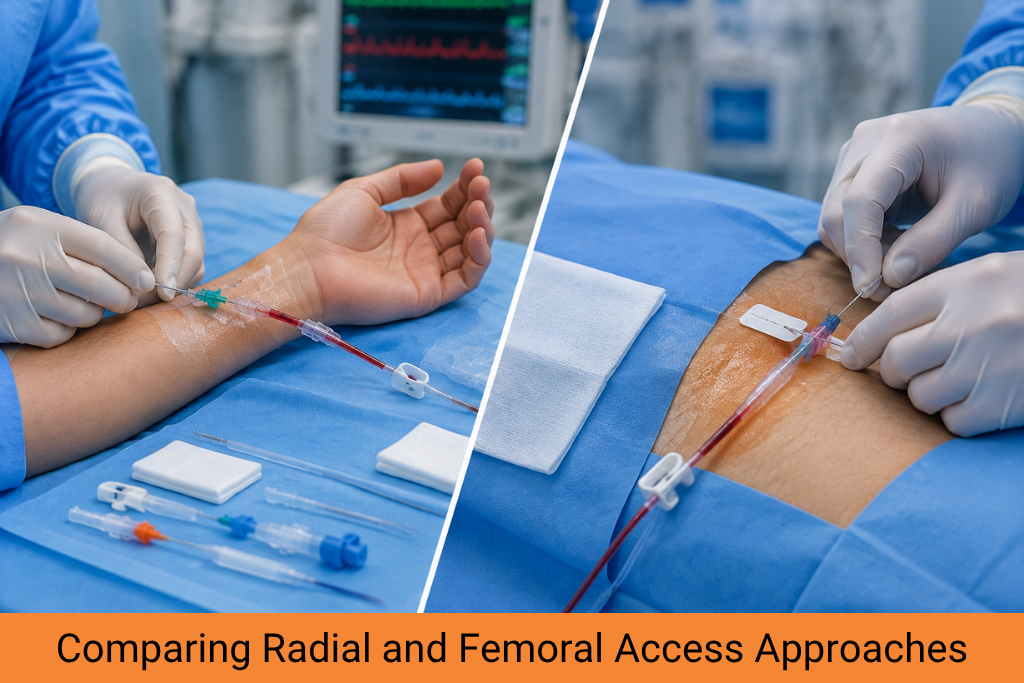
Once the catheter is placed, it connects to a pressure transducer and continuous flush system, typically pressurized saline infusing at a slow, steady rate, that displays the patient’s arterial waveform and numeric blood pressure on the bedside monitor. While this transducer setup is generally supplied separately from the arterial line kit itself, hospitals should confirm the catheter hub and connector type in their chosen kit is fully compatible with the transducer sets already in use across their intensive care and theatre environments, since a mismatch at this connection point can force staff to improvise a workaround at exactly the moment continuous monitoring needs to begin.
Our Other Product
Zebra GuidewireProcurement teams sourcing arterial line kits should first confirm the specific component list matches their clinical protocol, particularly around sterile barrier requirements, since a mismatch between what the kit provides and what the hospital’s infection control policy requires means staff have to supplement the kit manually every time, undermining its purpose. Second, catheter gauge and length options should be reviewed against the range of patients and access sites the hospital actually treats, since pediatric, adult, and difficult vascular access patients often call for different specifications. Third, since latex sensitivity remains a relevant concern in many clinical settings, kits manufactured without natural rubber latex components should be confirmed and clearly labeled. Fourth, distributors serving multiple hospitals should be able to offer both basic and comprehensive barrier configurations from the same supplier relationship, since standardizing on one hospital’s preference should not mean turning away a neighboring facility that follows a different protocol.
St Stone Medical Devices manufactures arterial line kits in multiple configurations, from basic access sets to comprehensive kits with full barrier precautions and sharps safety features, supplying hospitals and distributors who need dependable, complete kits for consistent arterial access procedures across intensive care and perioperative settings. The company’s manufacturing approach focuses on matching each configuration to real clinical workflows rather than offering a single generic kit and expecting every hospital’s protocol to adapt around it.
 Call Now!
Larger hospitals running several intensive care units, an emergency department, and multiple operating theatres often find that arterial line practice has evolved independently in each area over time, with different teams settling on slightly different kit configurations, catheter gauges, or barrier precaution levels. Standardizing on a smaller number of kit configurations across the hospital, chosen deliberately rather than inherited from historical purchasing habits, simplifies staff training, since clinicians moving between units do not need to relearn a different kit layout each time. It also strengthens the hospital’s negotiating position with suppliers and reduces the inventory complexity for central sterile and materials management teams who have to stock and track every configuration in use.
Because an arterial line kit bundles together more than a dozen individual components in a specific sequence of use, new staff, whether newly qualified nurses, residents, or technologists, benefit from structured orientation to the kit layout before their first unsupervised placement. A kit that is unfamiliar in its component arrangement can slow down an otherwise routine procedure and increase the chance of missing a step, such as flushing the line fully before connection to the transducer set. Hospitals that include a brief, hands on orientation to their specific kit configuration as part of new staff onboarding tend to see fewer procedural delays and fewer instances of staff needing to source a missing item mid procedure from outside the kit.
An arterial line kit brings together a specific, carefully matched set of components, all needed within a short window during a sterile bedside or theatre procedure, and the completeness and quality of that kit has a direct bearing on how smoothly the placement goes and how well the patient and staff are protected throughout. Hospitals that take the time to match kit configuration, sterile barrier level, and component specifications to their actual clinical practice are better positioned than those defaulting to whichever basic kit happens to be cheapest. St Stone Medical Devices continues to support hospitals with arterial line kits built to meet this range of clinical requirements.
We are recognized as one of the leading manufacturers, exporters, and suppliers of a diverse range of high-quality medical devices in India. Our products, including Interventional Cardiology, Nephrology, Anaesthesia, General Consumables, and Critical Care Accessories, are designed to meet the highest standards of excellence, ensuring reliable performance and patient care.
A – 8, Kuraopokpi industrial Estate,
Thoubal (kakching) Imphal,
Manipur – 795001, India.